The Billion-Euro Black Market Driving Europe's Eels to Extinction
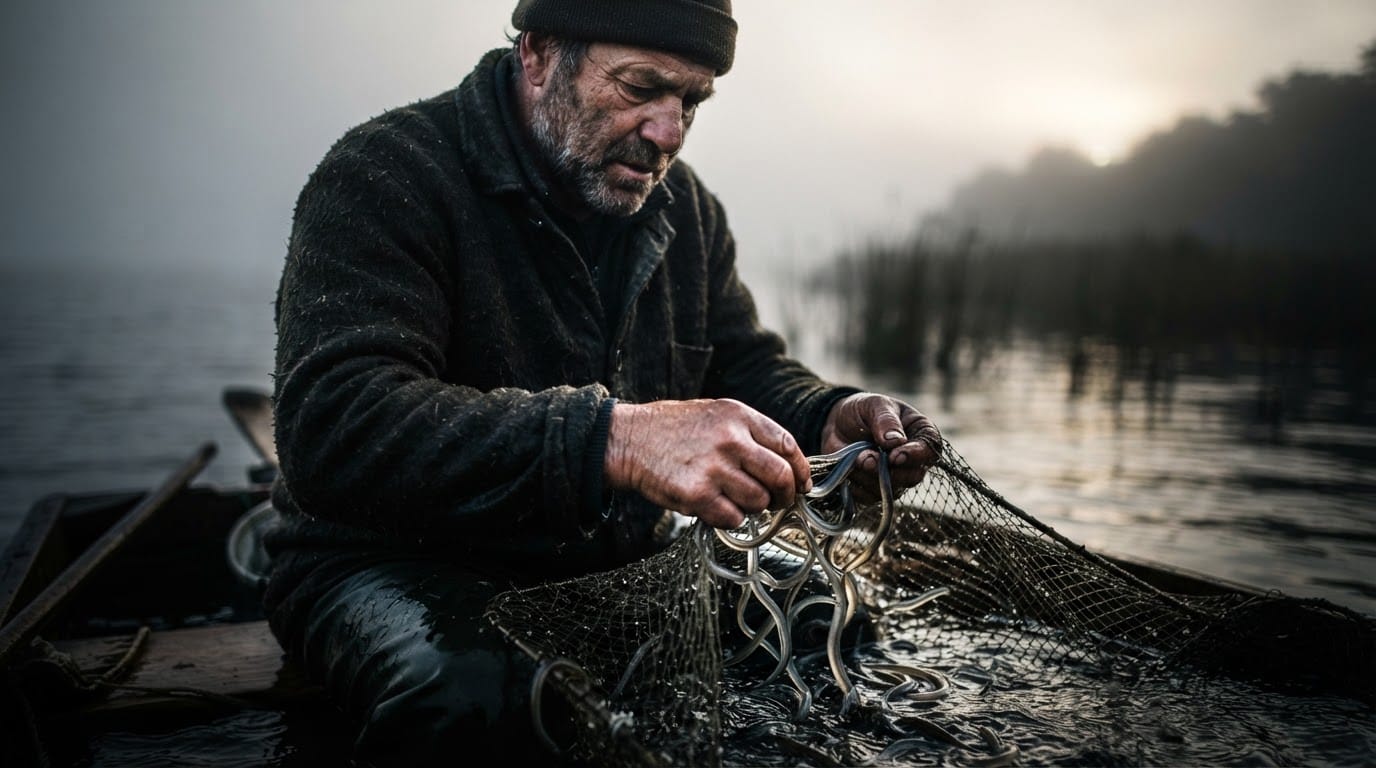
A matchstick-sized, nearly transparent creature is fueling one of the most lucrative and destructive environmental crimes on the planet. Known as glass eels, these juvenile European eels migrate thousands of miles across the Atlantic Ocean, only to face an underground pipeline that siphons them out of European estuaries and onto dinner plates thousands of miles away. Organized crime syndicates now orchestrate a multi-billion-euro black market that European law enforcement agencies estimate is worth up to 3 billion euros annually at peak market values. The trade has accelerated a cataclysmic biological collapse, pushing a foundational aquatic species toward total extinction.
The Biology Behind an Insatiable Demand
The roots of the crisis lie in a stubborn biological mystery: the European eel (Anguilla anguilla) cannot be reliably bred in captivity. In nature, adult eels leave European rivers and swim across the Atlantic to spawn in the Sargasso Sea, where their larvae hatch before ocean currents carry them back to the European and North African coasts. By the time they enter fresh waters, they have transformed into tiny, transparent juveniles known as glass eels.
Because commercial aquaculture operations cannot artificially reproduce the life cycle, every farmed eel must first be captured in the wild. In East Asian markets, particularly in China and Japan, mature eel is a celebrated delicacy known as unagi. When native Japanese eel populations collapsed from overfishing during the late 20th century, aquaculture farms turned to the European stock to fill the void.
One kilogram of live glass eels contains roughly 3,000 individual fish. When raised to commercial maturity in fattening ponds, that single kilogram yields more than a metric ton of eel meat. This staggering yield drives black-market prices to between 6,000 and 10,000 euros per kilogram in destination countries, matching or exceeding the profit margins of illicit narcotics.
A Transnational Smuggling Machine
To protect rapidly dwindling numbers, the European Union banned all commercial exports and imports of European eels outside its borders in 2009. Instead of halting the extraction, the ban pushed the entire export system underground.
Today, European law enforcement officials describe the trade as a complex, highly organized transnational pipeline. European-based groups coordinate the initial poaching and procurement, netting juveniles along river estuaries in France, Spain, Portugal, and the United Kingdom. The catch is quickly moved into clandestine holding facilities where water oxygenation and temperature are carefully regulated.
Smugglers then deploy specialized logistics to keep the animals alive during transit. In earlier years, courier "mules" carried them directly in temperature-controlled luggage on commercial flights. The eels were packed into plastic bags infused with pure oxygen and ice bottles to slow their metabolism.
As airport surveillance tightened across Western Europe, syndicates evolved. Traffickers now frequently move live consignments by road into Southeastern Europe or North African nations like Morocco, where customs controls are often less stringent, before freighting them to aquaculture centers in Asia. The network also relies on pervasive paper fraud, falsifying trade invoices, mislabeling cargo as non-regulated fish, and disguising shipments through legal European restocking programs. Europol estimates that as much as 100 metric tons of glass eels—representing hundreds of millions of individual lives—are smuggled out of Europe each year.
Collapsing Populations and Broken Ecosystems
The consequences for marine and freshwater ecosystems are severe. Scientists classify the European eel as critically endangered on the International Union for Conservation of Nature Red List. Recruitment levels—the number of juvenile eels returning to river systems compared to historical baselines—have collapsed by more than 90 to 95 percent since the 1980s.
Trafficking is not the sole pressure on the species, but it acts as an amplifier to an existing crisis. Hydroelectric dams obstruct migratory paths, chemical pollution fouls riverways, and climate variations alter the Atlantic currents that carry larvae across the ocean.
Biologists caution that eliminating the eel threatens the wider food web. In freshwater rivers, estuaries, and lakes, eels serve as both apex predators and vital prey for birds, otters, and larger marine fish. Because juvenile eels take up to two decades to mature into reproductive adults, continuous over-harvesting removes entire generations from the gene pool before they can ever breed.
The Enforcement Battle
Halting the illegal trade has required an unprecedented cross-border policing effort. Europol's flagship enforcement push, Operation LAKE, brings together national police forces, customs agents, and international bodies across more than 20 countries.
The scale of intervention is enormous. In a single recent operational cycle, coordinated inspections across Europe led to 26 arrests and the seizure of 22 metric tons of live glass eels, which were successfully reintroduced into domestic waterways. Over the lifetime of Operation LAKE, authorities have arrested more than 850 suspects and intercepted over 100 tons of eels.
Inspectors increasingly rely on technological advances to outmaneuver smugglers. Because juvenile European eels look nearly identical to other regional eel species, customs officers traditionally struggled to prove illegality at border checkpoints. Forensic teams now use portable environmental DNA test kits that verify the exact species within minutes, undermining attempts to disguise cargo behind fraudulent paperwork.
Enforcement agencies are also pursuing financial conduits, treating the illicit eel trade as serious corporate organized crime involving money laundering and systemic tax evasion. International anti-money-laundering frameworks have begun incorporating wildlife trafficking directly into financial reporting mandates to trace illicit profits back to high-level coordinators.
The Looming Deadline
Despite multi-ton seizures and dozens of criminal convictions, the fundamental market imbalance remains. As long as consumer demand in major seafood markets guarantees high prices, and captive breeding remains scientifically elusive, criminal syndicates find the financial reward far outweighs the legal risk.
The window to stabilize the European eel is narrowing rapidly. Without comprehensive international traceability that tracks seafood products from farm to plate, coupled with tighter global trade controls, Europe's most enigmatic fish may vanish entirely from the wild, depleted by an underground trade that values a single live bucket more than the survival of an entire species.