The Digital Front Line: Battling the Tide of War Misinformation in the Shadow of Iranian Conflict
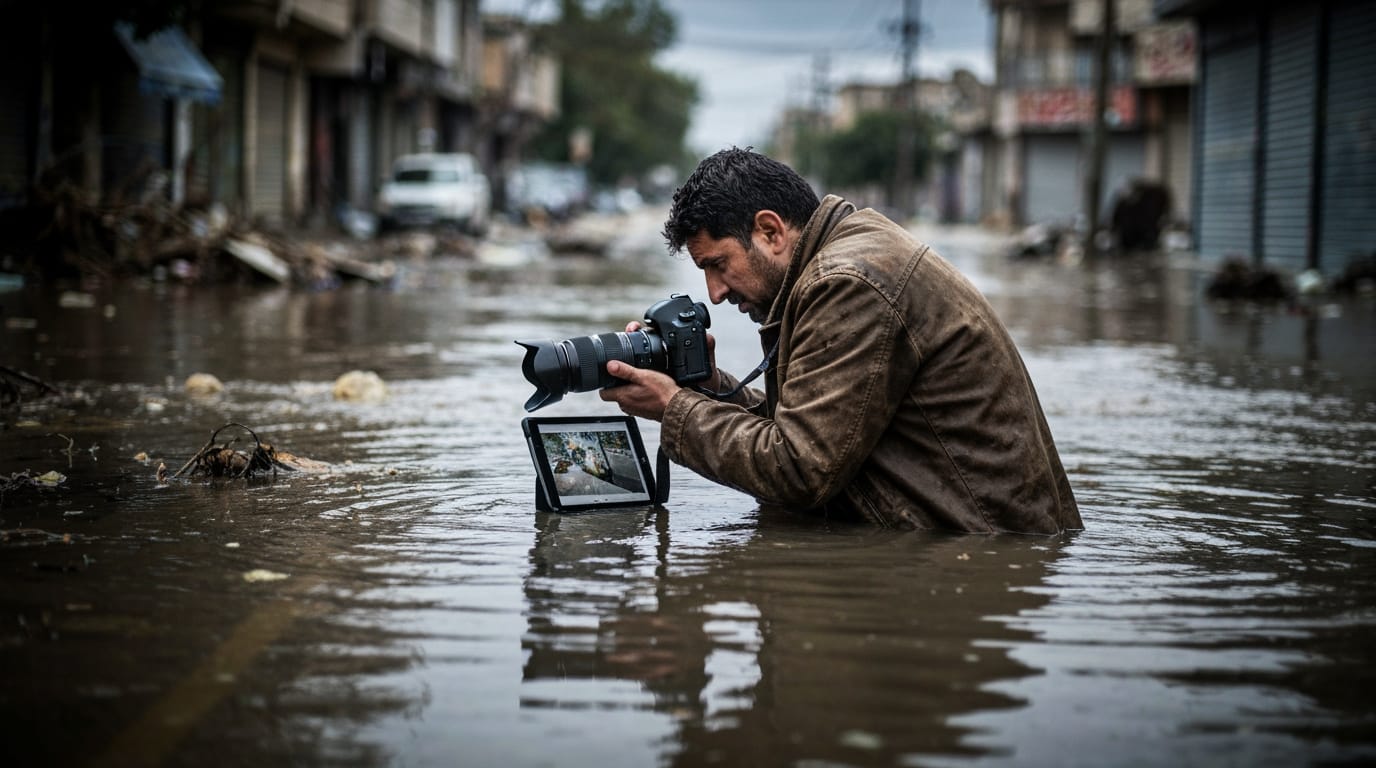
In an era defined by rapid digital dissemination, the conflict surrounding Iran has ignited a secondary, equally volatile battlefield: the information space. As tensions escalate, a relentless deluge of unverified images and videos purporting to depict scenes of war, destruction, and military action in Iran floods social media platforms, posing significant challenges to accurate reporting and public understanding. This digital fog of war, characterized by everything from repurposed old footage to sophisticated AI-generated content, demands heightened vigilance and robust fact-checking mechanisms to discern truth from calculated deception.
A Deluge of Deception: The Varied Forms of Visual Disinformation
The online environment has become fertile ground for the propagation of misleading visual content related to the conflict. Fact-checkers and digital forensic experts are identifying several pervasive categories of disinformation. Foremost among these are images and videos fabricated entirely by artificial intelligence (AI), designed to appear authentic. Instances include AI-altered satellite imagery falsely claiming to show damaged military infrastructure, computer-generated depictions of missile strikes, and even manufactured videos allegedly showing U.S. troops operating within Iran. Such AI-generated content can be surprisingly convincing, with errors sometimes only detectable through close scrutiny for tell-tale inconsistencies like misshapen hands, warped objects, or unnatural movements. Tools such as Google's SynthID have been instrumental in identifying content created using Google's AI platforms, often revealing hidden watermarks that confirm digital fabrication.
Beyond AI, a significant portion of the misinformation relies on older material given new, false contexts. Footage from past conflicts, unrelated global incidents, or even domestic events is frequently recirculated with captions falsely linking it to the current situation in Iran. For example, a widely shared video claiming to show a missile strike on Tel Aviv was, in reality, footage from a 2015 chemical warehouse explosion in Tianjin, China. Similarly, clips from military simulation video games are regularly misrepresented as genuine combat operations, blurring the lines between virtual and real warfare for unsuspecting viewers. Miscaptioned real images, where authentic visuals are stripped of their original context and assigned new, misleading narratives, also contribute to the chaotic information landscape.
The Perilous Implications of a Misinformed Public
The proliferation of unverified war imagery carries profound implications, extending far beyond mere factual inaccuracy. On a geopolitical scale, such content can exacerbate existing tensions, misrepresent events on the ground, and inflame public sentiment, potentially influencing international relations and policy decisions. Domestically, it can sow discord, fuel panic, and erode public trust in legitimate news sources and institutions. Individuals or groups seeking to capitalize on public attention may intentionally spread sensationalized or false information, sometimes driven by political agendas, other times simply to "game monetization" systems on social media platforms. The sheer volume and rapid spread of this deceptive content create a challenging environment where credible information struggles to gain traction against viral falsehoods.
The Crucial Role of Digital Detectives: Verification Techniques
In response to this onslaught, a dedicated community of fact-checkers, journalists, and open-source intelligence (OSINT) analysts has emerged as the front line in the battle against visual misinformation. These digital detectives employ a sophisticated arsenal of techniques to verify the authenticity and context of images and videos. A primary method involves reverse image searching, a process where an image is uploaded to search engines like Google or TinEye to trace its origin and identify previous instances of its use. This often reveals if an image is old, has been used in a different context, or is associated with a specific event from the past.
Geolocation is another critical technique, involving the meticulous analysis of visual clues within an image or video—such as landmarks, street signs, weather patterns, or distinctive architecture—and cross-referencing them with satellite imagery and mapping services like Google Maps or Wikimapia to pinpoint the exact location and potentially the time of capture. When evaluating AI-generated content, experts look for specific digital "tells," including unnatural features in human faces or bodies, strange lighting effects, impossible physics, or graphical glitches. Metadata analysis, though often hampered by platforms stripping this data, can sometimes reveal crucial information like the date, time, and device used to capture an image. Fact-checkers also track the propagation patterns of suspicious content, identifying if identical images or videos are being shared across multiple accounts simultaneously or amplified by bot networks, which can indicate coordinated disinformation campaigns.
Collaborative Efforts and the Path Forward
Social media platforms are increasingly being pressed to address the issue of misinformation. Some, like X (formerly Twitter), have implemented "Community Notes" that allow users to add context or flag potentially misleading posts, though their effectiveness can be inconsistent due to the sheer volume of content and the speed of spread. News organizations, including The New York Times and Bellingcat, are sharing their verification methodologies and open-source intelligence toolkits, empowering a broader audience with the skills to critically evaluate digital content. This push for media literacy is vital, as the fight against misinformation is an ongoing and evolving challenge.
The visual landscape surrounding the conflict in Iran underscores a broader truth: in the digital age, seeing is no longer inherently believing. The deliberate weaponization of visual information necessitates a collective commitment to critical thinking and responsible sharing. As AI technologies advance and the global information environment becomes increasingly complex, the onus falls not only on fact-checking organizations but also on individual users to question, verify, and resist the impulse to share unconfirmed content, thereby safeguarding the integrity of the public discourse.


