The Enduring Cycle: Why Military Pressure Alone Fails in the Israel-Lebanon Conflict
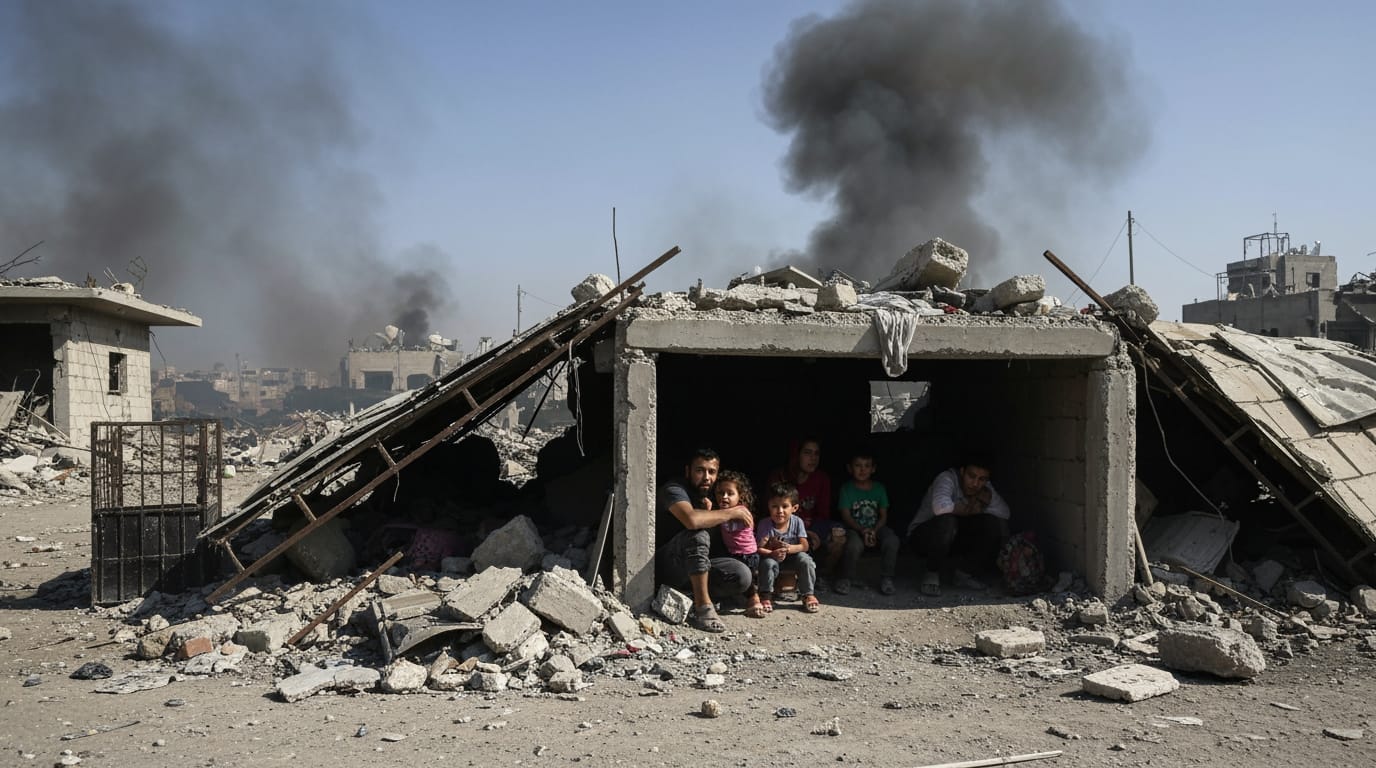
Beirut, Lebanon – The volatile border between Israel and Lebanon has once again erupted into a theater of conflict, with cross-border bombardments and escalating military actions claiming lives and devastating infrastructure. Despite decades of intermittent warfare and concerted military campaigns, the recent surge in hostilities underscores a grim reality: military pressure, however intense, remains insufficient to dismantle the deep-rooted complexities fueling this intractable conflict. The ongoing violence, intertwined with the broader regional crisis, reveals that without comprehensive political, social, and economic strategies, the cycle of destruction is destined to repeat, leaving both nations trapped in a perpetual state of instability.
A Familiar Echo of Escalation
The current phase of intense exchanges, which notably escalated following Hamas's October 2023 attacks on Israel, has drawn Lebanon deeply into a regional conflagration also involving a broader US-Israel war on Iran. Hezbollah, the powerful Lebanese Shiite political party and militant group, initiated rocket and artillery fire at Israeli positions on October 8, 2023, expressing solidarity with Palestinians. This immediately triggered retaliatory Israeli strikes, leading to widespread displacement and significant damage on both sides of the border. By early March 2026, the conflict had escalated into what is being termed the "2026 Lebanon War," marked by an Israeli invasion of southern Lebanon in 2024, deeper ground operations, and extensive airstrikes targeting Hezbollah strongholds, including in Beirut.
The toll has been devastating. As of early June 2026, Lebanon's Ministry of Public Health reported over 3,422 killed and 10,395 wounded in Lebanon since March 2 alone. Over 1.2 million Lebanese have been displaced, alongside more than 96,000 Israelis uprooted from their northern communities. Israeli forces have pushed beyond a traditional buffer zone, seizing territory and threatening further action, including strikes on Beirut's southern suburbs. While various truces and ceasefires have been announced, often brokered by international actors like the United States, they have proven fragile, with both sides frequently accusing the other of violations. This relentless military back-and-forth highlights a critical failure to achieve lasting security through force alone.
Hezbollah's Dual Identity: More Than a Militia
At the heart of why military pressure falls short lies Hezbollah's unique and formidable position within Lebanon. Formed in 1982 with Iranian funding to resist Israel's occupation, Hezbollah has evolved far beyond a mere paramilitary group. It operates as a sophisticated political party with representation in government, a vast social services network including schools and hospitals, and a powerful media presence. This deep integration into the fabric of Lebanese society, particularly within Shiite communities, means that targeting Hezbollah militarily inevitably impacts the civilian population and the state itself.
Hezbollah's military wing is considered more powerful than the conventional Lebanese Armed Forces (LAF), possessing a significant arsenal of rockets and missiles. The LAF, constrained by political fragmentation and underfunding, is often unable to confront Hezbollah or fully defend Lebanon's borders from Israeli incursions, effectively ceding the "resistance" narrative to Hezbollah. Attempts to "disarm" Hezbollah solely through military means are complicated by its popular support, especially among those who view it as a protector against Israeli aggression in the absence of a strong state. As one analyst recently noted, Lebanon "cannot be bombed into sovereignty."
Lebanon's Fractured State: An Internal Impasse
The internal political landscape of Lebanon further complicates any purely military approach to resolving the conflict. Lebanon's consociational governance system, designed to share power among its diverse religious sects, has historically led to political paralysis and deep-seated divisions. This fragmentation is not merely a byproduct of the conflict but a contributing factor to its perpetuation. Hezbollah, while a powerful actor, operates within and beyond formal state institutions, highlighting the limits of centralized authority.
The nation has been grappling with multiple crises, including an economic collapse since 2019, a political deadlock, and the aftermath of the 2020 Beirut port explosion, even before the current escalation. These systemic vulnerabilities mean that even if military campaigns degrade Hezbollah's capabilities, the underlying governance failures and sectarian tensions remain, creating fertile ground for future instability. External influence from regional powers, particularly Iran's strong backing of Hezbollah, also exploits these internal divisions, making a unified national approach to security nearly impossible.
The Catastrophic Human and Economic Toll
The recurring military confrontations exact an unbearable price on civilian populations and cripple Lebanon's already fragile economy. The recent Israeli offensive has caused immense human suffering, with reports of damage to medical facilities, critical infrastructure, and widespread displacement. Over 1.2 million people have been internally displaced in Lebanon, with entire communities along the border emptied. Children and vulnerable populations are disproportionately affected, facing disruptions to healthcare and education.
Economically, the impact is catastrophic. Poverty rates are soaring, with projections indicating that southern regions could see poverty levels reach up to 94%. Vital sectors such as agriculture and tourism have been decimated, with significant damage to farmlands and a projected loss of over $3 billion in tourism revenue. The destruction of homes, schools, and healthcare facilities not only causes immediate hardship but also erodes human capital and social cohesion, threatening long-term recovery. This cycle of destruction ensures that military gains, even if achieved, are temporary, as they undermine the very foundations necessary for a stable and peaceful future.
Beyond the Battlefield: The Imperative for a Comprehensive Solution
The current crisis vividly demonstrates that military solutions alone cannot bring lasting peace to the Israel-Lebanon border. While Israel cites legitimate security concerns for its actions, including the threat of Hezbollah's continued attacks, military escalation has repeatedly failed to achieve sustainable security. Instead, it entrenches grievances, fuels radicalization, and further destabilizes an already fragile region.
A durable resolution necessitates a multifaceted approach that addresses the political, social, and economic roots of the conflict. This includes strengthening the Lebanese state and its legitimate institutions, particularly the Lebanese Armed Forces, to enable them to assert authority across the country. Diplomatic efforts, such as the ongoing US-brokered talks between Israel and Lebanon, are crucial but must be sustained and comprehensive. Such talks need to move beyond temporary ceasefires to tackle core issues, including border demarcation and the disarmament of non-state actors like Hezbollah within a framework that ensures the security and sovereignty of both nations.
Ultimately, breaking the cycle of violence requires a commitment from all parties to political dialogue, economic reconstruction, and addressing the deep-seated humanitarian crises. Without a shift from military primacy to comprehensive engagement, the people of Israel and Lebanon will remain subject to the enduring and devastating consequences of a conflict that military pressure alone cannot resolve.