The Enduring Paradox: Why the World Can't Quit Its Fossil Fuel Habit
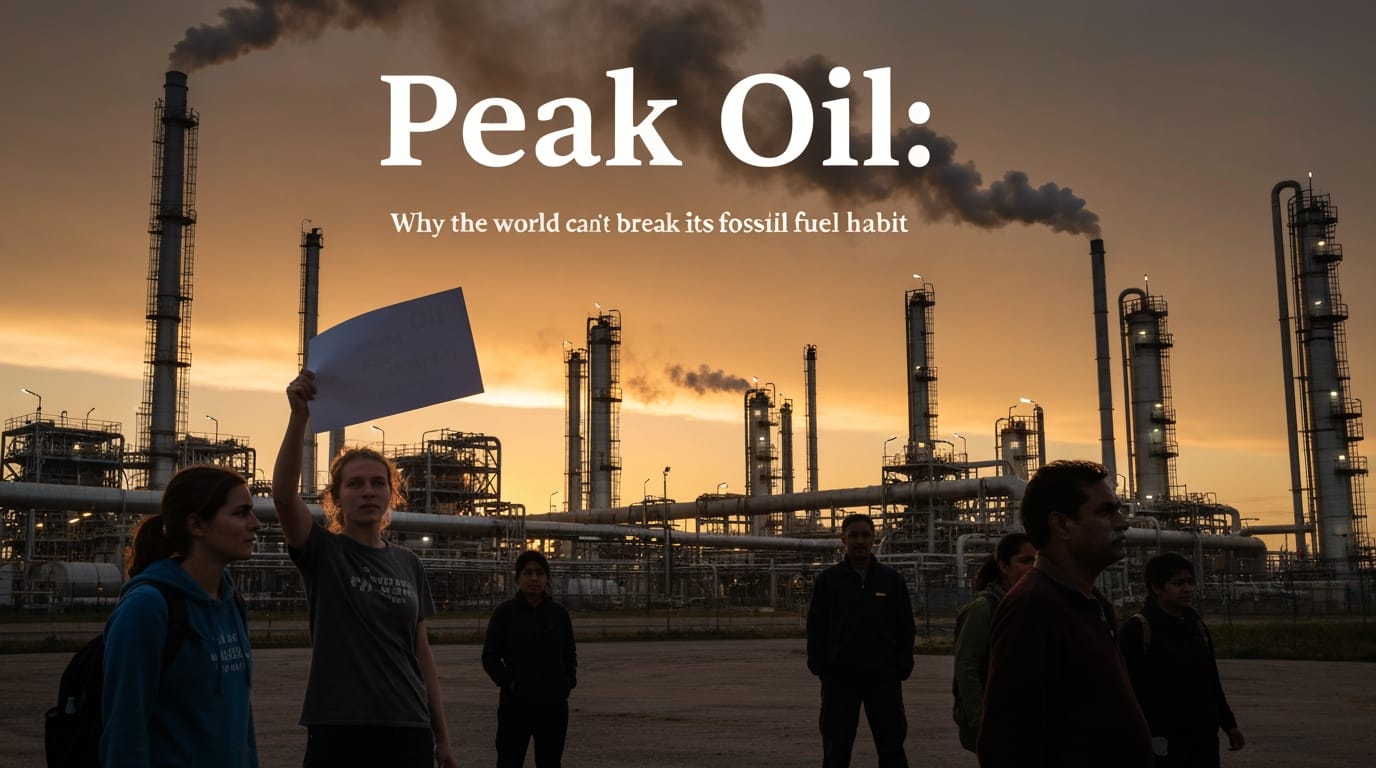
Despite escalating climate concerns and significant advancements in renewable energy technologies, the global economy remains profoundly tethered to fossil fuels. The long-debated concept of "peak oil" has evolved from an impending supply crunch to a more nuanced discussion centered on peak demand, yet the world's reliance on coal, oil, and natural gas continues to shape geopolitical landscapes, economic stability, and the very future of the planet. This persistent dependence highlights a complex interplay of historical infrastructure, economic realities, technological hurdles, and divergent national interests that collectively impede a swift transition to a greener future.
The Shifting Sands of "Peak Oil" Theory
The idea of "peak oil" first gained prominence in 1956, proposed by geophysicist M. King Hubbert. His "peak theory" posited that oil production from any given region, and eventually globally, would follow a bell-shaped curve, reaching a maximum rate before entering an irreversible decline due to resource depletion. Hubbert accurately predicted that U.S. crude oil production would peak between 1965 and 1970, which it did around 1970. For decades, fears of dwindling oil supplies fueled concerns about energy security and economic prosperity.
However, the trajectory of global oil production proved more resilient than early predictions suggested. New recovery techniques, such as hydraulic fracturing, unlocked vast unconventional reserves, pushing back projected peaks and demonstrating that production rates could increase again after periods of stagnation. Today, the conversation has largely shifted from "peak oil supply"—a scarcity-driven ceiling—to "peak oil demand," a scenario where consumption declines due to alternatives becoming more cost-effective, or due to aggressive climate policies. For instance, BP predicted in 2020 that the world had reached peak oil demand, expecting it would not recover to pre-pandemic levels due to increased electric vehicle adoption and climate action. While global oil demand saw a sharp, albeit swift, recovery post-COVID-19, its growth is projected to slow markedly in 2024 and 2025, influenced by the end of the post-pandemic mobility rebound, slower industrial growth, and the rising impact of electric vehicles. Nevertheless, global crude oil output remained stable in 2024, with increased production from the United States offsetting cuts by OPEC+ nations.
The Deep Roots of Dependence
The world's continued reliance on fossil fuels stems from a combination of deeply entrenched factors. Foremost among these is the inherent energy density of petroleum, coal, and natural gas. These fuels pack a significant amount of energy per unit of weight or volume, making them exceptionally efficient for transportation, industrial processes, and electricity generation. Alternatives like batteries currently cannot match this energy density, particularly for heavy-duty transport, aviation, and shipping.
Moreover, the existing global infrastructure represents an enormous investment built over a century. Power plants, refineries, pipelines, and distribution networks are all designed around fossil fuel use. Transitioning away from this extensive, well-established system requires a massive, time-consuming, and expensive overhaul. Governments and industries have long-standing policies and investments in fossil fuels, often bolstered by subsidies that artificially lower prices and make them more competitive than cleaner alternatives. These subsidies can stem from a desire for economic stability, to keep energy prices low for consumers and industries, and from the political influence of fossil fuel companies.
Economic factors also play a crucial role. Historically, fossil fuels have been cheaper to extract and utilize compared to many renewable energy sources, despite the rising affordability of green technologies. The ability of fossil fuel plants to provide on-demand electricity, especially during peak demand periods, offers a reliability that intermittent renewables currently struggle to achieve without significant storage solutions. For many nations, particularly those in the Global South, domestic fossil fuel production is also viewed as critical for energy security, reducing reliance on foreign energy sources and contributing to national self-sufficiency, especially in times of geopolitical instability.
The Uphill Battle of Transition
While the push for renewable energy is strong, the transition faces substantial hurdles. The intermittent nature of solar and wind power, which fluctuate with weather conditions and daylight, necessitates robust and reliable energy storage solutions. However, scaling grid storage presents numerous technological, economic, and regulatory obstacles.
High capital costs for battery energy storage systems (BESS) remain a significant barrier, despite recent price reductions. Beyond the batteries themselves, integrating these systems requires considerable investment in infrastructure modifications, power conversion, and grid integration equipment. Issues like the limited lifespan of current battery technologies, complex maintenance, and environmental concerns related to raw material extraction (such as lithium and cobalt) and disposal of spent batteries also add to the complexity.
Furthermore, grid infrastructure built for centralized fossil fuel generation often requires extensive modernization to effectively handle distributed renewable sources. This includes developing advanced grid management capabilities, transmission networks to connect remote renewable sites to demand centers, and dispatchable backup sources to compensate for intermittency. Policy and regulatory frameworks often lag behind technological advancements, creating additional challenges for market design and investment in new energy systems.
A Divided Energy Path: Developed vs. Developing Nations
The energy transition presents distinct challenges for developed and developing countries. Developed nations, characterized by robust economies and mature electricity grids, typically face a "horizontal transition." Their primary challenge is to displace existing large fossil fuel fleets with renewable sources while maintaining stable demand.
In contrast, developing countries face a "vertical energy transition." They must simultaneously build out vast quantities of renewable energy while rapidly expanding and modernizing their often-limited grid and distribution infrastructure to meet soaring electricity demand. Electricity consumption in emerging markets and developing countries is projected to grow at approximately three times the rate of developed countries. Nations like India and those in Southeast Asia are significant drivers of current and projected oil demand growth, prioritizing economic development and access to affordable energy for their growing populations.
For these countries, the transition is complicated by factors such as energy poverty, limited financial resources, and high costs of capital for renewable projects. Many are locked into fossil fuel projects due to existing infrastructure and a reliance on these fuels to power job-creating enterprises. While clean energy can help reduce poverty, the initial investment required for renewables is often prohibitive, forcing these nations to contend with a "triple penalty" of higher electricity costs, limited access to clean energy projects, and a lock-in to volatile fossil fuel markets. Despite the increasing affordability of renewable technologies, a significant gap remains between the annual investment needed for renewable energy projects in developing countries (estimated at $1.7 trillion) and what they currently receive ($544 billion in 2022).
Global Reverberations: Climate, Economy, and Geopolitics
The world's persistent reliance on fossil fuels carries profound and far-reaching implications across climate, economic, and geopolitical spheres. Environmentally, the burning of fossil fuels is the primary driver of climate change, releasing vast amounts of greenhouse gases and contributing to extreme weather events that destroy crops, impact food prices, and exacerbate health issues. Air pollution from fossil fuels is linked to cardiovascular and respiratory diseases and premature deaths globally.
Economically, continued dependence leaves nations vulnerable to volatile global commodity markets and can lead to significant fiscal pressures from energy subsidies. The full economic costs of fossil fuels, including their health and environmental impacts, are often not reflected in market prices, making their short-term affordability deceptive.
Geopolitically, the shift away from fossil fuels is reshaping global power dynamics. While it could diminish the influence of traditional oil-producing nations, it also creates new dependencies on critical minerals essential for renewable technologies, potentially shifting geopolitical competition. Energy security remains a paramount concern, as nations seek to diversify their energy sources and supply chains to mitigate risks from resource nationalism or political conflict. The uneven geographical distribution of energy resources and the complexities of energy trade continue to be at the core of geopolitical risks.
Conclusion
The path away from fossil fuels is neither simple nor uniform. The enduring habit is a legacy of decades of infrastructure development, economic policies, and the inherent energy advantages of traditional fuels. While the concept of "peak oil" has transformed from an imminent supply crisis to a more complex challenge of managing peak demand, the world continues to navigate a multifaceted energy transition. Overcoming this inertia requires not only continued technological innovation in renewables and storage but also significant international cooperation, substantial financial investment, and tailored policy frameworks that address the diverse needs and challenges of both developed and developing nations. The global community faces the intricate task of balancing energy security, economic development, and environmental imperatives to forge a sustainable energy future.