The Enduring Radiance: Unpacking Hanukkah, The Festival of Lights
Hanukkah, an eight-day Jewish "Festival of Lights," illuminates the darkest days of winter with its profound message of resilience and faith. Commemorated annually by Jewish communities worldwide, the holiday centers on the nightly lighting of a nine-branched candelabrum known as a menorah or chanukiah. Beginning on the 25th day of the Hebrew month of Kislev, which typically falls in late November or December, Hanukkah celebrates the rededication of the Second Temple in Jerusalem and the triumph of light over darkness and spirituality over material concerns. It stands as a testament to perseverance, offering a narrative that continues to resonate with generations.
A Legacy of Resistance: The Maccabean Revolt
The historical genesis of Hanukkah traces back more than 2,000 years to ancient Judea, specifically to events occurring in 164 BCE. During this period, the region was under the rule of the Seleucid Empire, led by Antiochus IV Epiphanes. Antiochus sought to impose Hellenistic culture and religion upon the Jewish people, desecrating the holy Second Temple in Jerusalem and forbidding Jewish religious practices. This religious persecution sparked a fierce resistance movement led by a priestly family known as the Hasmoneans or Maccabees.
Under the leadership of Judah Maccabeus, a small but determined group of Jewish fighters waged a three-year struggle against the formidable Seleucid army. Against overwhelming odds, the Maccabees emerged victorious, reclaiming Jerusalem and the Temple. Following their triumph, the Temple was purified, cleansed, and a new altar was installed. This pivotal event of rededication took place on the 25th of Kislev, and Judah Maccabeus proclaimed that this dedication should be celebrated annually for eight days. The Hebrew word "Hanukkah" itself means "dedication," directly referencing this monumental act of reclaiming and purifying the sacred space.
The Miraculous Oil: Foundation of the Eight-Day Celebration
While the historical account of the Maccabean victory is central, the enduring eight-day duration of Hanukkah is famously tied to a miraculous event documented in the Talmud, centuries after the initial revolt. According to this narrative, upon reclaiming the Temple, the Maccabees sought to relight the menorah, the seven-branched candelabrum that was a perpetual light in the Temple. They discovered only one small cruse of ritually pure olive oil, enough to fuel the menorah for a single day.
However, by divine intervention, this meager supply of oil miraculously burned for eight full days and nights. This extraordinary event provided sufficient time for new, ritually pure oil to be prepared and brought to the Temple. It is this "miracle of the oil" that cemented Hanukkah's identity as the "Festival of Lights" and established the eight-day period of celebration observed to this day.
Rituals and Traditions: Illuminating the Holiday
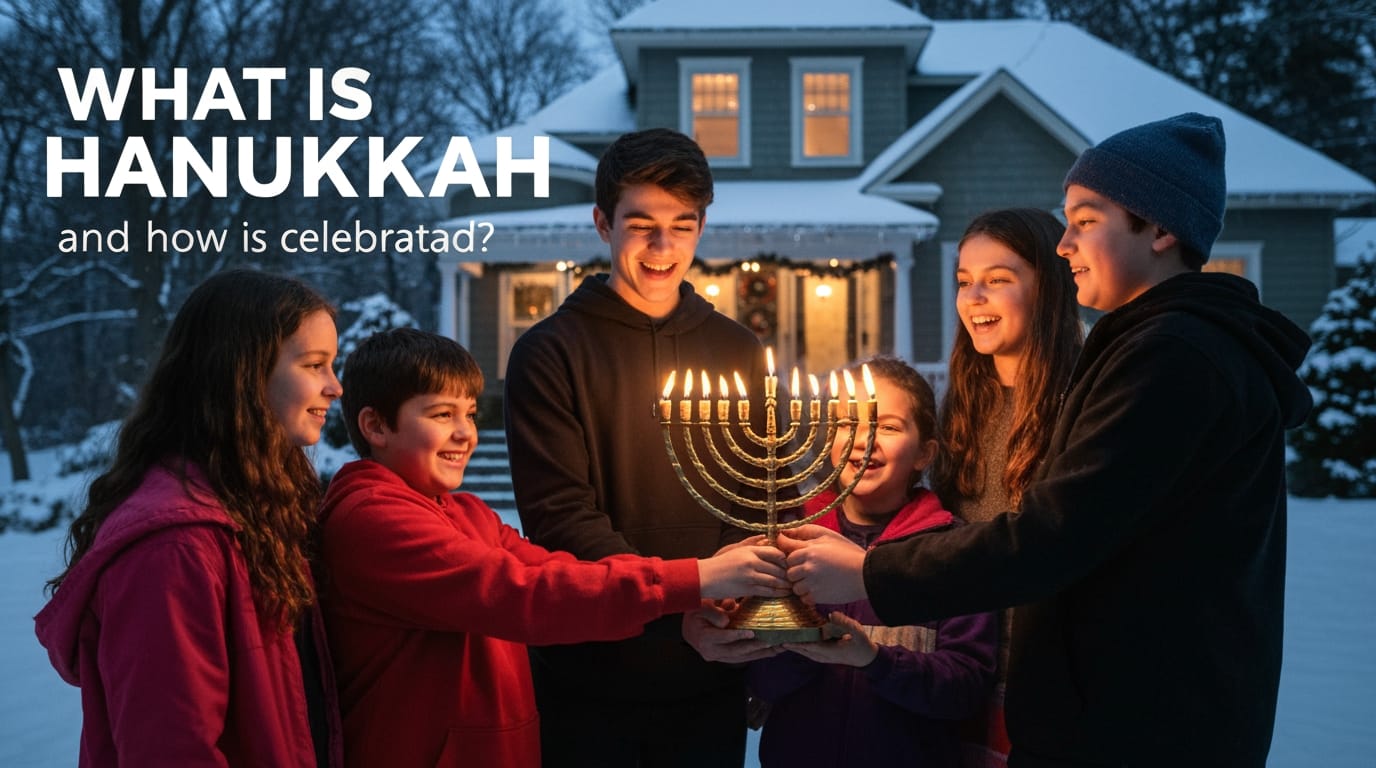
The celebration of Hanukkah is rich with distinctive customs and rituals, all revolving around the core themes of light, miracles, and religious freedom. The most prominent tradition is the nightly lighting of the chanukiah, the special nine-branched candelabrum unique to Hanukkah. Each night, an additional candle is lit using the shammash, or "attendant" candle, which typically sits slightly apart from the other eight. By the eighth and final night, all eight candles are ablaze, filling homes with light. Blessings are recited before the lighting, and traditional songs are often sung afterward. Many families place their lit menorah in a window or doorway, symbolizing the "publicizing of the miracle" to the world. In recent decades, large public menorah lightings have become common in city centers globally, further amplifying this message.
Food plays a significant role in Hanukkah celebrations, with a particular emphasis on dishes prepared in oil, commemorating the miracle of the oil. Popular culinary delights include latkes, savory potato pancakes, and sufganiyot, sweet jelly-filled doughnuts.
Another cherished tradition is playing the dreidel, a four-sided spinning top. Each side bears a Hebrew letter, forming an acronym for "Nes Gadol Hayah Sham," meaning "A great miracle happened there" (referring to the miracle in ancient Israel). Children often play for gelt, which are chocolate coins, often wrapped in gold foil, symbolizing the monetary gifts historically given to teachers and the poor during the holiday. While gift-giving has become a more prominent feature of modern Hanukkah, particularly in North America, its original intent was often to provide charity and reinforce Jewish identity.
Modern Resonance: Identity, Community, and Hope
Hanukkah's narrative extends beyond its historical and religious origins, carrying significant cultural weight in contemporary society. Especially in North America, where it often coincides with other major winter holidays, Hanukkah has grown in cultural importance, serving as a vital period for families to gather and for Jewish individuals to strengthen their connection to their heritage. The holiday provides an opportunity to assert Jewish distinctiveness and celebrate communal identity.
Across the globe, from Israel, where it is a national holiday, to Jewish communities in diverse countries, the core message of Hanukkah remains consistent: the triumph of enduring faith over oppression, the power of a few against many, and the enduring nature of hope. It reaffirms the ideals of Judaism, encouraging perseverance and continuity in the face of challenges. The lighting of the menorah each night serves as a poignant reminder that even a small flame can dispel considerable darkness, symbolizing the lasting impact of courage, dedication, and miraculous intervention on the course of history and the human spirit.