The Evolving Farewell: From Ancient Rites to Green Goodbyes
In an era defined by personalization and a burgeoning environmental consciousness, the traditional funeral is undergoing a profound transformation. Modern farewells are increasingly diverging from somber, standardized rituals, embracing both extraordinary expressions of individuality and sustainable practices that minimize ecological impact. This shift reflects a deeper societal change, where end-of-life decisions are becoming as diverse and values-driven as life itself.
Echoes of the Past: Extraordinary Farewells Across Cultures
Humanity has long honored its dead with customs that range from the deeply spiritual to the strikingly unconventional. These practices, often rooted in ancient beliefs and cultural narratives, highlight the universal human desire to commemorate a life and guide the departed into the afterlife.
In Tibet, for instance, the practice of "sky burial" or jhator reflects Buddhist beliefs in the transmigration of the soul and the impermanence of the body. Here, the deceased are placed on mountaintops to be consumed by vultures, a ritual seen as an act of generosity and a return of the body to nature. Similarly, in Madagascar, the Famadihana, or "turning of the bones," sees families exhuming ancestors every few years to rewrap them in fresh shrouds and dance with their remains to live music. This joyous ceremony strengthens family bonds and accelerates the spirit's journey to the afterlife.
Other remarkable customs include Ghana's "fantasy coffins," where caskets are crafted into elaborate shapes—like cars, animals, or tools—to symbolize the deceased's profession, hobbies, or social status, turning funerals into vibrant celebrations of personality. In New Orleans, the iconic jazz funeral blends solemn hymns with lively jazz music, beginning with a slow, mournful procession and culminating in an upbeat celebration of life. South Korea, facing limited burial space, has seen a rise in cremation with ashes being compressed into colorful "burial beads" that families can keep as mementos. These diverse traditions underscore a universal impulse to honor the deceased in ways that are meaningful to their community and beliefs.
The Green Awakening: A Call for Sustainable Farewells
Parallel to the rise of personalized ceremonies, a significant movement towards eco-friendly funerals is reshaping the death care industry. Driven by growing environmental awareness, individuals are increasingly seeking end-of-life options that align with their commitment to sustainability. This trend responds to the considerable environmental footprint of traditional burial and cremation practices. For example, conventional burials in the U.S. annually introduce millions of gallons of embalming fluid (including formaldehyde), millions of board feet of hardwoods, and thousands of tons of steel, copper, bronze, and concrete into the earth. Traditional cremation, while seemingly a cleaner alternative, releases mercury and requires substantial energy, equivalent to driving thousands of miles per cremation.
The demand for greener options is evident: surveys indicate that over 90% of people consider the environmental impact of a funeral important, and a high percentage would consider a green funeral if offered. The global green funerals market was valued at over $570 million in 2021 and is projected to grow significantly.
Pioneering Eco-Friendly Choices
Several innovative and sustainable alternatives are gaining traction:
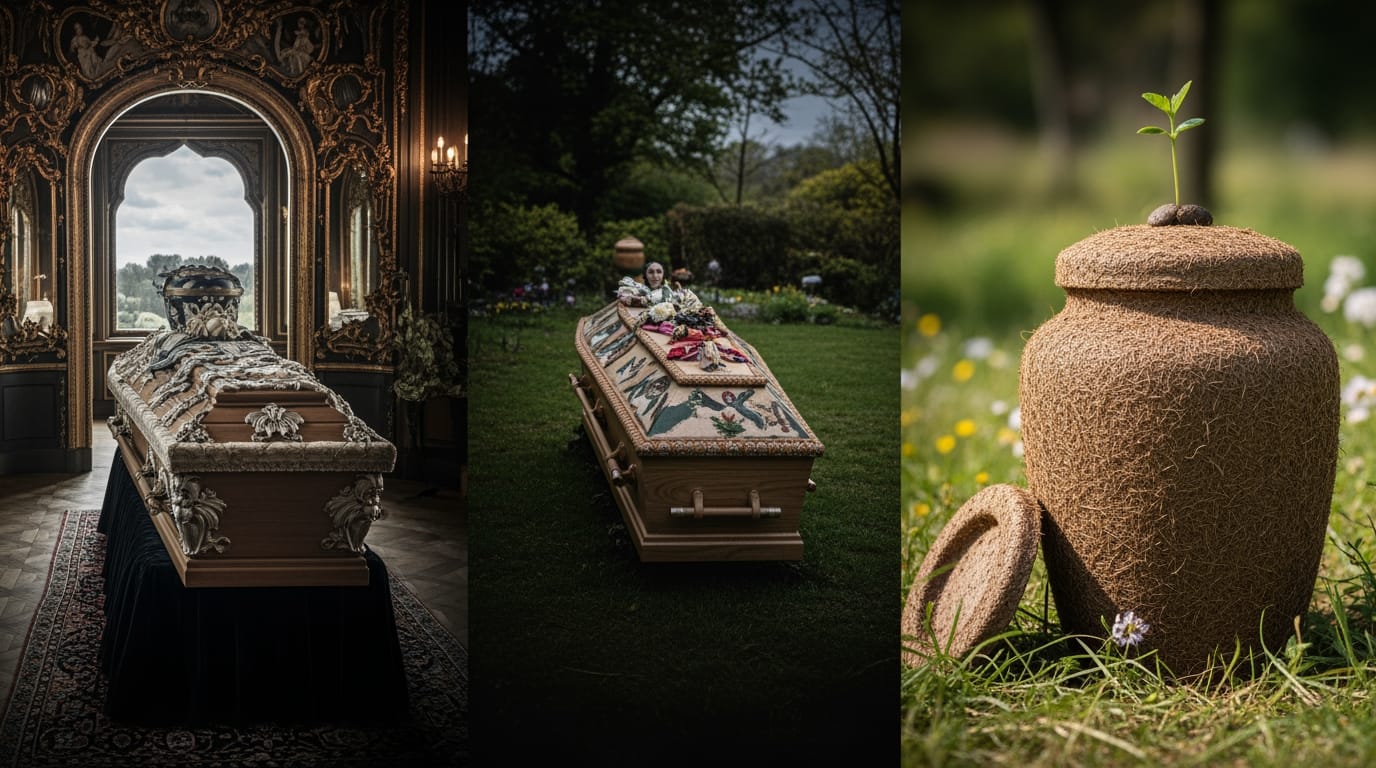
- Green Burials: These prioritize natural decomposition by avoiding embalming chemicals, metal caskets, and concrete vaults. Bodies are interred in biodegradable caskets, shrouds, or simple wooden coffins in dedicated green cemeteries that often double as natural preserves, fostering wildlife habitats. As of November 2024, there are 470 green burial cemeteries in the U.S. and Canada.
- Aquamation (Alkaline Hydrolysis): This water-based alternative to flame cremation uses an alkaline solution to gently break down the body, producing fewer emissions and consuming less energy. The process results in sterile bone ash and nutrient-rich liquid.
- Human Composting (Natural Organic Reduction): Involving the placement of the body in a vessel with organic materials like wood chips and straw, this method transforms remains into nutrient-rich soil over several weeks. This soil can then be used to nurture plants and trees. Human composting accounted for the largest share in the green funerals market in 2021 and is now legal in several U.S. states.
- Biodegradable Products: For those choosing cremation, biodegradable urns made from materials like sand, paper, or salt dissolve naturally in soil or water. Some companies even offer reef ball memorials, incorporating ashes into artificial reefs to support marine life. Sustainable coffins and shrouds are also made from rapidly renewable materials like bamboo, wicker, or cardboard, free from harmful chemicals.
Technology's Role in Modern Farewells
Beyond ecological concerns, technology is also transforming how we mourn and remember. Modern funeral homes increasingly offer digital innovations that enhance personalization and accessibility. These include memorial tribute videos and slideshows, livestreaming of services for distant attendees, and online funeral planning tools. Artificial intelligence is also beginning to play a role, assisting with planning and personalization, while virtual memorials provide a lasting online space for remembrance.
A Future of Meaningful Legacies
The funeral industry is at a crossroads, navigating between deeply ingrained traditions and the accelerating demands for personalization and sustainability. From extraordinary cultural rites that celebrate life with unique flair to eco-conscious choices that honor both the deceased and the planet, the way we say goodbye is becoming increasingly diverse and reflective of individual values. These shifts are not merely trends but represent a fundamental re-evaluation of how societies approach death, recognizing it not just as an end, but as an opportunity to leave a meaningful and responsible legacy.