The Lingering Echo: Russian Language Persists in Kyiv Schools Amidst War and Ukrainization
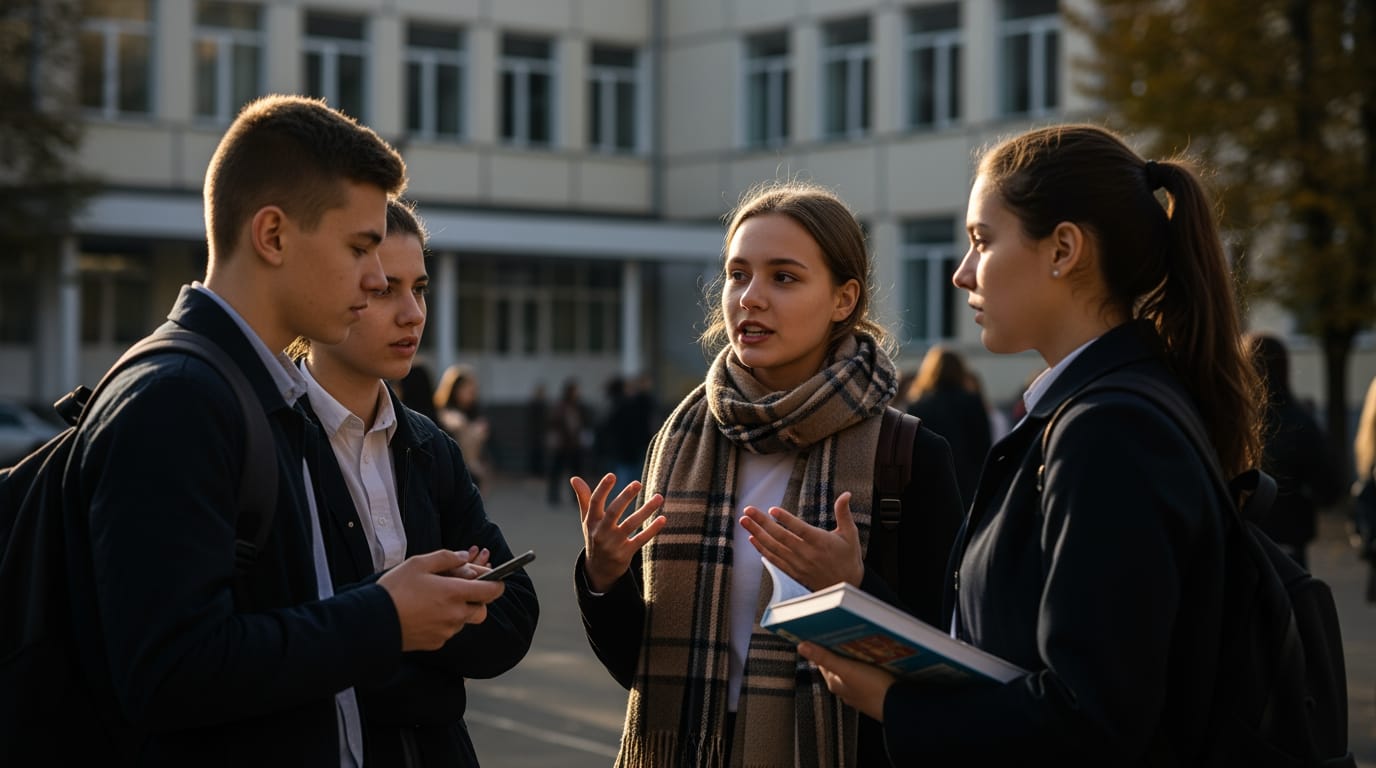
KYIV – More than two and a half years since Russia's full-scale invasion intensified efforts to solidify Ukrainian identity, a complex linguistic reality endures within the schools of Kyiv. Despite intensive government initiatives to promote Ukrainian language use and a surge of national consciousness, Russian continues to be frequently heard in school corridors and playgrounds, presenting a nuanced picture of identity, ingrained habit, and cultural transformation in a nation at war. This persistence highlights the deep-rooted nature of language in society and the formidable challenges of rapid linguistic shifts, even under extraordinary circumstances.
A Deep-Seated Linguistic Legacy
The prevalence of Russian in Kyiv's educational spaces is a testament to a long and intricate history. For generations, particularly during the Soviet era, Russian held a dominant position in daily life, administration, and education across much of Ukraine, including its capital. This historical hegemony established deep linguistic habits within families, shaping the mother tongue for many residents. Even before the 2022 invasion, many Kyiv families were either Russian-speaking or bilingual, a legacy that continues to influence language patterns at home and, consequently, among students. This makes Russian a natural language of communication for many children, a linguistic foundation that does not simply vanish overnight. Historically, Ukrainian speakers in Kyiv even faced discrimination, and many schools primarily taught in Russian following the dissolution of the Soviet Union.
The Resurgence of Ukrainian: Policy and Patriotism
In response to ongoing Russian aggression, and building on efforts since 2014, Ukraine has significantly intensified its "Ukrainization" policies, aiming to strengthen national identity through language promotion. Official education policy now unequivocally mandates Ukrainian as the primary language of instruction across all state schools. Legislative measures, notably the 2017 education law, made Ukrainian the required language of study from the fifth grade upwards, with further updates in 2019 and 2020 reinforcing its mandatory use in educational settings. These policies reflect a deliberate national strategy to decolonize Ukraine's linguistic landscape and assert its sovereignty against a backdrop of Russian attempts to eradicate Ukrainian language and culture in occupied territories.
The full-scale invasion in February 2022 spurred a dramatic increase in the adoption of Ukrainian. In 2022 alone, there was a hundredfold increase in classes, schools, and students switching to Ukrainian, a trend that has continued to grow fivefold since. For many, the decision to speak Ukrainian became an act of patriotism and resistance against the aggressor. Yet, the reality in Kyiv schools shows the complexity of translating national policy and patriotic fervor into universal everyday linguistic practice.
Classroom Walls and Playground Talk: Everyday Realities
Despite official mandates, the distinction between formal classroom instruction and informal student interaction remains stark. Teachers in Kyiv have observed that while lessons are conducted in Ukrainian, students frequently switch to Russian during breaks and other informal exchanges. A recent survey of Kyiv schools highlighted this phenomenon, revealing that 66% of students still reported speaking Russian in class, and a striking 82% used it during breaks.
Several factors contribute to this persistence. Foremost among them is the home environment, where Russian continues to be the dominant language for many families. Parents play a crucial role, and for some, preserving Russian at home is seen as maintaining family linguistic traditions, while they expect schools to provide Ukrainian language education.
The influence of Russian-language media and pop culture also cannot be overstated. The pervasive presence of Russian-language content on platforms like YouTube, social media, and online gaming environments means that many young Ukrainians are consistently exposed to and interact in Russian outside of school. This creates a powerful informal linguistic ecosystem that competes with formal educational efforts. The perceived lack of engaging Ukrainian-language content for children further exacerbates this issue.
Moreover, the conflict has led to significant internal migration. Kyiv has become a refuge for many internally displaced persons (IDPs) from Ukraine's eastern and southern regions, areas with historically higher proportions of Russian speakers. The integration of these students into Kyiv schools inevitably brings with it their existing linguistic patterns, contributing to the continued presence of Russian in student interactions. This influx is identified by officials, such as Ukraine's State Language Protection Commissioner Olena Ivanovska, as a reason for a reported negative trend in Kyiv, where the proportion of students using only Ukrainian has fallen by 10 points to 17%.
Navigating Identity and Charting a Linguistic Future
The ongoing linguistic dynamics in Kyiv's schools underscore a complex interplay between personal habit, family heritage, national policy, and geopolitical realities. The continued use of Russian among students does not necessarily equate to a lack of patriotism or disloyalty to Ukraine. Instead, it often reflects deeply embedded linguistic practices and the complexities of identity formation during a period of immense national trauma and transformation.
Ukrainian authorities are actively working to address the challenges. A bill registered in October 2024 aims to establish a clear definition of a "Ukrainian-language learning environment" that extends beyond classroom lessons to include breaks and school activities. While this bill does not foresee punitive measures against students or parents for speaking Russian, it emphasizes the importance of a consistent state policy and the need for high-quality Ukrainian-language content to foster a comprehensive Ukrainian-speaking environment outside formal lessons. Parents are also being encouraged to recognize the advantages their children will have if their primary language is Ukrainian when they start school.
Ultimately, Kyiv's educational institutions serve as a microcosm of Ukraine's broader linguistic evolution. The transition away from the historical dominance of Russian is a profound, generational undertaking, marked by both rapid progress and persistent challenges. It is a process that balances the imperative of national identity and linguistic sovereignty with the practical realities of a bilingual society grappling with war, displacement, and the slow unwinding of centuries of influence. The journey toward a fully Ukrainian-speaking educational environment in Kyiv is ongoing, reflecting the nation's broader struggle to redefine its cultural and linguistic future.


