The Looming Storm: How Renewed Conflict Could Empower Yemen's Houthis Amidst Fragile Peace
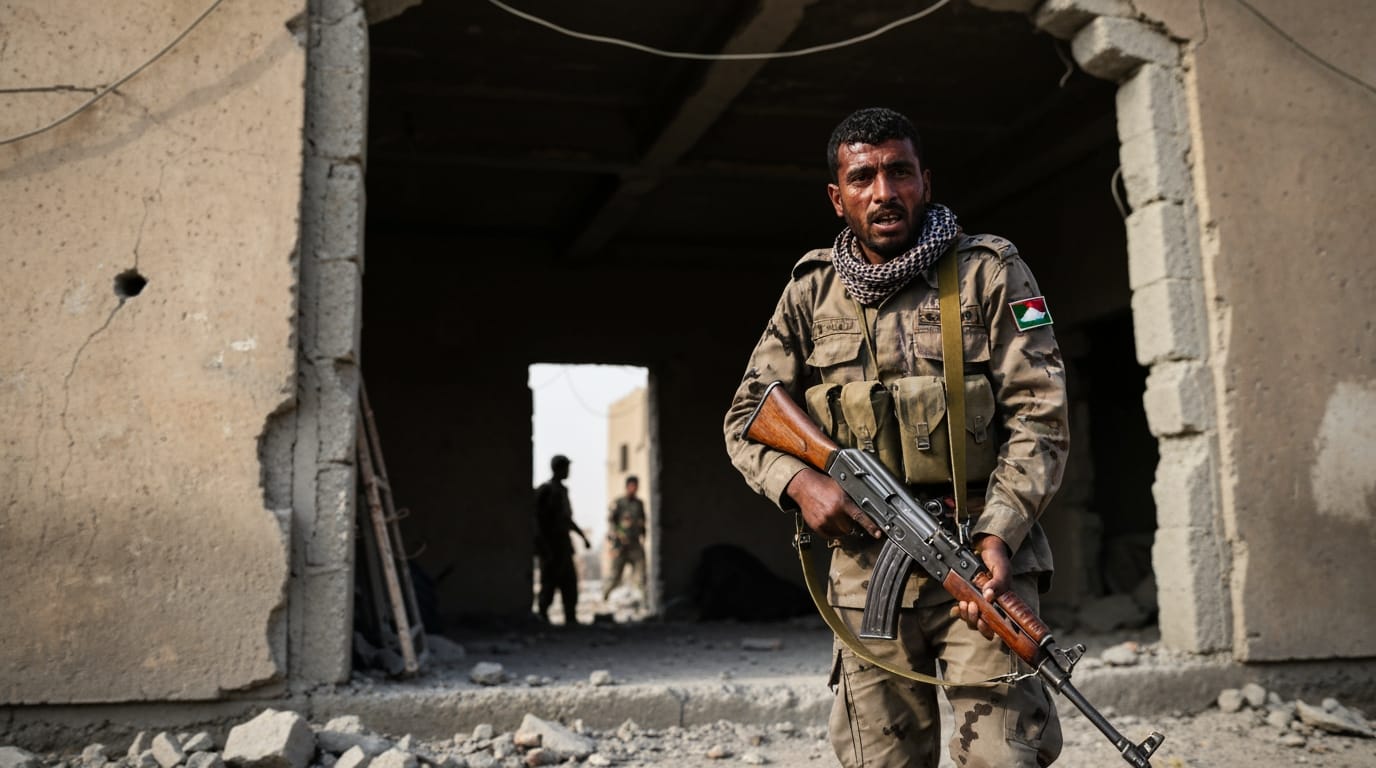
SANAA, Yemen – Yemen teeters on the brink of renewed widespread conflict, a dangerous pivot that could unexpectedly solidify the strategic position of the Ansar Allah movement, commonly known as the Houthis. Despite years of devastating civil war and a precarious, informal ceasefire, recent regional developments and stalled peace talks suggest that a return to open hostilities might offer the Houthis significant political, military, and economic advantages, further entrenching their control over northern Yemen and reshaping the geopolitical landscape of the Arabian Peninsula. This comes as international efforts to secure a lasting peace remain elusive, and the humanitarian crisis, already one of the world's worst, threatens to spiral deeper into catastrophe.
A Peace Built on Shifting Sands
The conflict in Yemen, ignited in 2014 when Houthi insurgents seized the capital Sana'a, has pitted the Iran-aligned group against Yemen's internationally recognized government, backed by a Saudi-led coalition since 2015. After years of intense fighting, a UN-brokered truce in April 2022 offered a fragile respite, though it officially expired in October of that year. Despite its formal lapse, a de-facto ceasefire largely persisted into 2023, accompanied by peace talks between the Houthis and Saudi Arabia, mediated by Oman. These negotiations, also supported by UN efforts, aimed for a more permanent political settlement. However, concrete progress has been slow, and trust between the parties remains low.
Key sticking points in negotiations include the complete reopening of Houthi-controlled ports and Sana'a airport, post-conflict reconstruction efforts, and a timeline for the withdrawal of foreign forces from Yemen. The Houthis have consistently demanded an end to Saudi military intervention and financial support for their rivals, seeing these as preconditions for a durable peace. Compounding the complexity are internal divisions among anti-Houthi factions, notably the Southern Transitional Council (STC), a UAE-backed separatist group that has renewed calls for an independent southern Yemeni state, further complicating peace prospects. This fragmented political landscape means any agreement would require navigating a complex web of competing interests and unresolved grievances.
The Strategic Calculus of Resumed Hostilities
Should peace efforts collapse and fighting reignite, the Houthis could find themselves in a strategically advantageous position. Their resilience against years of airstrikes from the Saudi-led coalition, and more recently from US and UK forces, has demonstrated their formidable military capabilities, which have been bolstered by Iranian support.
One significant benefit for the Houthis would be the potential to consolidate their military and political dominance. They currently control northern Yemen, including Sana'a, and territories where an estimated 60% to 65% of the Yemeni population resides. Renewed conflict could allow them to further entrench this control and enhance their legitimacy, portraying themselves as a resistance force. Crucially, military offensives, particularly around the oil-rich Marib province, could yield substantial economic gains. Taking Marib, which has been a Houthi objective in past failed offensives, would grant them control over crucial oil and gas resources, significantly expanding their economic capabilities and delivering a crippling blow to the internationally recognized government.
Economically, the Houthis have already demonstrated their capacity for leveraging control. They impose comprehensive taxation and regulation on imports entering their territory, effectively creating an economic stranglehold. They have also used economic warfare against the internationally recognized government, for example, by blockading oil and gas exports and seizing a share of customs revenue. Renewed fighting could also provide opportunities for further illicit trade and revenue generation in a wartime economy.
Furthermore, the Houthis have proven adept at exploiting divisions within the anti-Houthi camp. The growing rifts between Saudi Arabia and the UAE, who previously led the coalition against them but now support different Yemeni factions, present an opportunity for the Houthis to weaken their adversaries from within. Their leadership has explicitly monitored such rifts, seeking to exploit them to their advantage.
The Red Sea Factor: Amplified Leverage
The Houthis' recent actions in the Red Sea have fundamentally altered their regional and international standing, providing them with unprecedented leverage. Since late 2023, they have launched numerous missile and drone attacks on commercial vessels, claiming solidarity with Palestinians in Gaza. These attacks have created a new form of global economic disruption, forcing major shipping companies to reroute vessels around Africa, leading to increased shipping costs and extended transit times of 7-14 days. The economic impact has been particularly severe for European nations and Egypt, which relies heavily on Suez Canal transit fees.
The US and UK, in response to these attacks, launched airstrikes against Houthi targets in Yemen starting January 2024. However, these strikes have largely failed to deter the Houthis, who have instead intensified and expanded their maritime operations. Paradoxically, this military response has inadvertently bolstered the Houthi's propaganda, allowing them to portray themselves as champions of the Palestinian cause and a legitimate resistance force against global powers. This narrative has resonated deeply, leading to widespread recruitment and increased domestic support, even amidst internal economic challenges in Houthi-controlled areas.
This newfound ability to disrupt global trade provides the Houthis with significant leverage at any future negotiation table. They have already used this to demand a ceasefire in Gaza and an end to the blockade as preconditions for halting their maritime attacks. Should wider conflict resume in Yemen, their capacity to influence international shipping lanes will remain a powerful tool to pressure regional and international actors for political concessions.
The Unseen Cost: Humanitarian Catastrophe
While the Houthis may perceive strategic benefits from renewed conflict, the overriding reality for Yemen remains an unimaginable humanitarian disaster. The civil war has already claimed an estimated 377,000 lives from direct and indirect causes between 2014 and 2021. Today, 21.6 million Yemenis require humanitarian assistance, and over 4.5 million remain displaced.
Yemen is one of the most food-insecure countries globally, with more than 17 million people experiencing hunger, a figure projected to rise to over 18 million by February 2026. The economy has collapsed, with hyperinflation making basic goods unaffordable for many, pushing millions into dependency on humanitarian aid. Renewed fighting would inevitably exacerbate this suffering, hindering aid delivery, destroying critical infrastructure, and further destabilizing a nation already on its knees. The UN Special Envoy for Yemen has repeatedly warned that regional turmoil erodes peace prospects and that further violence will only worsen the humanitarian situation, risking the loss of any opportunity for a political settlement.
Conclusion: A Perilous Path Forward
The situation in Yemen is a stark reminder of the complex and often counterintuitive dynamics of protracted conflict. While a return to full-scale fighting would unleash unimaginable suffering on the Yemeni population, the Houthis' strategic calculations suggest they could emerge from such a scenario with enhanced political legitimacy, consolidated territorial control, and greater leverage on the international stage. Their demonstrated military resilience, coupled with the potent weaponization of maritime trade routes, has reshaped their negotiating power and influence.
However, any perceived Houthi gains would be built upon the continued destruction of their own nation and the deepening despair of its people. The international community, weary of the conflict yet entangled by the Red Sea crisis, faces the immense challenge of preventing a full-scale conflagration while urgently addressing the humanitarian catastrophe. The path to a stable, peaceful Yemen remains fraught with obstacles, complicated by regional rivalries and the ever-present threat of escalating violence that, for the Houthis, may offer a perilous route to strategic advantage.


