The Lucrative Underworld of the Global Sea Cucumber Trade
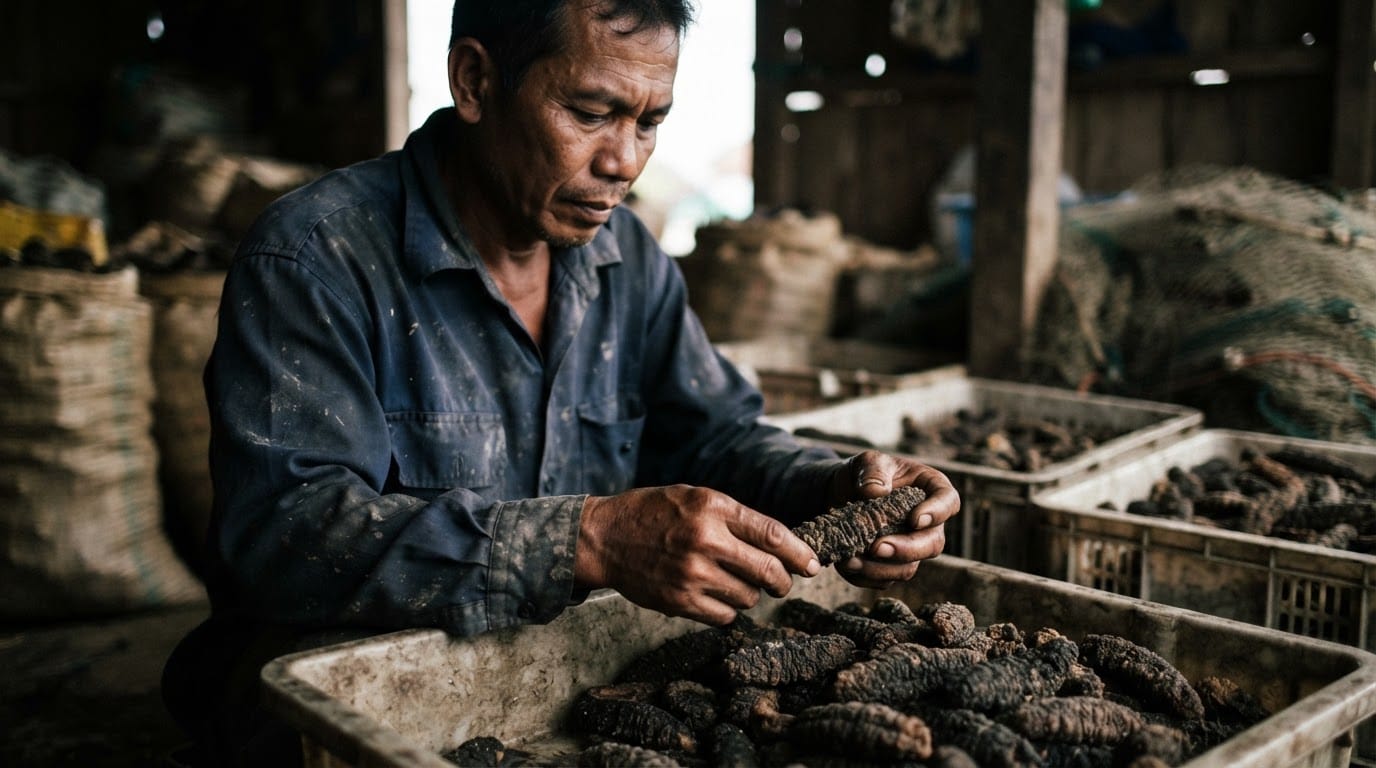
Across coastal waters from the Gulf of Mexico to the coral reefs of the Indian Ocean, a quiet gold rush has turned an unassuming marine creature into one of the most trafficked wildlife commodities on Earth. Sea cucumbers—cylindrical, slow-moving echinoderms that crawl along ocean beds—are fueling a black market valued in the hundreds of millions of dollars. Spurred by surging luxury demand and soaring prices in East and Southeast Asia, international syndicates, local poachers, and organized crime networks have stripped seabeds bare, transforming a niche seafood delicacy into an environmental and geopolitical flashpoint.
A Delicate Ecological Giant Sells for Gold
Sea cucumbers, known in culinary trades as bêche-de-mer or trepang, have been prized for centuries in Chinese cuisine and traditional medicine. Historically served at banquets to signify prosperity and believed to offer medicinal benefits, the dried animals command extraordinary prices. Rare and high-end species can sell for hundreds to upwards of $3,000 per kilogram in retail hubs such as Hong Kong and mainland China.
Biologically, these invertebrates act as the vacuum cleaners of the sea. By ingesting sediment, digesting organic debris, and excreting clean sand along with basic compounds like calcium carbonate, they cycle vital nutrients through benthic ecosystems and buffer coral reefs against ocean acidification. Their ecological value makes their sudden removal catastrophic for marine health. Because they move slowly and possess virtually no natural defenses, harvesting them requires little more than a pair of goggles, a net, and opportunistic access to the water.
Over the past two decades, nearshore populations in traditional harvesting grounds collapsed. With roughly 70 percent of exploited global fisheries now overdrawn or depleted, the supply deficit triggered a dramatic surge in black market values, pulling international criminal networks into coastal waters worldwide.
Organized Crime Expands Its Portfolio
The high profit margins and comparatively light legal penalties have attracted sophisticated transnational criminal organizations. In Mexico, major drug cartels have integrated wildlife trafficking into their portfolios. In the Yucatán Peninsula and the waters off Baja California, illicit harvesting quickly morphed from informal poaching into an organized pipeline. Criminal networks oversee harvesting, operate covert processing facilities to boil and dry the product, and falsify customs declarations to move shipments across the United States border bound for Asia.
Federal investigations have revealed the scale of these networks. Between 2011 and 2021, Mexican and U.S. authorities intercepted more than 100 metric tons of illegally harvested sea cucumbers, representing an estimated street value exceeding $29 million. High-profile prosecutions in California uncovered commercial shipping operations laundering tens of millions of dollars in Mexican sea cucumbers disguised as legal seafood imports. In several Mexican coastal towns, the sudden influx of illicit wealth created boomtown conditions, followed quickly by localized violence, extortion, and the near-total exhaustion of wild stocks.
Farther east, in the waters of the Palk Strait and Gulf of Mannar dividing India and Sri Lanka, a parallel crisis unfolds daily. While India banned all commercial sea cucumber harvesting and trade in 2001 under its Wildlife Protection Act, neighboring Sri Lanka maintains a regulated permit system for certain species. Smugglers capitalize on this regulatory gap, using high-speed wooden boats to move nightly catches across the narrow maritime border into Sri Lankan territory, where illegally harvested Indian catches are laundered into the licit export market.
The Human Toll on Vulnerable Coastal Workers
Behind the sophisticated logistics lies an exploited workforce drawn largely from economically vulnerable artisanal fishing communities. As shallow stocks disappear, divers must venture into deeper waters, often utilizing crude and dangerous equipment.
In parts of Latin America, Africa, and South Asia, divers rely on jury-rigged surface compressors—frequently repurposed car air pumps—pumping unfiltered air through long garden hoses. Divers dive without decompression computers, depth gauges, or formal training. The consequences are severe: decompression sickness, permanent paralysis, and fatal embolisms are commonplace in diving villages.
Economic pressures push communities into these hazards. With fish stocks declining from industrial overfishing and climate disruptions, impoverished fishers often see poaching as one of the few livelihoods capable of sustaining families. Yet the primary financial windfalls rarely remain in local hands. Local divers generally receive only a tiny fraction of the retail price, with the bulk of profits retained by intermediaries, corrupt officials, and international exporters.
The Patchwork Fight for Enforcement
Combating the illegal harvest presents substantial hurdles for maritime and customs authorities. Marine boundaries are notoriously difficult to patrol, and enforcement agencies often lack the fuel, radar infrastructure, and patrol vessels necessary to intercept clandestine boats operating at night.
Compounding the problem is the ease of concealment. Once sea cucumbers are gutted, boiled, and dried, they shrink considerably, resemble generic dried goods, and are exceptionally difficult to identify by non-specialist customs agents. A shipment can easily be labeled as dried fish maw or squid, slipping through container terminals without detection.
International treaties have slowly begun responding to the threat. The Convention on International Trade in Endangered Species of Wild Fauna and Flora (CITES) has progressively added vulnerable sea cucumber species to Appendix II, requiring exporting nations to prove catches are legally and sustainably sourced. However, enforcement remains uneven. Differences in legal status between neighboring states create natural hubs for laundering, while weak penalties mean that poachers and traffickers often view occasional fines simply as the cost of doing business.
Sustaining the Ocean's Foundation
The unchecked boom in sea cucumber smuggling underscores how consumer demand thousands of miles away can disrupt remote ocean environments and destabilize vulnerable human communities. Marine scientists warn that the loss of these animals could permanently reduce the resilience of coral reefs, accelerating reef death and eroding local fishing industries entirely.
Curbing the illicit trade requires coordinated international policy, including harmonized fishery regulations across borders, greater investment in maritime monitoring, and stiffer criminal penalties for transnational wildlife syndicates. Simultaneously, developing sustainable coastal aquaculture and providing alternative livelihoods remain essential to relieving pressure on wild stocks. Until the incentives that drive this black market are dismantled, the ocean floor will continue to be vacuumed clean, leaving fragile ecosystems and dependent communities to bear the ultimate cost.