The North Pole Under Threat: Can the Spirit of Winter Endure a Melting World?
The iconic image of the North Pole, a pristine expanse of ice and snow, stands as a global symbol of winter wonder, adventure, and the enduring spirit of festive traditions. However, this critical region is undergoing a rapid and profound transformation, driven by escalating global temperatures. Scientific projections paint a stark picture: the Arctic, warming at a rate three times faster than the global average, is facing an unprecedented loss of its vital ice cover, raising urgent questions about the future of its ecosystems, Indigenous communities, and the very concept it represents to the world. The changes unfolding at Earth's northernmost point are not merely geographical shifts; they represent a fundamental challenge to the environmental balance of the planet and the cultural narratives deeply entwined with a frozen Arctic.
The Retreating White Frontier: A Rapidly Disappearing Icescape
The most immediate and visible manifestation of climate change in the Arctic is the dramatic decline of its sea ice. Since satellite observations began in 1979, NASA has recorded approximately a 13% loss of sea ice per decade in September, the annual minimum. Over the past three decades, the oldest and thickest ice in the Arctic has diminished by a staggering 95%. Recent studies, using advanced climate models, indicate that the Arctic Ocean could become practically ice-free in September as early as the 2030s, or at best by the 2050s, even if significant cuts in emissions are achieved. This accelerated melt is fueled by a destructive feedback loop known as the albedo effect: as highly reflective snow and ice disappear, darker ocean surfaces are exposed, absorbing more solar energy and further intensifying warming. The Arctic's role as the Earth's "refrigerator," reflecting heat back into space, is significantly compromised by this process, leading to higher global temperatures and more extreme weather events worldwide.
Beyond sea ice, snow cover is also shrinking at an alarming rate. The duration of Arctic snow cover has decreased by approximately 3-5 days per decade, with earlier spring melts and later onset of snow. In some areas, June snow cover has decreased by half since 1967. These changes impact crucial snow properties, leading to unseasonal thaws and rain-on-snow events that further alter the delicate Arctic ecosystem.
Reindeer in Peril: A Symbolic Loss
The environmental upheaval in the Arctic poses a direct threat to its unique wildlife, none more emblematic of the region's spirit than the reindeer. These creatures, known as caribou in North America, are an integral part of the Arctic ecosystem and cultural heritage. However, their populations are experiencing significant declines, having already fallen by 40% over three generations, leading to their classification as vulnerable by the IUCN in 2016. Projections suggest a further decline of up to 58% by 2100 under high-emissions scenarios, with their range shrinking by 46%.
The warming climate impacts reindeer in multiple ways. Changes in weather patterns affect the availability and quality of their forage, the grasses and plants they rely on. Warmer temperatures also increase the likelihood of rain-on-snow events during winter, which form impenetrable ice crusts over vegetation, making it difficult for reindeer to access their primary food source, lichen, beneath the snow. This leads to nutritional deficiencies, increased vulnerability to parasites and predators, and reduced survival rates, particularly for calves. The disappearance of these majestic animals would not only be an ecological tragedy but also a profound cultural loss for Indigenous communities for whom reindeer are a lifeline, providing food and embodying cultural identity.
The Shifting Geographic Pole: A Planetary Wobble
The dramatic shifts in Arctic ice are so substantial they are literally affecting the Earth's axis. Since the 1990s, the loss of hundreds of billions of tons of ice annually has caused the Earth's geographic North Pole to drift in new directions. While natural factors like ocean currents have always caused minor shifts, glacial melt, particularly from Alaska, Greenland, and the southern Andes, has significantly accelerated this polar motion. The average speed of the pole's drift from 1995 to 2020 was 17 times faster than in the preceding period from 1981 to 1995, resulting in a movement of approximately 4 meters since 1980. This phenomenon underscores the massive scale of human-induced changes to the planet's mass distribution and their global implications.
The loss of Arctic ice also contributes to rising sea levels worldwide, exacerbates coastal flooding, and can destabilize the polar jet stream, leading to more extreme weather events in mid-latitude regions. Furthermore, the thawing of permafrost releases significant amounts of methane, a potent greenhouse gas, creating another feedback loop that accelerates global warming.
A Sacred Place in Flux: Cultural and Symbolic Implications
The North Pole transcends its geographical coordinates, holding deep cultural and symbolic significance across the globe. For millennia, the Arctic has been home to Indigenous peoples whose cultures are inextricably linked to the ice and snow. They possess an intimate understanding of their "icescapes," with elaborate vocabularies for various ice forms and processes, and their traditional practices are deeply intertwined with the seasonal cycles of a frozen environment. As the ice recedes, these cultural landscapes are threatened, risking the loss of ancestral knowledge and traditional ways of life.
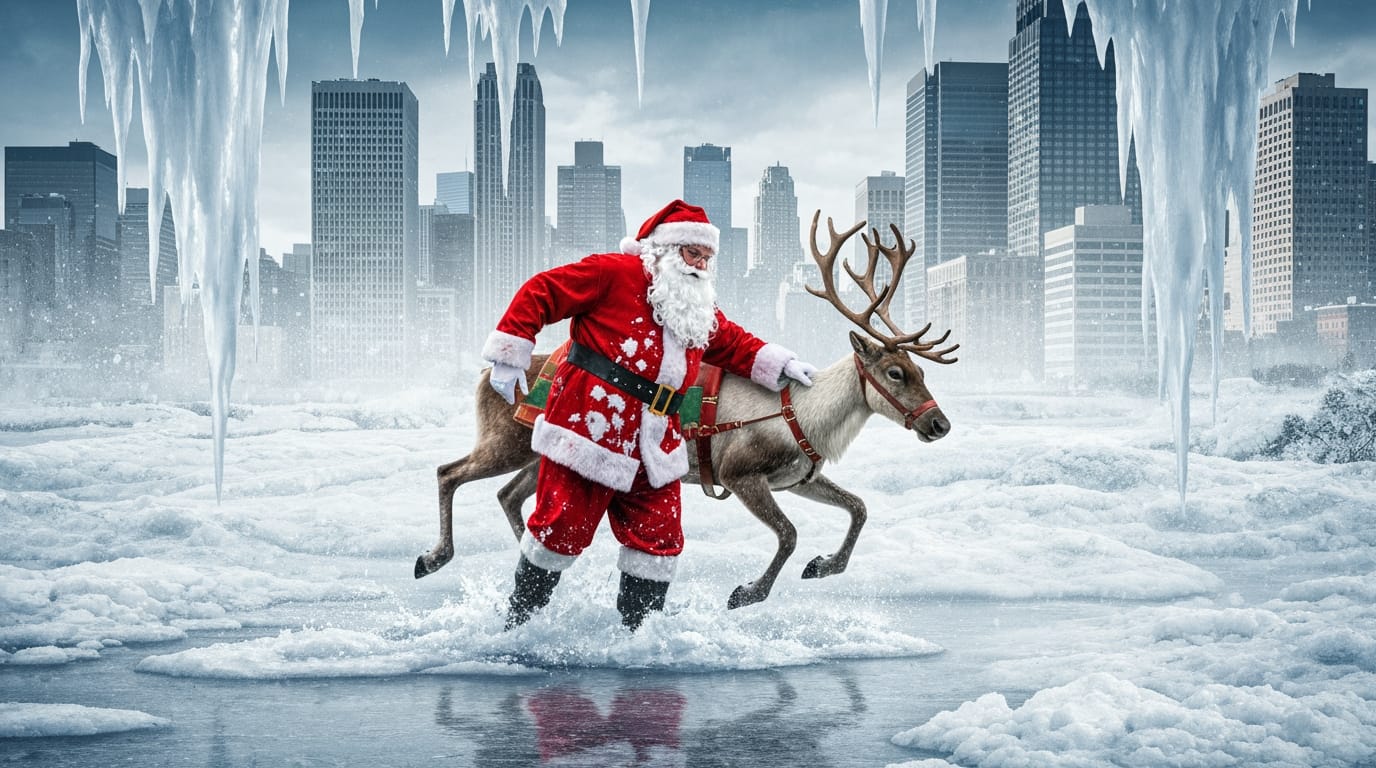
Beyond Indigenous communities, the North Pole has captivated the global imagination, serving as a beacon for explorers, a setting for folklore, and a universal emblem of purity and wonder. The concept of a "Santa Claus" residing at the North Pole, surrounded by snow and reindeer, is a potent symbol of generosity and cheer for billions. The notion of this symbolic home disappearing carries a weight far beyond its metaphorical meaning, impacting shared cultural narratives and the collective human imagination. Dr. Michael Bravo, from Cambridge's Scott Polar Research Institute, emphasizes that the North Pole remains an important symbol even as receding sea ice makes approaches more precarious, noting that "the stories we've told about it, and continue to tell about it, are powerful symbols of what it means to live on this planet."
Charting a Path Forward: Adaptation and Global Responsibility
While the challenges are immense, efforts are underway to mitigate the impacts of climate change in the Arctic and protect its unique environment. Organizations such as the World Wildlife Fund (WWF) are actively engaged in conservation, advocating for sustainable development, preventing new oil and gas drilling, and establishing protected marine areas. The Arctic Council, an intergovernmental forum, also prioritizes strengthening Arctic ecosystems and biodiversity through initiatives like the Conservation of Arctic Flora and Fauna (CAFF) working group. These efforts aim to build resilience in Arctic biodiversity and ensure that local communities have access to renewable energy options.
The future of the Arctic, and by extension, the world, hinges on urgent and concerted global action to reduce greenhouse gas emissions. While some projections suggest an ice-free Arctic may be inevitable regardless of emission cuts, delaying this event by decades through ambitious reduction targets remains a critical goal. The metaphorical "survival of Santa Claus" in a melting world serves as a potent reminder of the profound ecological, cultural, and even existential stakes involved. Protecting the Arctic means safeguarding not just a remote wilderness, but a crucial component of global climate stability and a shared heritage that inspires generations.