The Spirit of Mutirão: Brazil's Indigenous Concept Redefines Global Climate Action
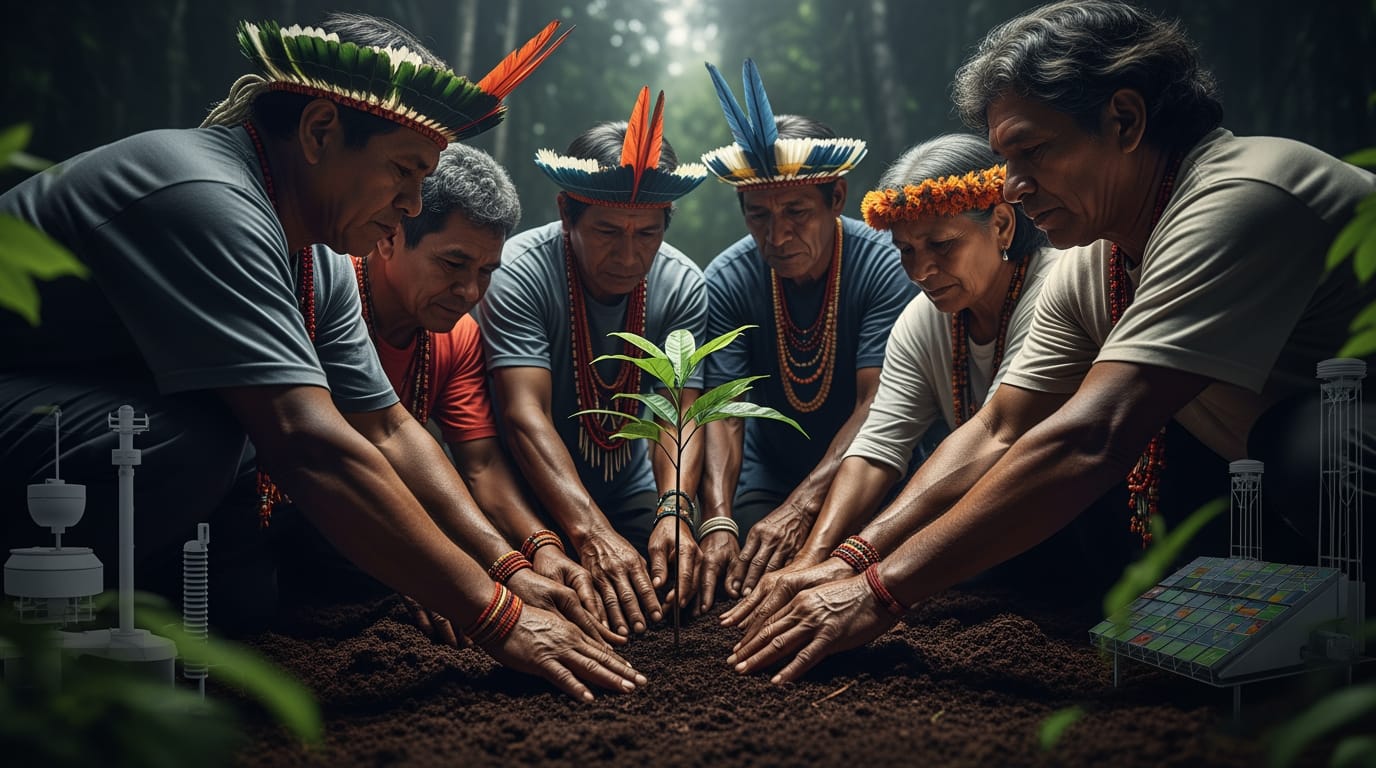
In a significant shift for international environmental diplomacy, the ancient Brazilian Indigenous concept of "Mutirão" has emerged as a guiding principle in global climate talks, championed by the incoming COP30 Presidency. This powerful notion, deeply rooted in collective effort and shared purpose, seeks to transform the predominantly top-down approach of climate negotiations into a more inclusive, bottom-up movement, emphasizing solidarity and community-led solutions to address the planet's most pressing crisis.
The adoption of Mutirão, a term originating from the Tupi-Guarani language, signals a deliberate attempt to infuse ancestral wisdom into modern policymaking, particularly as the world grapples with the accelerating impacts of climate change. With the COP30 summit recently held in Belém, within the Amazon rainforest, the spotlight intensified on the invaluable role of Indigenous peoples as custodians of critical ecosystems and proponents of sustainable living. This embrace of a communal philosophy offers a potential pathway to bridge divides and foster genuine global cooperation, moving beyond mere symbolic gestures towards tangible, widespread action.
The Ancestral Roots of Collective Action
At its core, "Mutirão" describes a community coming together to work on a shared task for the common good. This spontaneous manifestation of solidarity involves mutual, free assistance, where individuals contribute their labor to achieve a collective goal that benefits all. Historically, Mutirão has been a fundamental practice in rural Brazilian society, applied to a wide array of activities such as harvesting crops, clearing land, planting, constructing homes, or even battling fires. In urban settings, it has seen neighbors cooperate on construction projects, reflecting an ingrained cultural value of interdependence.
More than just a practical arrangement for labor, Mutirão embodies an ethical and relational worldview. It highlights a horizontal collaboration model, contrasting with hierarchical structures, and intrinsically links community well-being with ecological balance. Indigenous communities, from whom the concept originates, have long understood that human prosperity is inextricably tied to the health of the environment, a perspective that is now gaining crucial recognition on the international stage. This tradition fosters a sense of pride and collective ownership in achievements, reinforcing the idea that significant progress often springs from united efforts.
Mutirão as a Blueprint for Climate Action
The Brazilian Presidency for COP30 has enthusiastically positioned the "Global Mutirão" as its vision for tackling climate change. This initiative aims to mobilize global efforts by integrating decentralized, bottom-up, and self-organized initiatives into an aligned, worldwide movement. The central idea is to shift the focus from solely governmental negotiations to a broader engagement that includes civil society, the private sector, and subnational governments as active participants in climate solutions. This approach acknowledges that the Paris Agreement's ambitious targets cannot be met through top-down mandates alone; instead, success hinges on the active engagement of society in its entirety.
Tulio Andrade, COP30 Chief Strategy and Alignment Officer, emphasized that Mutirão provides an opportunity to forge a mobilization chain and connect global actions. This movement is envisioned to influence the global climate governance system by driving technologies, resources, platforms, and shared spaces to limit global warming to 1.5°C. It calls for everyone to participate daily in climate action, making choices about transportation, consumption, and energy use, each contributing according to their abilities and a sense of mutual responsibility.
Indigenous Stewardship and Unanswered Calls
Indigenous peoples, living largely in harmony with nature for millennia, are widely recognized as humanity's most effective forest guardians. They manage approximately a quarter of the world's land and up to half of its remaining intact forests, ecosystems crucial for storing an estimated 861 gigatons of carbon. Research consistently demonstrates that where Indigenous territorial rights are respected and upheld, deforestation rates decline significantly, underscoring their vital role in global climate stability. Their traditional knowledge systems offer invaluable insights into climate-resilient practices, sustainable agriculture, water management, and disaster preparedness, providing practical solutions often overlooked in conventional approaches.
Despite their critical contributions, Indigenous communities have historically been marginalized in international decision-making processes. They frequently face immense threats, including violence, for defending their ancestral lands against extractive industries. Advocates for Indigenous rights have consistently pressed for several key demands: the full demarcation and protection of their territories, direct funding for Indigenous-led conservation initiatives that ensure autonomous management, and the meaningful integration of traditional ecological knowledge into climate policy. While COP30 acknowledged Indigenous rights in several documents, including the Global Mutirão text itself, concerns persist among Indigenous groups that their demands, such as the rejection of controversial carbon credit schemes, are not being fully embraced.
Outcomes from the Global Mutirão at COP30
The recent COP30 summit in Belém saw the "Mutirão Decision" emerge as a pivotal agreement, endorsed by 195 participating countries. This text highlights the importance of leveraging the private sector, local entities, and civil society in the implementation phase of climate action. Key outcomes reflecting the Mutirão spirit included an agreement to triple adaptation finance by 2035, a crucial step to bolster resilience in vulnerable nations. The decision also acknowledged biodiversity loss as central to addressing climate change, signaling a more integrated approach to environmental crises.
Furthermore, COP30 launched a "Belem mission" aimed at increasing collective actions to reduce emissions. Practical applications of the Mutirão concept were also observed in reforestation efforts, such as the planting of 600 native Atlantic Forest seedlings in Tijuca National Park. Discussions also extended to the "Neighbourhood of the Mutirão" initiative, emphasizing water management as a connector for urban systems and climate solutions. While some proposals, such as explicit roadmaps for transitioning away from fossil fuels and halting deforestation, did not make it into the final negotiated text, the COP30 Presidency indicated these would be developed outside formal UN processes, signifying ongoing commitment.
A New Era of Inclusive Climate Governance
The embrace of Mutirão as a framework for global climate action represents a profound recognition of the need for collaborative, inclusive, and culturally informed approaches. As the planet faces increasingly severe environmental challenges, the wisdom embedded in Indigenous concepts like Mutirão offers a powerful alternative to traditional, often fragmented, diplomatic efforts. It champions a shift from merely negotiating targets to actively implementing solutions through shared responsibility and solidarity, from the local to the global scale.
This paradigm shift, while promising, also underscores the urgent need to address historical injustices and ensure that the voices and rights of Indigenous peoples are not just acknowledged but genuinely integrated into policy and practice. The future of climate talks, guided by the spirit of Mutirão, presents an opportunity for humanity to reconnect with fundamental principles of cooperation and mutual aid, fostering a collective movement essential for the "healing of the Earth" and securing a sustainable future for all.