The Unlikely Peace: How the Guns Fell Silent on the Western Front, Christmas 1914
Flanders Fields, December 1914 — In a startling and profoundly human chapter of World War I, an unofficial, spontaneous ceasefire broke out along significant stretches of the Western Front on Christmas Eve and Christmas Day of 1914. Amidst the mud, cold, and relentless horror of trench warfare, soldiers from opposing armies, primarily British and German, laid down their arms, exchanged greetings, and shared moments of peace that have since resonated through history as the "Christmas Truce". This extraordinary event, occurring just five months into a conflict that was supposed to "be over by Christmas," offered a fleeting, poignant glimpse of shared humanity amidst the burgeoning brutality of the Great War.
The Grim Dawn of a New Kind of War
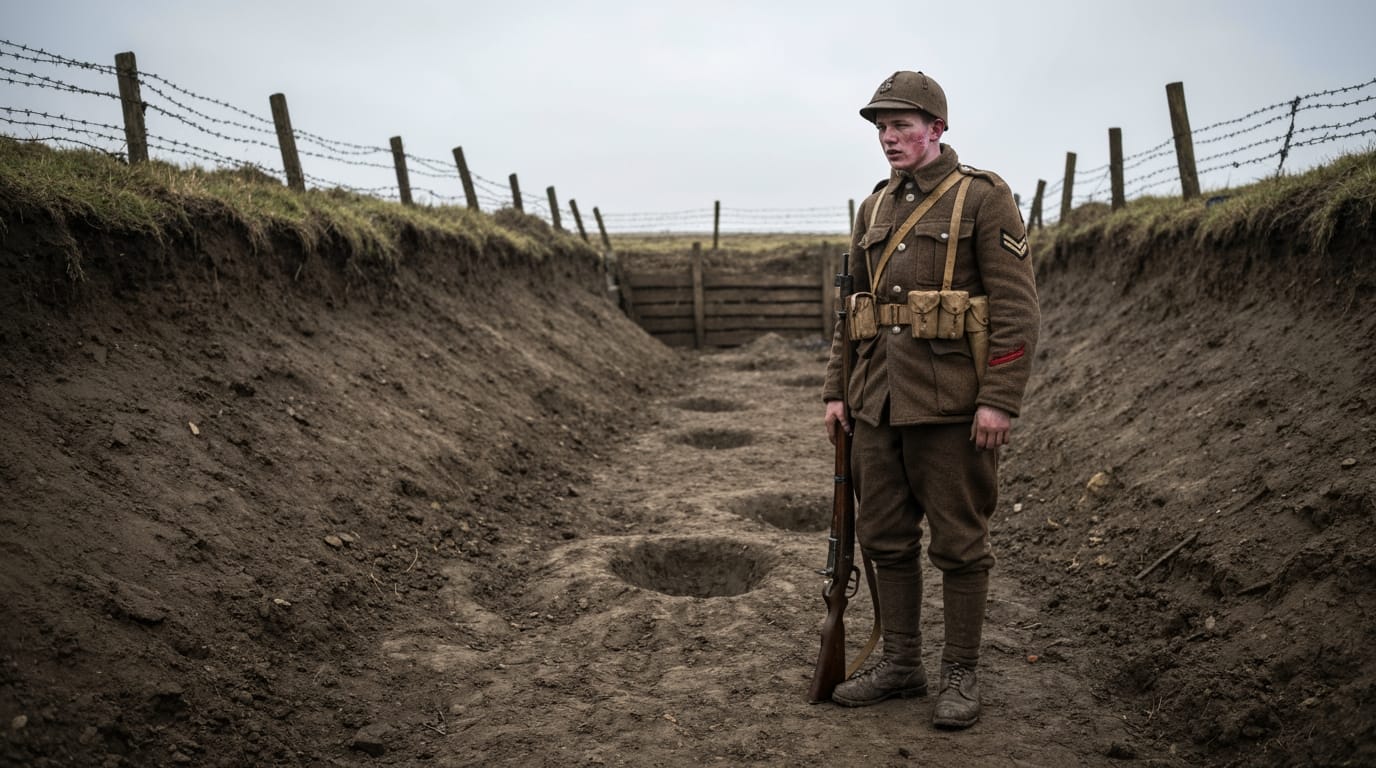
When Europe plunged into war in the summer of 1914, enthusiasm for the conflict was widespread, fueled by the naive belief that victory would be swift and decisive, concluding by the festive season. However, by December, that optimism had dissolved into a brutal stalemate. The initial German advance had been checked at the Marne, and the subsequent "Race to the Sea" solidified a front that stretched from the Swiss border to the North Sea. Hundreds of thousands of soldiers had already perished in heavy fighting, particularly at Ypres. The reality was trench warfare, a miserable existence characterized by cold, mud, and incessant danger, with enemy lines often separated by mere dozens of yards in "No Man's Land". The battlefields of Flanders, churned into a cold, muddy morass by weeks of heavy rain, were blanketed by a light dusting of snow as Christmas approached, offering a stark, desolate backdrop to the impending holiday. Pope Benedict XV had issued an appeal on December 7 for an official truce, asking "that the guns may fall silent at least upon the night the angels sang," but this plea was largely ignored by the warring governments.
A Silent Night on the Battlefield
Despite the official rejection of a ceasefire, a different kind of peace began to emerge from the trenches themselves. On Christmas Eve, a remarkable transformation commenced. German soldiers initiated the first overtures, placing small Christmas trees adorned with candles outside their trenches, and then began singing carols like "Stille Nacht" (Silent Night). The sound drifted across No Man's Land, carrying the familiar melodies to the British lines. British troops, recognizing the tunes, soon responded with carols of their own, such as "O Come, All Ye Faithful". Messages began to be shouted between the trenches, with greetings and well wishes exchanged. Some lower-ranking British officers had already begun unofficial policies of "live and let live," instructing their men not to fire unless fired upon. The spontaneity of these actions, without authorization from higher command, underscored the shared yearning for a respite from the constant conflict. Saxon troops were particularly noted for initiating dialogue with British soldiers, many of whom had worked in Britain before the war, facilitating communication.
Humanity in No Man's Land
As Christmas Day dawned, a tentative yet profound fraternization unfolded. German soldiers emerged from their trenches, demonstrating they were unarmed, and British soldiers cautiously joined them in No Man's Land. Estimates suggest approximately 100,000 British and German troops were involved in these informal cessations of hostility along various sectors of the Western Front, particularly across some two-thirds of the 30-mile front controlled by the British Expeditionary Force. These meetings led to extraordinary scenes: enemies exchanging gifts of food, tobacco, alcohol, and souvenirs like buttons and hats. There were joint services to bury the dead that had lain for weeks in No Man's Land, a solemn act of mutual respect and shared grief.
Perhaps the most enduring image from the truce is that of impromptu football matches played on the frozen, shell-scarred ground, using caps or even empty tin cans as makeshift balls. One widely recounted game reportedly ended in a 3-2 victory for the Germans. Soldiers shared photographs, and some even exchanged addresses, building connections that transcended the national animosities propagated by their respective governments. Many British soldiers were surprised to find the Germans were not the "hideous monsters" they had been led to expect, but young men with similar hopes and fears.
The Truce's Fragility and Official Disapproval
The remarkable Christmas Truce was, regrettably, short-lived. While it persisted until after New Year's Day in some isolated areas, in most places, the return to hostilities began soon after Boxing Day. The unofficial nature of the truce quickly drew the ire of military high commands on both sides, who viewed such fraternization as a severe threat to morale and the necessary animosity between combatants. Generals quickly took steps to prevent any further widespread episodes, issuing strongly worded orders forbidding future truces. While no widespread courts-martial or punishments were directly linked to the 1914 truce, commanders recognized the potential for disastrous effects on morale if they were seen to punish acts of shared humanity.
Attempts to revive the truce on Christmas Day 1915 were swiftly quashed. By then, the nature of the war had shifted; it had become far more brutal, characterized by the introduction of poison gas and escalating casualties, hardening soldiers against their enemies. The "live and let live" system continued in quiet sectors of the front throughout the war, allowing for tacit pauses to repair trenches or recover dead, but never again on the scale and public display of Christmas 1914.
A Lasting Symbol of Hope
The Christmas Truce of 1914 stands as a unique and extraordinary anomaly in the annals of warfare. It was not sanctioned by generals or politicians but emerged organically from the ranks of exhausted young men who, for a brief period, recognized their common humanity above the manufactured hatred of war. Letters and photographs sent home confirmed the astonishing events, solidifying its place in public consciousness.
Though it did not alter the course of the war or prevent the ensuing four years of unprecedented bloodshed, the Christmas Truce remains a powerful and inspirational story. It serves as a poignant reminder that even in the darkest and most destructive of human conflicts, moments of peace, compassion, and unity can emerge, transcending national divides and highlighting the enduring human spirit. It is a testament to the idea that, given the chance, ordinary people might choose fellowship over enmity, offering a timeless message of hope against the backdrop of war.