The Unseen Hand: How Nonviolent Protest Reshapes Autocratic Rule
For generations, the conventional wisdom held that only force could effectively challenge entrenched authoritarian regimes. Yet, a growing body of evidence, gleaned from a century of global movements, increasingly demonstrates that nonviolent resistance campaigns are not only viable but often more successful in achieving political change than their armed counterparts. This strategic advantage lies in their ability to mobilize broad segments of society, erode the pillars of state support, and foster more durable democratic transitions.
The Strategic Imperative of Peaceful Dissent
The historical record indicates a compelling truth: nonviolent campaigns have consistently proven more effective than violent campaigns in achieving their ultimate political objectives, even when confronting repressive governments. Research spanning from 1900 to 2006, analyzing hundreds of resistance movements, reveals that nonviolent campaigns succeeded 52 percent of the time, almost twice the 26 percent success rate of violent campaigns. This disparity holds true even in the face of similar opposition and state-sponsored repression.
The strategic logic underpinning this success is multifaceted. Nonviolent movements inherently possess a greater capacity to attract widespread domestic and international support, which in turn grants them increased legitimacy. Unlike armed struggles, which often alienate potential allies and provide regimes with justification for violent counterattacks, nonviolent actions can neutralize security forces and compel shifts in loyalty among those who initially support the autocratic power structure. A significant finding suggests that no repressive regime has been able to maintain power when at least 3.5 percent of its population actively participates in sustained nonviolent resistance. This "participation threshold" underscores the profound impact of mass mobilization.
Undermining the Pillars of Power Through Collective Action
Nonviolent resistance operates by systematically dismantling the various "pillars of support" that uphold an autocratic regime. These pillars can include security forces, economic elites, state media, and even segments of the bureaucracy. By strategically targeting these institutions through a diverse array of tactics, movements can induce noncooperation and ultimately trigger loyalty shifts, which are crucial for the collapse of authoritarian rule.
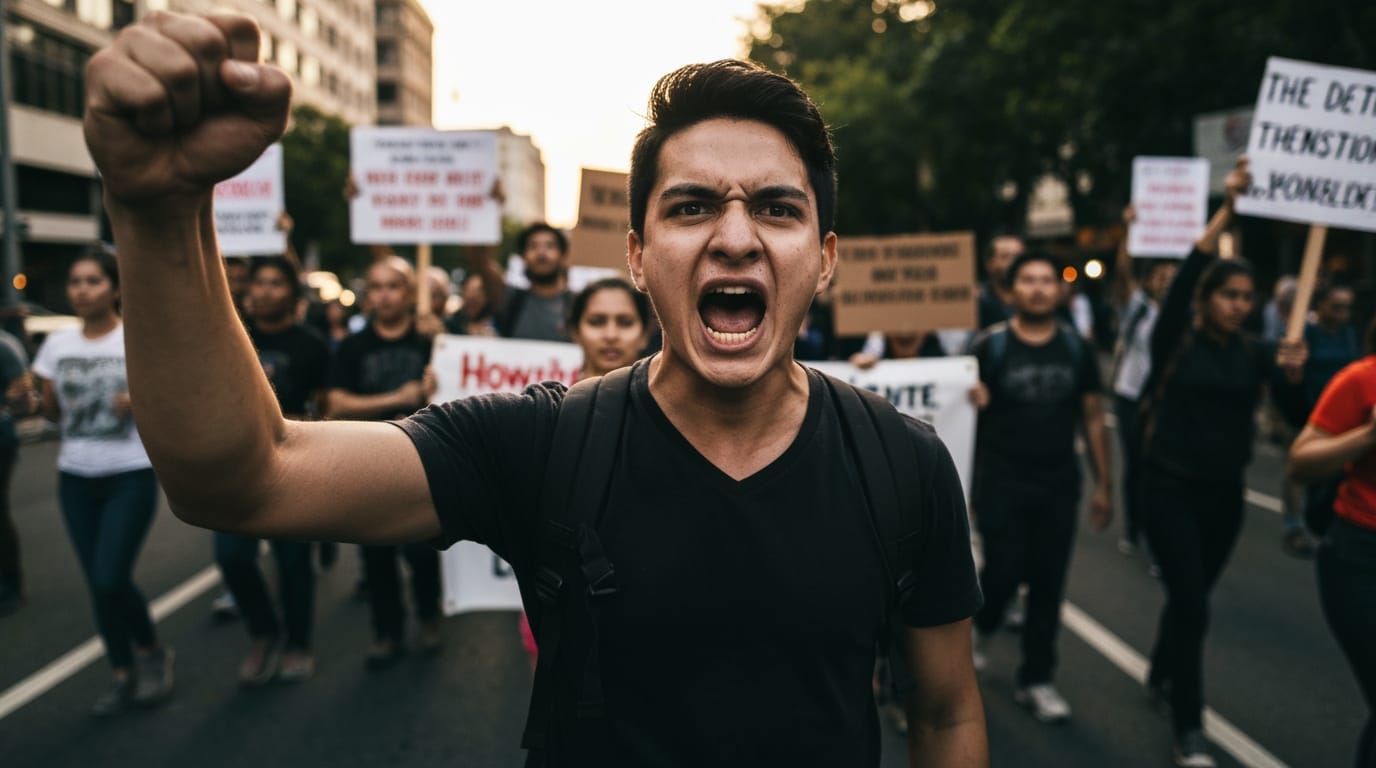
One of the primary strengths of nonviolent movements is their ability to foster broad-based participation. Because they do not require individuals to engage in armed combat, these movements can draw in a wider and more diverse demographic, including women, children, the elderly, and religious leaders. This inclusivity makes it significantly harder for regimes to violently suppress protests without incurring severe domestic and international condemnation, further eroding their legitimacy.
The tactics employed in nonviolent resistance are wide-ranging and strategically designed to impose costs on the regime while maximizing public engagement. Gene Sharp, a prominent scholar of nonviolence, cataloged 198 distinct methods, broadly categorized into nonviolent protest and persuasion, noncooperation, and nonviolent intervention. These methods include symbolic acts like vigils, public assemblies, and dramatic displays; various forms of social, economic, and political noncooperation such as boycotts, strikes, and civil disobedience; and direct interventions like sit-ins and blockades. Such varied actions allow movements to remain adaptable, escalate pressure, and resonate with different segments of the population.
A Legacy of Change: Historical Triumphs and Global Diffusion
History offers numerous powerful examples of nonviolent resistance successfully challenging and ultimately breaking autocratic rule. Mahatma Gandhi's leadership of India's independence movement against British colonial rule, utilizing civil disobedience and mass noncooperation, stands as a foundational case study. The American Civil Rights Movement, under the guidance of figures like Martin Luther King Jr., similarly employed nonviolent tactics such as boycotts and mass demonstrations to dismantle segregation and secure voting rights.
In more recent decades, nonviolent "people power" movements have reshaped the global political landscape. The Velvet Revolution in Czechoslovakia (1989), the People Power Revolution in the Philippines (1986), and the Singing Revolution in the Baltic States (1989-1991) all demonstrated the capacity of unarmed civilians to overthrow authoritarian governments. The Rose Revolution in Georgia (2003) and parts of the anti-apartheid movement in South Africa further underscore this trend. These movements not only succeeded in ending oppressive rule but also significantly increased the likelihood of establishing stable democracies. Countries that experienced nonviolent campaigns were approximately ten times more likely to transition to democracy within a five-year period compared to those that underwent violent conflicts. The success of such movements in one nation often inspires and informs similar activism in others, creating a powerful "diffusion" effect across borders. Notably, some countries, like Chile and South Korea, have even seen citizens nonviolently depose rulers multiple times, demonstrating a sustained capacity for civic agency.
Enduring Challenges and the Evolving Landscape of Resistance
Despite the demonstrable effectiveness of nonviolent resistance, these movements are not without their challenges and limitations. Autocratic regimes frequently resort to severe repression, including arbitrary arrests, violence, and even killings, to suppress dissent. In some instances, such as the protests in Hong Kong, Venezuela, and Belarus, movements have faced brutal crackdowns that have, at least temporarily, curtailed their progress. The outcomes of the Arab Spring uprisings and events in Sudan also highlight that while nonviolent action can trigger regime change, the subsequent transition to stable democracy is not guaranteed and requires sustained vigilance and proactive campaigning.
The effectiveness of nonviolent campaigns can also be influenced by external factors, including the potential for international intervention or the lack thereof. In situations where powerful external actors are unwilling or unable to pressure a repressive regime, the path to success becomes even more arduous for internal movements. Furthermore, the digital age presents both opportunities and threats. While social media can facilitate rapid mobilization and information dissemination, it also enables regimes to employ sophisticated surveillance techniques, spread propaganda, and monitor dissidents, complicating organizational efforts. The presence of violent factions within broader nonviolent movements can also undermine their legitimacy and provide autocrats with pretexts for harsher repression.
Ultimately, the success of nonviolent resistance hinges on a combination of mass, diverse, and sustained participation, coupled with a strategic deployment of varied tactics and the ability to prevent descent into chaos or violence when confronted with repression. Strong social ties and connections between citizens are vital for building and sustaining robust resistance movements, especially in environments where open political discourse is suppressed.
In conclusion, the efficacy of nonviolent protest in dismantling autocratic rule is a powerful and increasingly recognized phenomenon. While fraught with risks and requiring immense courage, strategic planning, and broad public commitment, its capacity to erode state legitimacy, induce loyalty shifts, and foster more democratic outcomes has been repeatedly demonstrated across diverse historical and geopolitical contexts. As societies grapple with the enduring challenge of authoritarianism, the strategic playbook of nonviolent resistance remains a potent and evolving force for change.