Two Decades On, Kosovo War Families Endure Agony, Demand Truth for Missing Loved Ones
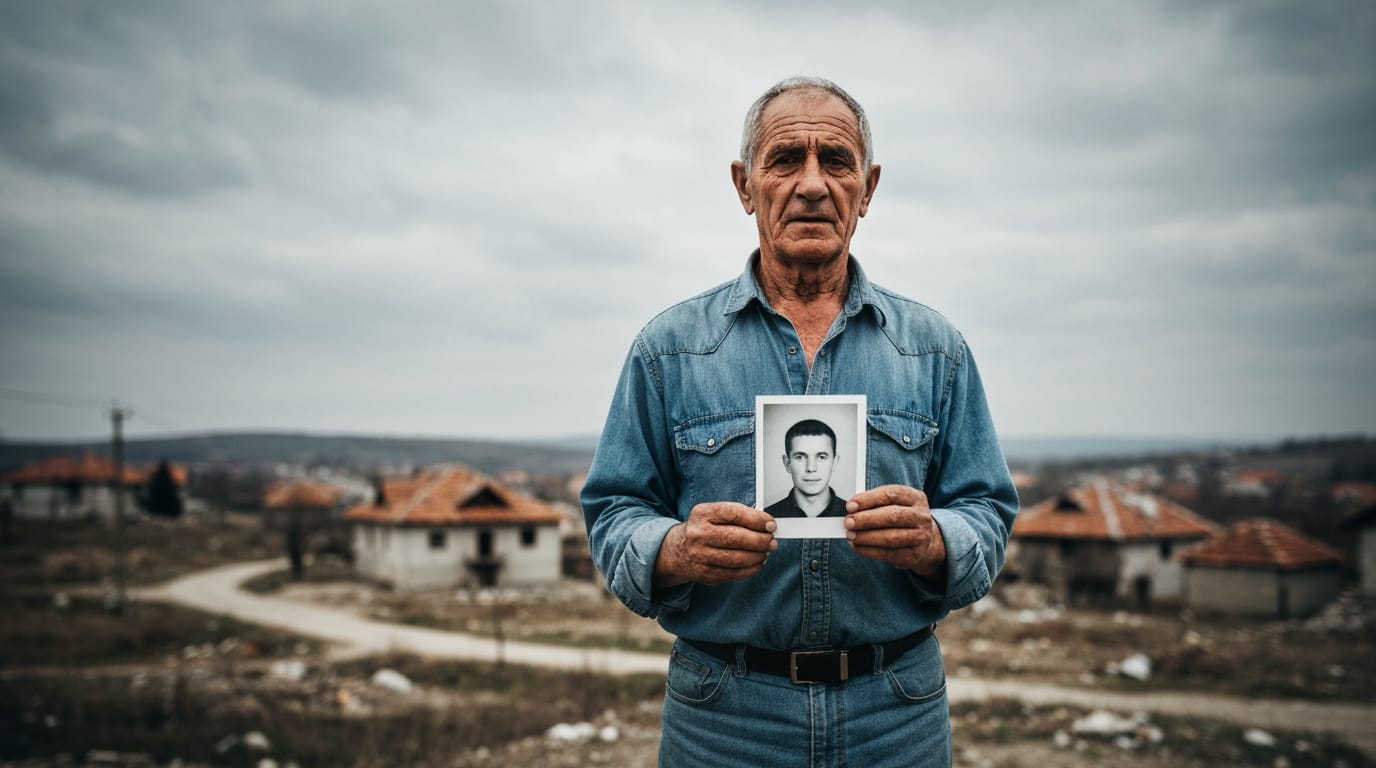
More than 25 years after the end of the 1998-1999 Kosovo War, hundreds of families across the region continue to grapple with an agonizing uncertainty, relentlessly pursuing answers about the fate of their loved ones who vanished during the conflict. This humanitarian crisis, marked by an enduring void for thousands, remains a profound impediment to reconciliation and lasting peace in the Western Balkans. Despite years of international and local efforts, the silence surrounding the disappearances prolongs a deep societal wound, highlighting the urgent need for political will and concerted action to bring closure to those who have waited for decades.
The Lingering Scars of Conflict: A Generation Lost
The Kosovo War, which pitted ethnic Albanian insurgents against Serbian forces, resulted in widespread death and displacement. While estimates vary, it is documented that over 13,500 people were killed or went missing during the two-year conflict. The chaos of war and subsequent displacements led to an estimated 4,400 to 4,500 individuals being unaccounted for by June 1999. Today, a significant number, approximately 1,600 to 1,700 people, remain missing from all communities, including ethnic Albanians, Serbs, and Roma. Each number represents a life abruptly ended or disappeared, and a family plunged into perpetual anguish. The sheer scale of these disappearances created a pervasive trauma that continues to define the lives of thousands, extending its shadow over a new generation born into this unresolved legacy.
Ambiguous Loss: A Daily Ordeal for Families
For the families of the missing, the absence of a grave or definitive information translates into an "ambiguous loss"—a grief without the solace of finality. This psychological burden prevents them from fully mourning or moving forward, leaving them "locked" in a state of perpetual uncertainty and hope. Organizations like the International Committee of the Red Cross (ICRC) have highlighted that "the wounds of the families of missing persons remain unhealed," as they live "day after day, in anxiety and uncertainty without knowing what happened to their husbands, children or relatives". The right to know the truth about their loved ones' fate is consistently underscored by international bodies and advocates as a fundamental human right. Family associations, such as the Missing Persons Resource Center (MPRC), established in 2017, play a critical role, uniting families from diverse ethnic backgrounds in their shared quest for answers, advocating for governmental accountability, and offering mutual support.
The Unfinished Search: International and Local Efforts
The search for the missing has been a complex undertaking involving a multitude of actors. The ICRC has been actively involved in the search for missing persons since 1998, working to alleviate suffering and remind authorities of their obligations. The International Commission on Missing Persons (ICMP) has provided crucial technical assistance since 1999, including DNA-based identification services, collaborating with entities like the UN Mission in Kosovo (UNMIK), the European Union Rule of Law Mission (EULEX), and national authorities, such as Kosovo's Institute of Forensic Medicine. These efforts have been instrumental in identifying 2,466 missing persons through DNA reports, a testament to the power of forensic science in resolving these cases. Over the years, numerous mass graves have been identified and exhumed in both Kosovo and Serbia, leading to the identification and return of remains to their families. Kosovo also enacted a Law on Missing Persons in 2011, which outlines the rights of families and the institutional responsibilities in the search process. Despite these advancements, significant challenges persist, including difficulties in locating new sites, accessing comprehensive and reliable documentation, and the intricate process of DNA matching, which has proven inconclusive in over 1,700 cases despite a high collection rate of family DNA samples.
Political Impasse and the Humanitarian Imperative
The resolution of the missing persons issue is inextricably linked to the often-strained political relationship between Kosovo and Serbia. For decades, the issue has been entangled in broader diplomatic tensions, frequently slowing progress. The European Union has recognized the critical humanitarian dimension of this problem, integrating it into its facilitated dialogue aimed at normalizing relations between Belgrade and Pristina. In a significant step, leaders from Kosovo and Serbia endorsed a Declaration on Missing Persons in May 2023, followed by an agreement in December 2024 on the Terms of Reference for a Joint Commission dedicated to overseeing its implementation. This commission is tasked with monitoring cooperation on identifying burial sites, facilitating access to accurate information and documentation, and ensuring respect for the rights of the families. While these agreements represent diplomatic breakthroughs, families often voice concerns that political considerations can overshadow the urgent human need for answers, asserting that the issue should be prioritized as a purely humanitarian concern, free from political maneuvering.
A Plea for Finality and Reconciliation
The unresolved fates of the missing persons from the Kosovo War represent a continuous human rights tragedy and a profound barrier to genuine reconciliation between communities. Every year, on the National Day of Missing Persons, families gather, their pleas for truth echoing across the region. International figures, such as the British Ambassador to Kosovo, Jonathan Hargreaves, have consistently affirmed the families' right to know the truth. Until the whereabouts of all missing persons are clarified, the wounds of war cannot fully heal, and a sustainable peace will remain elusive. The path forward demands sustained political commitment, unwavering international support, and a humanitarian approach that prioritizes the dignity and suffering of the families above all else. Only with transparency, accountability, and the full disclosure of information can the thousands of waiting families finally find the peace that has eluded them for over a quarter-century.


