The Unsung Saga of the "Plain" Spice: Vanilla's Rich and Tumultuous History
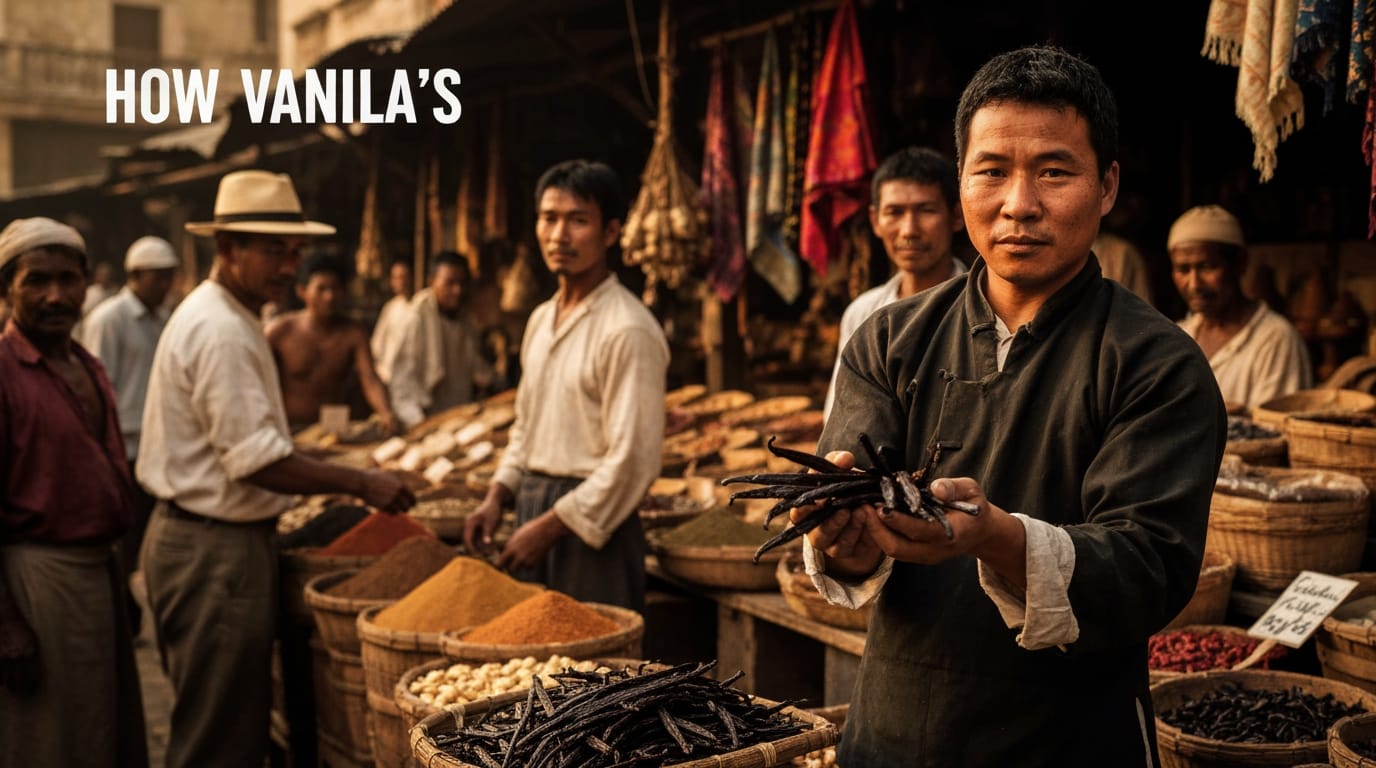
Often relegated to the background, synonymous with blandness, the flavor of vanilla belies a history as intricate, dramatic, and globally influential as any precious spice. From its ancient origins in the rainforests of Mesoamerica to its modern cultivation across tropical islands, the vanilla bean has been a subject of indigenous reverence, colonial ambition, scientific breakthrough, and enduring economic volatility. Far from being "plain," the story of vanilla is a testament to human ingenuity, persistent challenges, and the complex web of global trade that has shaped its destiny.
Ancient Roots: From Totonac Deity to Aztec Delicacy
Vanilla's journey begins over a millennium ago on the humid eastern coast of present-day Mexico, specifically in the region inhabited by the Totonac people of Veracruz. As early as 1185, the Totonac were the first known cultivators of the Vanilla planifolia orchid, a climbing vine whose fruit would become one of the world's most prized flavors. They held vanilla in high esteem, considering it sacred and a gift from the gods, incorporating it into religious ceremonies, traditional medicine, and as a fragrant offering in temples.
Centuries later, in 1427, the formidable Aztec empire conquered the Totonacs and quickly adopted vanilla into their own culture. The Aztecs, who referred to the bean as "tlilxochitl" or "black pod," valued it primarily as a flavoring for their cacao-based drink, "xocolatl," a concoction believed to bestow strength and endurance. This chocolate-vanilla synergy would mark vanilla's introduction to the European palate. Spanish conquistador Hernán Cortés encountered the flavored beverage during his encounters with Emperor Moctezuma in the 1520s and subsequently introduced both vanilla and chocolate to Europe.
For decades, vanilla remained largely an exotic additive to chocolate in Europe. However, its distinct appeal eventually spurred independent recognition. In the early 17th century, Hugh Morgan, an apothecary serving Queen Elizabeth I, pioneered the creation of chocolate-free, vanilla-flavored "sweetmeats," a pivotal moment that allowed vanilla to stand alone as a culinary star. By the 18th century, the French were incorporating vanilla into ice cream, and its popularity continued to spread, with Thomas Jefferson notably bringing a vanilla ice cream recipe to the United States after his time in Paris.
The Pollination Puzzle: Mexico's Monopoly and European Frustration
Despite its burgeoning popularity in Europe, vanilla cultivation remained exclusively confined to its native Mesoamerican lands for centuries. Efforts to transplant the vanilla orchid to other tropical regions, including European colonies in the Indian Ocean like Réunion and Mauritius in the early 19th century, proved largely futile. While the vines thrived in the new climates, they stubbornly refused to produce the precious pods.
The mystery baffled botanists for years until the crucial missing link was identified: natural pollination. In its native habitat, the vanilla orchid relies almost exclusively on a specific species of bee, the Melipona bee, which is native only to Mexico. Without this precise pollinator, the orchid's unique floral structure prevented self-fertilization, rendering transplanted vines barren. In 1837, Belgian botanist Charles François Antoine Morren successfully demonstrated a method for artificial pollination, proving that manual intervention could yield fruit. However, Morren's method was slow and too labor-intensive to be commercially viable, leaving Mexico's monopoly on vanilla production unchallenged.
A Young Innovator: Edmond Albius and the Game-Changing Technique
The breakthrough that would revolutionize global vanilla production came unexpectedly and from an unlikely source. In 1841, on the French island of Réunion (then known as Île Bourbon), a 12-year-old enslaved boy named Edmond Albius discovered an efficient and practical method for hand-pollinating vanilla orchids. Albius had learned basic botany from his owner, Ferréol Bellier-Beaumont, including how to hand-pollinate watermelons. Applying these principles to the vanilla orchid, he ingeniously identified the rostellum, a small flap separating the male and female parts of the flower, and devised a technique using a thin stick or blade of grass and a simple thumb gesture to bring them into contact.
This simple yet profound discovery allowed for rapid and profitable fertilization, turning the once-barren vanilla vines into prolific producers. Albius's technique was quickly adopted and spread across Réunion and neighboring French colonies. While Bellier-Beaumont advocated for Albius, who was subsequently granted his freedom, the young innovator reportedly died in poverty in 1880, never receiving full financial recognition for his monumental contribution. Nevertheless, Albius's method, remarkably, remains largely the same technique used today for pollinating nearly all vanilla globally.
The Rise of "Bourbon" Vanilla and Global Expansion
Albius's innovation unleashed vanilla cultivation beyond Mexico's borders, leading to a dramatic expansion of the industry throughout the Indian Ocean. From Réunion, vanilla vines were rapidly introduced to islands like Madagascar, the Comoros, and Seychelles. These regions, particularly Madagascar, proved to have ideal climatic conditions for the orchid. By 1898, Madagascar, Réunion, and the Comoros Islands collectively produced an astonishing 80% of the world's vanilla supply.
Madagascar, in particular, rose to prominence, becoming the undisputed global leader in vanilla production. Today, the island accounts for approximately 70-80% of the world's vanilla, with the northeastern SAVA region (Sambava, Antalaha, Vohemar, and Andapa) serving as the epicenter of this industry. The vanilla from this region is widely known as "Bourbon vanilla," a designation derived from Réunion's colonial name, Île Bourbon, and recognized for its distinct, rich flavor profile. As Indian Ocean production soared, Mexican vanilla output experienced a decline, partly due to domestic political instability and the emerging threat of synthetic alternatives.
This global vanilla industry, however, is built on intensive labor. From the painstaking hand-pollination of each delicate flower, which blooms for only a brief 12 to 24-hour window, to the lengthy multi-stage curing process that can take three to six months to develop the bean's aromatic compounds, nearly every step requires human touch. This labor-intensive nature, combined with a cultivation period of three to four years before a vine yields pods, contributes significantly to vanilla's status as the world's second most expensive spice, trailing only saffron.
Modern Challenges: Climate, Volatility, and the Future of a Flavor
In the 21st century, the vanilla industry navigates a complex landscape fraught with challenges, many of which stem from its unique history and geographical concentration. The market for natural vanilla is notoriously volatile, characterized by dramatic "boom-and-bust" cycles. Prices can swing wildly, with historical peaks soaring over $600 per kilogram, only to plummet to fractions of that value. These fluctuations are driven by a confluence of factors, including supply and demand imbalances, speculative trading, and, critically, environmental conditions.
Vanilla plants are exceptionally sensitive to climate, requiring precise temperatures, high humidity, and consistent rainfall. Climate change poses an existential threat, with increasing frequencies of extreme weather events such as cyclones, droughts, and torrential rains devastating crops in key producing regions like Madagascar. Such natural disasters can wipe out entire harvests, causing immediate price spikes and immense hardship for farming communities.
Labor shortages further complicate matters. The grueling manual work, from daily pollination to the arduous curing process, is becoming less appealing to younger generations who often migrate to urban areas, creating knowledge transfer challenges and potential skill deficits. Disease and pests also threaten vanilla orchids, with climate change potentially exacerbating these issues.
Adding another layer of complexity is the widespread use of synthetic vanillin. Scientists successfully synthesized vanillin, the primary flavor compound, in 1858 and later on an industrial scale in 1874. Synthetic alternatives are significantly cheaper, more consistent, and now prevalent in countless consumer products, posing a constant competitive pressure on natural vanilla.
The industry is also grappling with issues of supply chain transparency, ethical sourcing, and regulatory pressures in producing nations. Currently, an oversupply situation, particularly from Madagascar, driven by record harvests and previous market conditions, has led to aggressive price reductions, creating economic hardship for farmers. This has spurred efforts to diversify vanilla production to other tropical regions to mitigate risks associated with over-reliance on a single geographic area.
Conclusion: A Resilient Essence
From its sacred status among the Totonac to its role in modern global commerce, vanilla's history is a compelling narrative of adaptation, exploitation, and enduring allure. The simple elegance of its flavor belies the intricate, labor-intensive processes required for its production and the human stories intertwined with its journey. The ingenuity of an enslaved boy, Edmond Albius, fundamentally reshaped its global trajectory, transforming it from a regional rarity into a global commodity. Yet, this transformation has not been without significant challenges, including volatile markets, climate vulnerability, and the constant competition from synthetic alternatives.
Despite these hurdles, the demand for natural vanilla persists, driven by its unparalleled flavor complexity and cultural significance. As the industry grapples with climate change, economic instability, and the need for sustainable practices, the resilient essence of vanilla continues to captivate, ensuring its place as a truly extraordinary spice with a history anything but 'vanilla'.