Thousands March in Prague to Defend Public Media Independence Amid Funding Overhaul
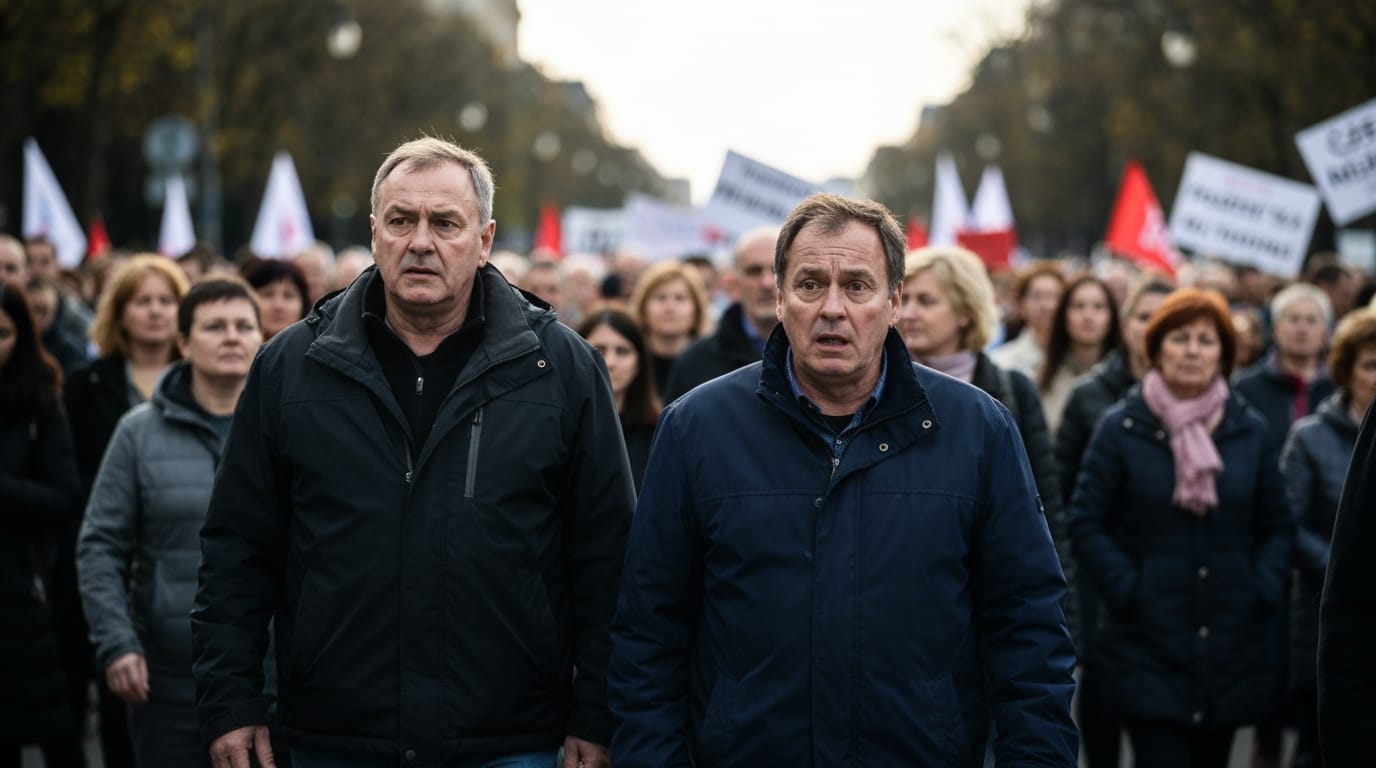
PRAGUE, CZECHIA – Thousands of Czech citizens took to the streets of Prague on Sunday, June 21, 2026, to protest the government's proposed overhaul of public media funding, a move critics warn will severely undermine the independence of Czech Television (ČT) and Czech Radio (ČRo). The demonstration, organized by the civic group Million Moments for Democracy (Milion Chvilek), underscored growing societal concern over legislative changes that would abolish traditional license fees in favor of direct state budget allocations.
The protest, which saw marchers carry banners declaring "Hands off public media" and chant slogans like "No Orbanization of Czechia!", culminated outside the Czech Television building. It came just one day before public broadcasters' employees were set to stage a warning strike, signaling deepening anxieties within the media landscape. This latest wave of public dissent follows months of escalating tension and smaller-scale protests, including student marches and journalists appearing on air in black to symbolize their opposition to the government's plans.
A Radical Shift in Funding
At the heart of the controversy is a draft law, approved by the government on Monday, June 16, that seeks to eliminate the long-standing system of license fees paid by households and businesses, replacing it with direct funding from the state budget. Proponents of the change, led by Prime Minister Andrej Babiš and his populist ANO party-led coalition, argue that this will alleviate the financial burden on citizens and businesses. Prime Minister Babiš has also suggested that public broadcasters have not demonstrated sufficient efforts to economize, contrasting them with other European public media organizations that have implemented cost-cutting measures. Culture Minister Oto Klempíř presented the proposal, outlining annual allocations of 5.74 billion crowns for Czech Television and 2.065 billion crowns for Czech Radio, indexed for inflation.
However, these figures, based on 2024 budgets before a crucial license fee increase in 2025, represent a significant reduction in funding. Critics contend the new model would result in an approximate 15% cut to public media budgets compared to current levels, reverting to funding rates seen between 2008 and 2024. This translates to an estimated loss of around one billion crowns for Czech Television and roughly 400 million crowns for Czech Radio.
Echoes of Regional Concerns
The proposed legislative changes have drawn sharp criticism from within Czechia and from international media watchdogs, who view them as a direct threat to editorial independence. Opponents argue that tying public media funding directly to the state budget could give the ruling government undue influence over programming and news content. Mikuláš Minář, a key organizer from Million Moments for Democracy, articulated this sentiment, stating, "Media does not belong to politics. They belong to us all and we won't allow them to be stolen from us."
Concerns have been amplified by comparisons to media landscapes in neighboring countries like Slovakia and Hungary, where populist governments have been accused of exerting political control over public broadcasting. International organizations such as the International Press Institute (IPI) and Reporters Without Borders have voiced fears that the motivation behind the changes is to weaken the broadcasters' financial and editorial independence, potentially compromising their ability to fulfill their public service mandate. Reporters Without Borders also suggested that the plan might contradict European Union rules on public media funding.
Dire Consequences for Broadcasters
The directors of both Czech Television and Czech Radio have warned of severe repercussions should the new funding model be implemented. Hynek Chudárek, head of Czech Television, described the plan as "unacceptable" and "almost destructive," indicating that a 15% budget cut could force the dismissal of 300 to 500 of the station's 2,900 employees. René Zavoral, Director General of Czech Radio, echoed these concerns, stating that the proposed changes would necessitate "major savings and cuts" affecting not only administration but also programming, including regional broadcasting, and productions for children and young audiences.
Both leaders have called for constitutional safeguards to protect public broadcasters' independence and questioned the necessity of such a fundamental change. They assert that the existing license fee system provides the highest possible degree of autonomy, a crucial element for objective journalism.
The Road Ahead
The government's draft law will now proceed to the lower house of parliament, where opposition parties have vowed to fight it vigorously. This legislative battle unfolds against a backdrop of consistent criticism from Prime Minister Babiš regarding the perceived bias of both public and private independent media coverage of his political and business affairs. Despite the government's assurances that independence will be maintained and parliamentary-appointed boards will continue to govern, a significant portion of Czech society, alongside media professionals and international observers, remains unconvinced.
The protests in Prague and across Czechia highlight a critical juncture for public media in the country. The outcome of this legislative debate will not only determine the financial stability and operational capacity of Czech Television and Czech Radio but will also serve as a barometer for media freedom and democratic standards in the Central European nation.


