Thousands Mobilize Across Germany in Widespread Pro-Kurdish Demonstrations
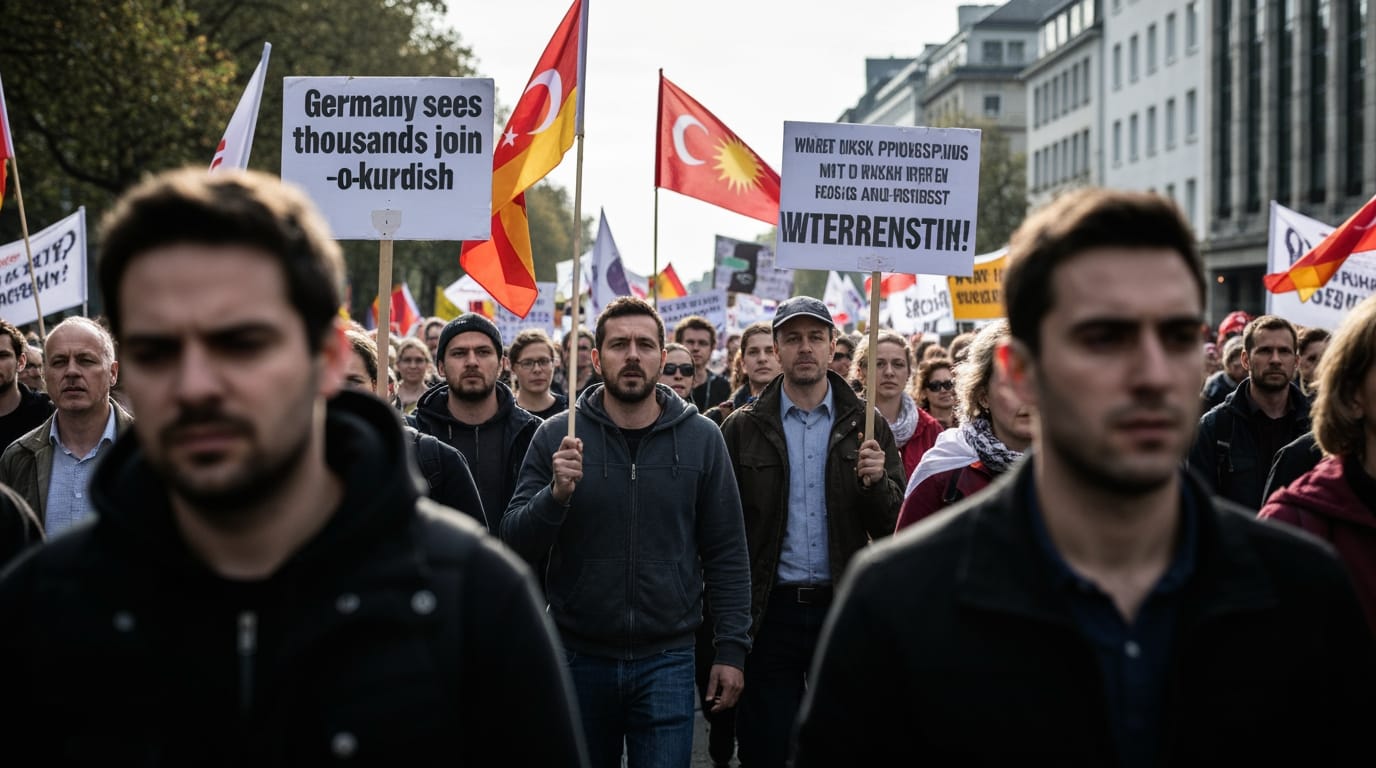
Germany has once again become a prominent stage for pro-Kurdish activism, with thousands taking to the streets across major cities in recent months, protesting geopolitical developments and advocating for Kurdish rights. These large-scale demonstrations, spanning from Bochum to Cologne, underscore the enduring political engagement of Germany's substantial Kurdish diaspora and highlight the complex intersection of Middle Eastern conflicts with European domestic affairs. The protests reflect deep-seated grievances and a sustained call for international attention to the plight of Kurdish communities in their ancestral lands.
A Resurgent Voice: Recent Demonstrations Mark Growing Discontent
The year 2026 has already witnessed significant mobilization within Germany's Kurdish community. In January, thousands gathered in Bochum, joining a global diaspora-wide protest movement, to denounce an escalating military offensive by the Syrian government against Kurdish-held territories in the northeast, often referred to as Rojava or Western Kurdistan. Activists described the ongoing military actions as a campaign of ethnic cleansing, urging European governments to pressure Damascus to halt its operations and prevent a potential humanitarian disaster. The demonstrations in Germany echoed similar rallies in the Kurdistan Region and other parts of the world, emphasizing a unified Kurdish stance against perceived threats to their people.
These recent events follow a consistent pattern of protest activity. Just a year prior, in February 2025, the Kurdish community in Germany articulated a comprehensive set of demands to political parties ahead of federal elections, calling for greater inclusion, recognition, and an end to systemic discrimination. Key among their appeals was the lifting of the ban on the Kurdistan Workers' Party (PKK), which they argue restricts their political participation and impacts asylum and citizenship applications. Earlier, in February 2024, approximately 15,000 Kurds marched through Cologne, demanding the release of Abdullah Öcalan, the imprisoned leader of the PKK, who has been held in a Turkish jail for 25 years. Protesters peacefully displayed thousands of flags bearing Öcalan's image, a symbol of the Kurdish national movement for many of his followers. These gatherings are not isolated incidents; in October 2024, Cologne also saw demonstrations by PKK/YPG supporters, though these were marred by reports of altercations with Turkish citizens.
Deep Roots of a Diaspora: A Community Forged by Displacement
The presence of a large and politically active Kurdish community in Germany is central to these ongoing protests. Estimates place the Kurdish population in Germany at over 1 million, with some suggesting the number could be as high as 1.3 million or more. This diaspora's history in Germany stretches back decades, primarily beginning in the 1960s with the arrival of "guest workers" from Turkey. Subsequent waves of migration occurred due to severe political oppression in Turkey following the 1980 military coup, the Iran-Iraq War, and the Gulf War, leading many Kurds from Iran, Iraq, and Syria to seek asylum. More recently, the Syrian Civil War and the fight against ISIS have driven further Kurdish immigration, particularly from Rojava.
The experiences of political marginalization and conflict in their homelands have profoundly shaped the Kurdish community in Germany, leading to a high degree of political organization and activism. Many Kurds have obtained German citizenship, enabling them to participate actively in German politics, both by voting and by fielding candidates of Kurdish origin in various parties. This strong political engagement ensures that issues affecting Kurds internationally resonate deeply within Germany, frequently spilling onto the streets in public demonstrations.
The Contested Narrative: PKK, YPG, and German Policy
A significant and often contentious element of pro-Kurdish protests in Germany involves the Kurdistan Workers' Party (PKK) and its Syrian affiliate, the People's Protection Units (YPG). The PKK has been officially banned in Germany since 1993 and is designated as a terrorist organization by Turkey, the United States, and the European Union. Despite this ban, the organization remains active within Germany, engaging in propaganda, recruitment, and fundraising activities. Displays of PKK symbols are illegal and frequently lead to police intervention during protests.
The YPG, while being a key U.S.-backed force in the fight against ISIS in Syria, is considered by Turkey to be the Syrian offshoot of the PKK. Germany, too, has banned YPG symbols since 2017, placing its authorities in a delicate position. German police often disperse rallies where banned flags or images of Öcalan are displayed, sometimes leading to confrontations and detentions. This dynamic creates tension within Germany, as many Kurds view the YPG as legitimate defenders of their people and Öcalan as a crucial political figure, while German authorities uphold the bans to counter what they classify as terrorist organizations and prevent the escalation of violence. The Kurdish community has openly criticized these policies, arguing they criminalize their movement and impede their freedom of expression and political participation.
Geopolitical Ripple Effects and Domestic Tensions
The protests in Germany are not merely local expressions of dissent but are intimately tied to the geopolitical realities of the Middle East, particularly the ongoing conflicts in Turkey and Syria. Turkish military operations against Kurdish groups in northern Syria have consistently spurred large-scale demonstrations in Germany, with protesters condemning Ankara's actions and showing solidarity with affected communities. These tensions sometimes manifest in inter-communal clashes between Turkish and Kurdish groups on German soil, prompting German authorities to appeal for restraint to prevent the Middle Eastern conflict from spilling over into German society.
Germany finds itself walking a diplomatic tightrope. While it maintains close ties with NATO ally Turkey, it also expresses concerns over Turkey's military actions against Kurdish groups and advocates for the protection of human rights. German officials have warned Turkey against further military escalation in northern Syria, fearing it could empower groups like ISIS and destabilize the region further. Simultaneously, Germany faces domestic pressure from its own Kurdish population to address their demands, reconsider the PKK ban, and halt arms sales to Turkey, which protesters argue are used against Kurdish communities. This complex interplay highlights how Germany's foreign policy considerations are increasingly influenced by its diverse diasporic communities.
An Unfolding Narrative of Identity and Advocacy
The continued mobilization of thousands in pro-Kurdish protests across Germany underscores a persistent struggle for recognition, self-determination, and justice. Fueled by events in their homelands and sustained by a deeply politicized diaspora, these demonstrations serve as a powerful reminder that the "Kurdish question" extends far beyond the borders of the Middle East. Germany, home to one of the largest Kurdish communities globally, remains a crucial arena where international geopolitical dynamics converge with domestic social and political realities. As conflicts abroad continue to impact Kurdish communities, the German streets are likely to remain a vibrant, and at times contentious, stage for their ongoing advocacy.


