Thousands of Chickens Turn German Autobahn into Feathery Chaos After Lorry Overturns
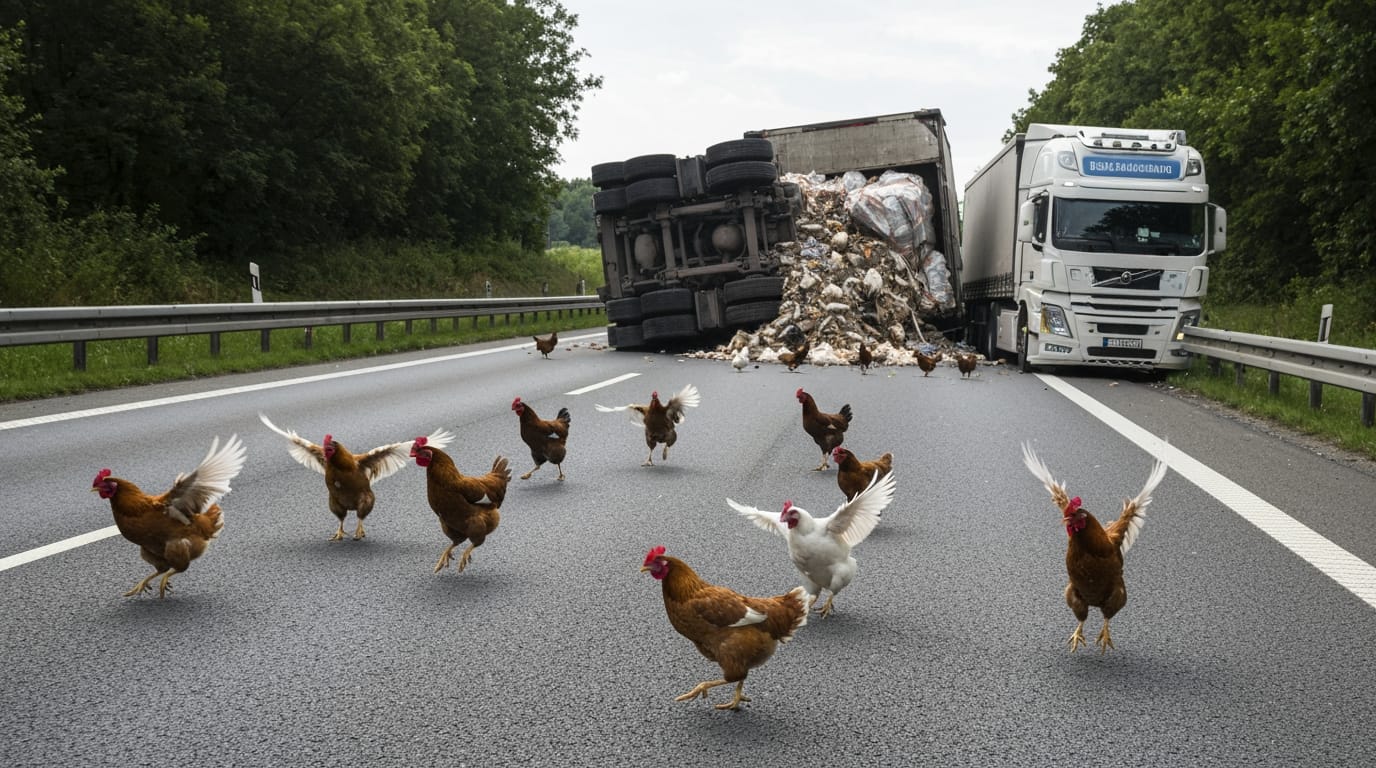
QUEDLINBURG, Germany – The early morning tranquility of the A36 autobahn near Quedlinburg, Saxony-Anhalt, was shattered today as a livestock lorry carrying an estimated 5,000 chickens overturned, unleashing a chaotic "chicken run" across the busy highway. The unusual incident led to significant traffic disruptions and a complex recovery operation involving veterinary services, transforming a routine commute into an extraordinary scene of flapping wings and scattered feathers.
The Unfolding Scene on A36
The accident occurred in the early hours of Thursday, December 11, when a truck laden with approximately 15 tons of poultry lost control and tipped over on the A36. The exact cause of the accident remains under investigation, but the immediate aftermath was visually striking and logistically challenging. Cages containing thousands of chickens were flung open, spilling their live cargo onto the motorway and its immediate vicinity.
Witnesses described a surreal scene as the birds, disoriented and suddenly free, scattered across multiple lanes. The presence of thousands of chickens on the highway presented an immediate hazard, not only to themselves but also to unsuspecting motorists. While the truck driver reportedly escaped the incident without injury, the welfare of the vast number of animals quickly became a primary concern for emergency responders.
Emergency Response and Challenging Recovery Efforts
Authorities were swift to react, implementing an immediate and complete closure of the A36 autobahn in the direction of Braunschweig to contain the situation and ensure public safety. This preemptive measure was crucial to prevent further accidents involving the roaming poultry and incoming traffic. The closure, however, rapidly led to significant traffic congestion, causing considerable delays for commuters and freight transport in the region.
The task of rounding up thousands of live chickens from an active highway environment is a formidable one. Veterinary service employees were promptly dispatched to the scene, tasked with the painstaking effort of collecting the escaped birds. Such operations are inherently difficult; chickens, while domesticated, are agile and can quickly disappear into roadside foliage or dart unpredictably, posing challenges for even experienced animal handlers. The sheer volume of birds meant that recovery efforts were expected to be protracted, requiring a coordinated approach from multiple agencies. The focus extended beyond mere capture to assessing the health and condition of the traumatized animals, many of whom would have suffered stress, injury, or worse during the crash and subsequent escape.
Ripple Effects: Traffic and Economic Implications
The extensive closure of the A36 autobahn created a significant choke point in the regional transport network. With a major artery effectively shut down, local roads bore the brunt of diverted traffic, leading to bottlenecks and extended travel times across the area. For businesses relying on timely deliveries, the disruption translated into potential economic losses, impacting supply chains and schedules.
Beyond the immediate traffic woes, the incident carries economic ramifications for the poultry industry. The loss of a 15-ton cargo of live chickens represents a substantial financial blow to the involved company. This includes not only the value of the animals themselves but also the costs associated with the extensive cleanup, veterinary care for surviving birds, and potential damage to the transport lorry. Such accidents underscore the fragile nature of livestock logistics and the wide-ranging impacts that can ripple through commercial operations.
Broader Conversations: Animal Welfare and Transport Safety
This mass escape on a German autobahn inevitably reignites discussions surrounding animal welfare in transport and the safety protocols governing such operations. While the immediate cause of this particular accident is yet to be determined, incidents involving overturned livestock vehicles often highlight the inherent risks of transporting live animals over long distances. Concerns typically arise regarding crate integrity, vehicle stability, driver fatigue, and emergency response procedures tailored for animal incidents.
Animal welfare organizations frequently advocate for stricter regulations and improved conditions for animals during transit, citing the stress, injury, and mortality rates that can occur. While the veterinary services at the Quedlinburg scene were dedicated to recovering the birds, the event serves as a stark reminder of the vulnerability of animals in commercial transport and the complex ethical considerations involved when large numbers are affected by unforeseen circumstances. The long-term fate of the recovered chickens will likely be a subject of public interest, highlighting the ongoing tension between agricultural efficiency and humane treatment.
An Unforgettable Day on the Autobahn
The "chicken run" on the A36 near Quedlinburg marks an unusual and memorable chapter in German traffic history. What began as a routine journey for thousands of chickens culminated in a widespread emergency, disrupting thousands of human lives and posing significant challenges for animal recovery. As cleanup efforts continue and investigations proceed, the incident will serve as a vivid illustration of how quickly the mundane can turn into the extraordinary, and how the welfare of even the smallest creatures can command significant public attention and resources. The A36 will eventually reopen, but for those who witnessed or were affected by today's avian exodus, the image of thousands of chickens reclaiming a stretch of autobahn will likely endure.


