Tragic End to Humanitarian Mission: Mexican Navy Plane Carrying Burn Victim Crashes in Galveston Bay, Five Dead
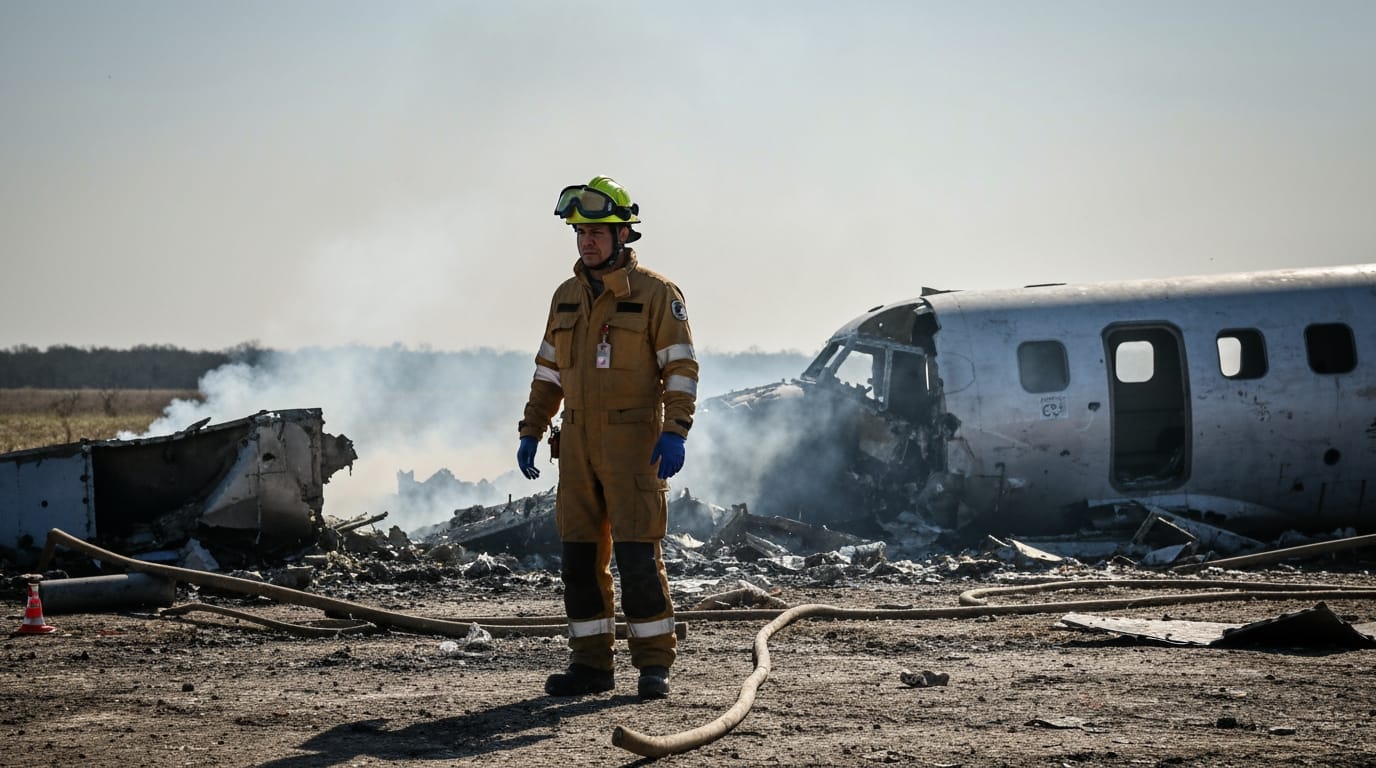
GALVESTON, Texas – A Mexican Navy aircraft on a critical humanitarian mission to transport a child burn victim for specialized medical care crashed into Galveston Bay on Monday, resulting in the deaths of at least five people and initiating a multi-agency search and rescue operation. The tragic incident unfolded amid dense fog, casting a somber shadow over efforts to save a young life. Eight individuals were aboard the King Air ANX 1209 twin-turboprop when it went down, including four members of the Mexican Navy and four civilians, among them a pediatric burn patient.
A Mission of Hope Derailed
The ill-fated flight was part of a compassionate initiative coordinated by the Michou and Mau Foundation, a Mexican non-profit organization dedicated to providing aid and specialized medical treatment to severely burned children. For years, the foundation has facilitated life-saving transfers, often bringing young patients to hospitals with advanced burn units, such as Shriners Children's hospital in Galveston. This particular mission aimed to transport a pediatric burn patient, identified in some reports as a one-year-old or two-year-old child, from Mérida, Mexico, to Galveston, Texas, for urgent medical attention. The use of a Mexican Navy aircraft underscores the critical nature of these medical evacuations, often undertaken when commercial transport is unsuitable or unavailable for patients requiring intensive care during transit. The plane, a Beechcraft Super King Air 350, had departed from Merida International Airport.
Galveston Bay Becomes a Crash Site
The crash occurred around 3:17 p.m. local time on Monday, December 22, near the base of the Galveston Causeway, a raised roadway over water, approximately 50 miles southeast of Houston. Weather conditions at the time were characterized by heavy fog, significantly reducing visibility to about half a mile, a factor that investigators will likely examine closely. Emergency responders from numerous agencies, including the Galveston Police Department, Galveston County Sheriff's Office, U.S. Coast Guard, and the Texas Department of Public Safety, rapidly converged on the scene. The U.S. Coast Guard received the first report of the crash and quickly initiated search and rescue operations in the waters of Galveston Bay, which were about four to five feet deep at the crash site.
Witnesses described a frantic scene as rescue personnel worked against challenging conditions. Initial reports from the Mexican Navy indicated that two people were recovered alive from the crash site, while one person remained missing. U.S. Coast Guard officials, however, later reported rescuing six people and recovering two bodies. Conflicting early accounts regarding the exact number of fatalities and survivors highlighted the chaos and complexity of the immediate aftermath. Ultimately, authorities confirmed that five people died in the crash, with two survivors and one person still unaccounted for, presumed deceased given the circumstances.
Mounting Casualties and Ongoing Investigations
The Mexican Navy officially confirmed five fatalities, including the underage patient being transported for medical treatment. Among the deceased were also three members of the Mexican Navy: Lieutenant A.N. P.A. Víctor Rafael Pérez Hernández, Lieutenant S.S.N. Juan Iván Zaragoza Flores, and Marinero A.N. E. Av. Guadalupe Flores Barranco. Additionally, Federico Efraín Ramírez Cruz, the patient, and Juan Alfonso Adame González, a doctor, were named among the civilian fatalities. The identity of a presumed deceased individual, whose body had not yet been located, contributed to the complexity of the casualty count. Two individuals who survived the crash were transported to local medical centers for treatment, while another 27-year-old woman was reportedly uninjured.
Both the Federal Aviation Administration (FAA) and the National Transportation Safety Board (NTSB) have dispatched teams to the crash site to commence a thorough investigation into the cause of the accident. While dense fog has been identified as a potential contributing factor, the official cause remains under investigation. The Mexican Navy has also pledged to conduct its own investigation and is cooperating with U.S. authorities. The coordinated effort between Mexican and U.S. agencies extends beyond the immediate rescue, emphasizing the international nature of the mission and the collaborative response to the tragedy.
The Broader Impact and Humanitarian Spirit
This devastating incident serves as a stark reminder of the risks involved in critical medical transport missions, particularly those crossing international borders to provide specialized care. The Michou and Mau Foundation, through its social media channels, expressed its "deepest solidarity with the families in light of these events," sharing grief and reaffirming its commitment to assisting children with severe burns. The foundation's work has provided a lifeline for countless children, often arranging emergency transports to facilities like Shriners Children's hospital in Galveston, known for its advanced burn care capabilities.
The loss of life, particularly that of a child patient and dedicated medical and military personnel, highlights the human cost associated with these vital humanitarian efforts. The incident reverberates beyond the immediate families, touching the wider communities in both Mexico and the United States that support such cross-border aid. The ongoing investigation will aim to provide answers and prevent similar tragedies in the future, even as the global medical community continues its work under challenging circumstances.
The crash in Galveston Bay represents a profound loss, underscoring the inherent dangers of air travel combined with the urgency of humanitarian medical missions. As investigations proceed, the focus remains on understanding the precise circumstances that led to this disaster and honoring the lives lost in a mission dedicated to hope and healing. The dedication of the Mexican Navy personnel and the Michou and Mau Foundation, though marred by this tragedy, exemplifies an enduring commitment to saving lives, even when faced with significant risks.


