Transatlantic Tensions Soar as Trump Imposes Tariffs Over Greenland Dispute, EU Vows Strong Response
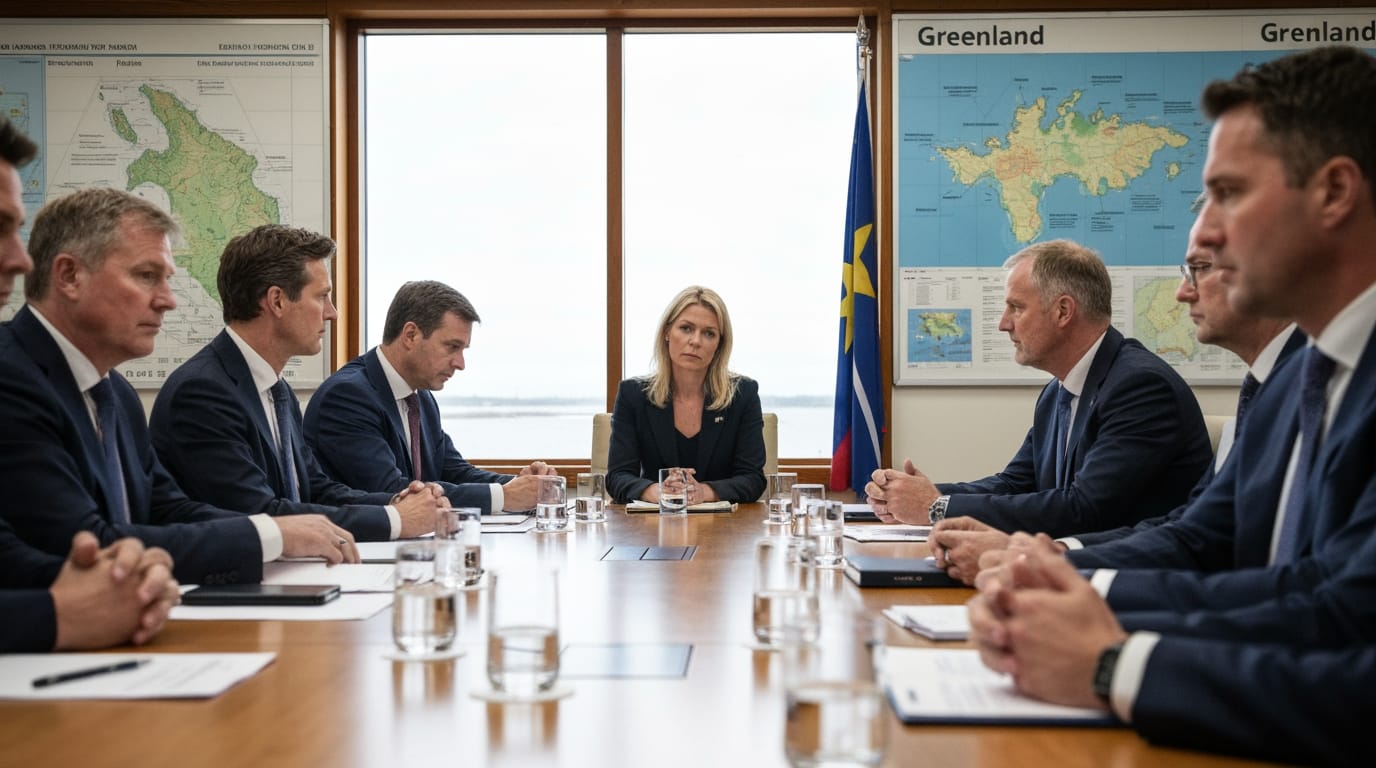
Brussels, Belgium – A diplomatic and economic crisis is escalating between the United States and its European allies after President Donald Trump announced the imposition of tariffs on eight European nations, explicitly linking the punitive measures to their opposition to his renewed efforts to acquire Greenland. The move, characterized by European leaders as an act of economic coercion and a profound challenge to international law, threatens to unravel transatlantic trade agreements and strain the foundational NATO alliance. As a united Europe weighs its retaliatory options, the fate of the strategically vital Arctic island has thrust geopolitical stability into uncharted waters.
The latest escalation unfolded Saturday when President Trump declared on social media a 10% import tariff on all goods from Denmark, Norway, Sweden, France, Germany, the United Kingdom, the Netherlands, and Finland, effective February 1. He warned that these tariffs would surge to 25% by June 1 unless a deal for the "Complete and Total purchase of Greenland" by the United States is concluded. Trump framed the tariffs as a direct consequence of these nations' recent deployment of military personnel to Greenland, which he deemed an obstruction to U.S. security interests in the Arctic. This drastic measure has prompted outrage across Europe, with the European Union considering freezing its implementation of a hard-won trade deal with the United States.
The Strategic Jewel of the Arctic: Why Greenland Matters
At the heart of this contentious dispute lies Greenland, the world's largest island, whose icy expanses belie an immense strategic value. Its location at the northern edge of the Arctic Circle is critical for global security and resource competition. For decades, the United States has maintained a military presence on Greenland, with the Pituffik Space Base serving as a cornerstone of its missile warning and space surveillance capabilities. The island forms the western flank of the Greenland-Iceland-United Kingdom (GIUK) Gap, a vital maritime chokepoint for monitoring naval activities in the North Atlantic. As climate change opens new Arctic shipping routes, Greenland's geopolitical importance is further amplified, positioning it as a key player in a region witnessing increasing strategic competition from global powers like Russia and China.
Beyond its military significance, Greenland boasts substantial natural resources, including significant deposits of rare-earth elements crucial for advanced technologies. It ranks eighth globally in rare-earth reserves, with two of the world's largest deposits at Kvanefjeld and Tanbreez. The potential for resource extraction offers economic allure, especially as the U.S. seeks independence from China in critical sectors. This combination of military advantage and economic potential fuels the long-standing American interest in the island, with historical attempts to acquire Greenland dating back to the 19th century, including a secret offer in 1946.
European Unity Against "Territorial Expansionism"
The European response to Trump's tariffs and his persistent calls for Greenland's acquisition has been swift and largely unified. Denmark, which governs Greenland as an autonomous territory, has consistently reiterated that the island is not for sale, a stance strongly supported by the Greenlandic government and its 56,000 predominantly Inuit inhabitants. Greenlanders have emphasized their right to self-determination, with rallies in Nuuk and Copenhagen featuring messages like "Greenland is not for sale" and "Greenland is already GREAT."
European leaders view any U.S. attempt to annex Greenland as a blatant violation of Danish sovereignty and international law, posing an existential threat to the credibility of the NATO alliance itself. French President Emmanuel Macron and Finnish President Alexander Stubb have publicly reaffirmed their "unwavering support" for Greenlandic territorial integrity. In a concerted display of solidarity and a perceived challenge to U.S. pressure, several European nations, all NATO allies, recently deployed military forces to Greenland for joint exercises. These deployments, intended to bolster Arctic security and demonstrate European commitment to the region, were directly cited by President Trump as the trigger for his tariff announcement.
The European Parliament is now actively considering halting the ongoing legislative process for the EU-U.S. trade deal in direct protest. Lawmakers argue that proceeding with the deal while the U.S. administration makes territorial claims and issues threats would be seen as rewarding provocative actions. This potential freeze could have significant economic repercussions, given that the U.S. is the EU's top trading partner for exports. U.S. Trade Representative Jamieson Greer, however, suggested that Europe should "silo off" the tariff issue from broader trade negotiations, though he noted that the EU has yet to reciprocate U.S. tariff reductions under existing agreements.
A Test of Transatlantic Bonds
The "Greenland row" represents a profound test for the transatlantic relationship, challenging decades of alliance and cooperation. The threat of tariffs against close allies over a territorial claim strikes at the heart of diplomatic norms and collective security principles. While a bipartisan U.S. congressional delegation visited Copenhagen to reassure Danish and Greenlandic officials of their support and to de-escalate the situation, President Trump's rhetoric and actions continue to create deep divisions.
Danish leaders have warned that military action against a fellow NATO member could jeopardize the alliance itself, raising concerns about its ability to present a united front against global challenges. The implications extend beyond trade and diplomacy, potentially eroding trust and cooperation on crucial security matters. The coming weeks will be critical as Europe deliberates its response, navigating the delicate balance between asserting its sovereignty and maintaining vital, albeit strained, ties with its most powerful ally. The standoff over Greenland is not merely a dispute over land; it is a battle for the principles of international relations and the future of the liberal world order.


