Trump Demands "Unconditional Surrender" as Israel-Iran Conflict Intensifies
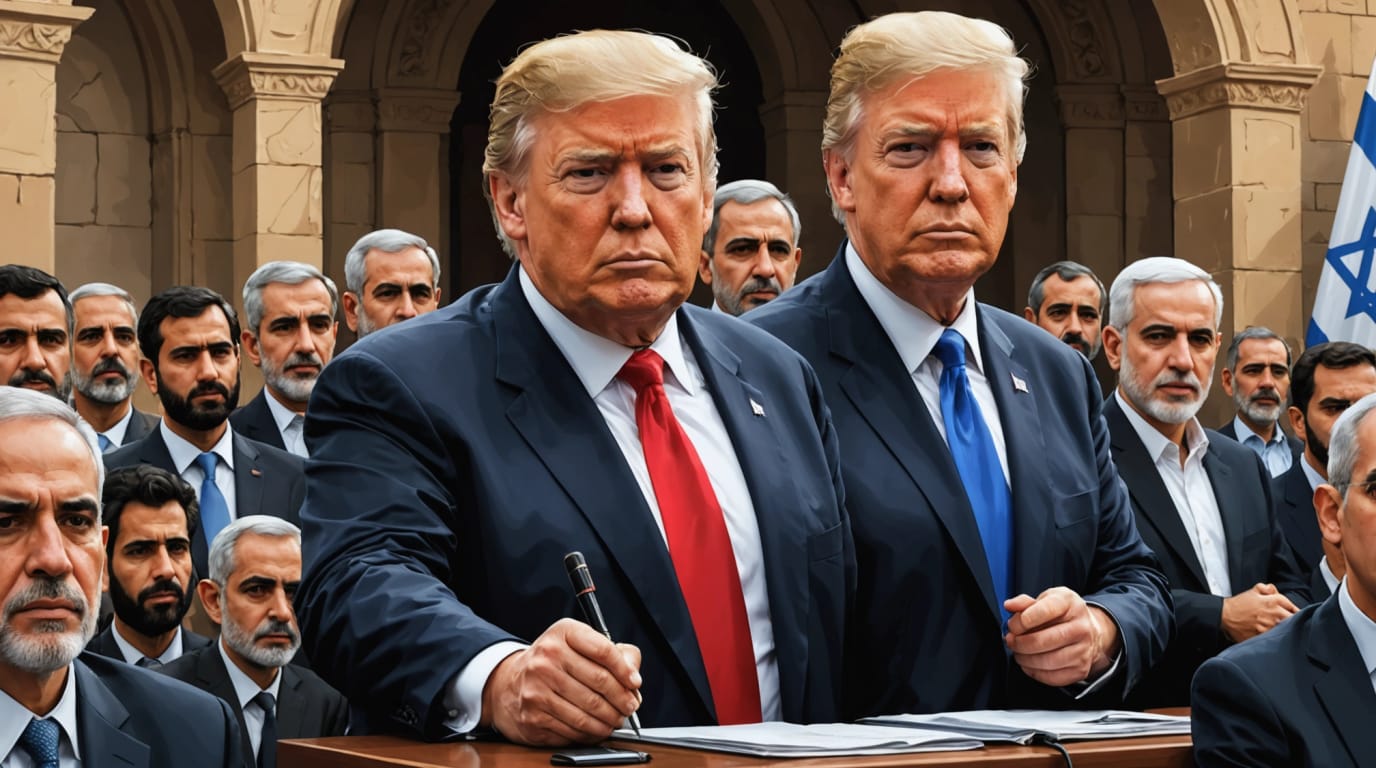
The conflict between Israel and Iran has escalated dramatically in recent days, with the United States, under President Donald Trump, taking an increasingly assertive stance. As explosions rock Tehran and missiles fly between the two nations, the world watches anxiously, uncertain whether the U.S. will be drawn into a broader Middle Eastern war.
Escalation of Hostilities
The current crisis entered its sixth day with Israel claiming responsibility for attacks on Iranian centrifuge and weapons production sites. These strikes followed a series of Iranian missile launches toward Israel, including the hypersonic Fattah projectile, which Iran claimed had breached Israeli air defenses. The Israeli military also reported intercepting drones launched from Iran, triggering sirens in the occupied Golan Heights.
Casualty reports continue to climb. According to Al Jazeera, the death toll from Israeli attacks on Iran has surpassed 240, including 70 women and children. Iranian attacks on Israel have resulted in over 24 fatalities. The ongoing conflict has exacerbated the already dire situation in Gaza, where Israeli forces have killed at least 89 Palestinians, including 70 seeking food aid in Khan Younis.
Trump's Stance: "Complete Control" and "Unconditional Surrender"
President Trump has responded to the escalating violence with strong rhetoric and a posture of command. He declared that the U.S. now has "complete and total control of the skies over Iran" and demanded Iran's "unconditional surrender." Speaking to reporters after cutting short his time at the G7 summit in Canada, Trump praised the Israeli offensive and insisted that Iran's nuclear capabilities needed to be eliminated.
Trump dismissed suggestions of a ceasefire, stating, "I'm not looking for a ceasefire, we're looking at better than a ceasefire… a real end" to the conflict. He added, "I'm not too much in a mood to negotiate." This firm stance has fueled speculation about potential U.S. military intervention.
Potential for U.S. Intervention
The possibility of direct U.S. military action has become a central question. Following his early departure from the G7 summit, Trump convened a meeting with his national security team to discuss the crisis. Sources indicate that the possibility of U.S. intervention and airstrikes was on the table.
Trump has sent mixed signals regarding potential U.S. involvement. While some "America First" voices oppose direct intervention, others within Trump's political base, such as Senator Lindsey Graham, advocate for a more aggressive approach. Graham has stated that if negotiations fail, the U.S. should "go all-in to help Israel finish the job," including providing bombs and potentially flying alongside Israeli forces.
Adding to the uncertainty, U.S. forces have been deployed to the Middle East, ostensibly for "defensive" purposes. Trump has also warned Iran's Supreme Leader Ayatollah Ali Khamenei that "our patience is wearing thin," further escalating tensions.
Congressional Response and War Powers
As the Trump Administration weighs its options, members of Congress are actively debating the limits of presidential war powers. Representatives Thomas Massie and Ro Khanna introduced a war powers resolution asserting that Congress must approve any decision by Trump to commit armed forces to military action in the region. Senators Tim Kaine introduced a similar resolution in the Senate.
These resolutions highlight concerns that the President might unilaterally involve the U.S. in another prolonged conflict in the Middle East. The debate reflects a broader discussion about the balance of power between the executive and legislative branches in matters of war and national security.
Implications and Uncertainties
Trump's tough rhetoric and the escalating conflict have significant implications for the region and the global balance of power. His stance has emboldened Israel, according to some analysts, potentially leading to a more aggressive approach towards Iran.
The conflict has also sent ripples through the global economy, with oil prices increasing amid the uncertainty. The potential for a wider war involving the U.S. raises concerns about further destabilization in the Middle East and beyond.
As the situation unfolds, the world remains on edge, awaiting further developments and clarity on the extent of U.S. involvement. The coming days will be critical in determining whether the crisis can be contained or if it will spiral into a larger, more devastating conflict.


