Trump Drops IRS Lawsuit in Exchange for Controversial $1.78 Billion ‘Anti-Weaponization Fund’
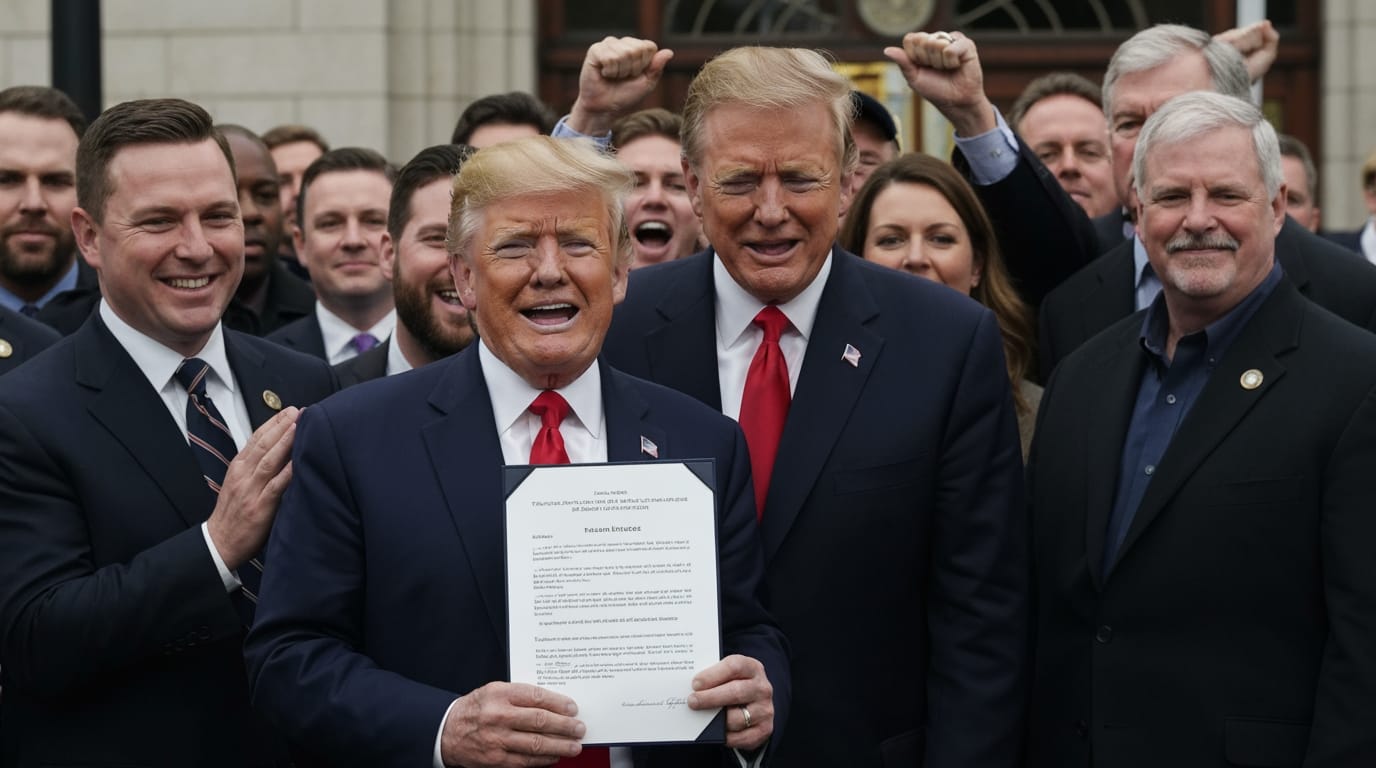
Washington D.C. — President Donald Trump has dropped his $10 billion lawsuit against the Internal Revenue Service (IRS) and the Treasury Department in a move that simultaneously resolves a high-profile legal battle and establishes a new, nearly $1.8 billion "Anti-Weaponization Fund" within the Department of Justice. The settlement, announced Monday, May 18, 2026, by Acting Attorney General Todd Blanche, ends a lawsuit filed by Trump, his sons, and the Trump Organization concerning the leak of their confidential tax returns. It has, however, ignited significant criticism from ethics watchdogs and Democratic lawmakers, who contend the fund could serve as a political tool for the administration.
The agreement sees the plaintiffs — President Trump, Donald Trump Jr., Eric Trump, and the Trump Organization — receive a formal apology from the government, but no direct monetary compensation. In exchange for dropping the $10 billion claim, which alleged the IRS failed to safeguard their tax information, President Trump also agreed to withdraw other administrative claims related to investigations into his 2016 presidential campaign and the 2022 Mar-a-Lago raid. The centerpiece of the resolution is the creation of the "Anti-Weaponization Fund," a $1.776 billion pool of taxpayer money designated to compensate individuals who claim to be victims of a "weaponized" justice system.
The Genesis of the Lawsuit
The lawsuit, initiated in January, stemmed from the unauthorized disclosure of President Trump's and his family's tax records to news organizations. This leak was traced to Charles Littlejohn, a former IRS contractor who pleaded guilty and was subsequently sentenced in 2024 to five years in prison for his role in what a judge described as "the biggest heist in IRS history." The lawsuit sought substantial damages, totaling $10 billion, arguing that the IRS failed in its duty to protect sensitive taxpayer information, leading to reputational and financial harm for the plaintiffs.
The legal challenge, however, faced an unusual predicament. U.S. District Judge Kathleen Williams, overseeing the case in Miami, had expressed concerns about the litigation's viability, given that President Trump, as the sitting president, effectively controls the very agency he was suing. This raised questions among legal experts about the potential for a conflict of interest and the legitimacy of the legal proceedings. The settlement comes just days before a May 20 deadline set by Judge Williams for parties to address whether a legitimate controversy, a core requirement for any lawsuit, truly existed.
The ‘Anti-Weaponization Fund’ Takes Shape
The newly established "Anti-Weaponization Fund" is slated to receive $1.776 billion, a sum intentionally chosen to commemorate the year of the nation's founding. This significant amount will be drawn from the Treasury Department's Judgment Fund, a taxpayer-funded pool typically reserved for settling legal claims against the federal government. Acting Attorney General Todd Blanche articulated the fund's purpose, stating it would provide "a lawful process for victims of lawfare and weaponization to be heard and seek redress."
The specifics regarding eligibility for compensation from the fund remain broadly defined. While Blanche did not elaborate on precise criteria, reports indicate that the fund is intended to compensate those who believe they have been unfairly targeted by the justice system. This broad scope has led to speculation that recipients could include individuals convicted in connection with the Jan. 6, 2021, Capitol riot, some of whom have already initiated lawsuits against the government. The Justice Department's statement on the settlement indicated the fund would "provide a systematic process to hear and redress claims of others who suffered weaponization and lawfare," and stressed that the "machinery of government should never be weaponized against any American."
The fund will be administered by a five-person commission. Four of these members will be appointed by the Attorney General and are subject to removal by the President, with the fifth member chosen in consultation with congressional leadership. The commission will have the authority to issue both formal apologies and monetary relief to claimants. Claims will be processed through mid-December 2028, approximately one month before the conclusion of President Trump's current term. Any funds remaining after this period will revert to the federal government. The payments made will be reported quarterly to the Attorney General and subject to audit, though public disclosure of these payments is not explicitly guaranteed.
Waves of Controversy and Criticism
The settlement and the creation of the "Anti-Weaponization Fund" have immediately drawn intense scrutiny and criticism. Democratic lawmakers and government ethics experts have voiced strong objections, characterizing the arrangement as a "highly unusual agreement" and a "corrupt" and "unprecedented resolution." Concerns center on the potential for the fund to be misused as a "slush fund" to reward political allies and supporters, particularly given its broad eligibility criteria and the President's influence over the commission's appointments.
Ninety-three Democratic members of Congress attempted to intervene in the original lawsuit, arguing that any settlement would "siphon billions of taxpayer dollars into the pockets of the President, his family, and his allies." Critics also point to the inherent conflict of interest in President Trump suing an agency under his executive control. Since his return to the White House, the Justice Department has reportedly paid at least $8.5 million to resolve claims brought by allies alleging improper targeting by federal law enforcement during previous administrations, raising further questions about the broader implications of this new fund.
Conclusion
The settlement of President Trump's lawsuit against the IRS marks a significant development, concluding a contentious legal battle while simultaneously inaugurating a new and controversial mechanism for addressing perceived governmental overreach. While the administration frames the "Anti-Weaponization Fund" as a necessary step to rectify past injustices and prevent future abuses of power, its structure and potential beneficiaries have sparked widespread concern regarding transparency, accountability, and the integrity of the justice system. The coming months will likely see continued debate over the fund's implementation and the eligibility of those seeking redress, solidifying its place as a focal point in the ongoing discourse surrounding government power and political influence.


