Trump Greenlights Nvidia H200 AI Chip Exports to China in Major Policy Reversal
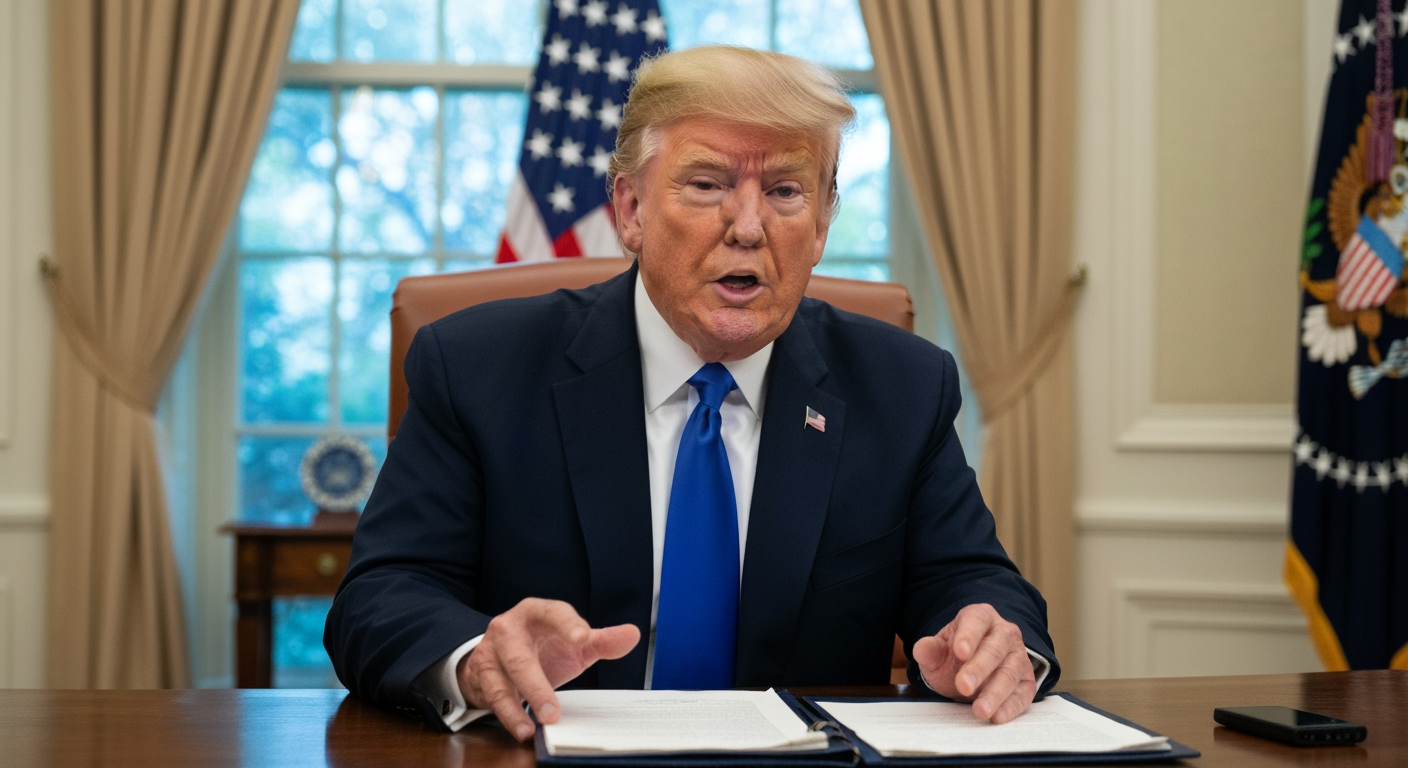
Washington, D.C. — In a dramatic shift in U.S. technology export policy, former President Donald Trump announced Monday that the United States will permit Nvidia to export its advanced H200 artificial intelligence chips to "approved customers" in China and other nations. The decision, revealed via a post on his Truth Social platform, partially rolls back a Biden-era restriction on high-end chip exports aimed at curbing China's technological advancements. The move is poised to reshape the competitive landscape in the global AI industry and ignite a complex debate over national security and economic interests.
The announcement marks a significant departure from the previous administration's stringent controls, which had largely cut off Chinese access to the most powerful U.S.-made AI semiconductors. President Trump stated the new policy is conditional on "continued strong National Security" and that the U.S. would receive a 25% share from the H200 chip exports. The Department of Commerce is currently finalizing the intricate details of this new framework, which is also expected to extend to other major U.S. chipmakers like AMD and Intel.
Deciphering the Policy Shift
The H200 Tensor Core GPU, based on Nvidia's Hopper architecture, represents a pinnacle of AI processing power. It boasts 141 gigabytes of HBM3e memory and a remarkable 4.8 terabytes per second bandwidth, significantly outperforming its predecessors like the H100 and the H20 chip, which was specifically engineered for the Chinese market under previous restrictions. Experts indicate the H200 is nearly six times as powerful as the H20, making it a critical component for accelerating generative AI, large language models, and high-performance computing workloads.
This policy reversal follows intense lobbying efforts by Nvidia and its CEO, Jensen Huang, who has consistently advocated for improved U.S.-China trade relations. Nvidia welcomed the decision, with a spokesperson asserting that it "strikes a thoughtful balance that is great for America" by supporting American jobs and manufacturing. The company had previously expressed concerns that export restrictions were inadvertently compelling China to develop its own homegrown AI chip industry.
However, the new arrangement specifically excludes Nvidia's most advanced forthcoming products, such as the Blackwell and Rubin systems, which will remain restricted from the Chinese market. President Trump emphasized that these cutting-edge chips are primarily being adopted by U.S. customers.
The Geopolitical Chessboard and Economic Implications
The U.S.-China technology rivalry has been a defining characteristic of global geopolitics for years, particularly in strategic sectors like semiconductors and artificial intelligence. Since 2018, the U.S. government has progressively strengthened export controls to limit China's access to advanced chip technologies, citing national security concerns and Beijing's military-civil fusion policies. The underlying objective has been to prevent the transfer of technologies that could bolster China's military capabilities or give it an undue advantage in the AI arms race.
The Biden administration, in particular, implemented comprehensive restrictions that targeted advanced computing chips, including Nvidia's A100 and H100, effectively blocking their sale to China without specific permission. This led U.S. chipmakers to create less powerful, modified versions of their chips for the Chinese market, a strategy that President Trump criticized as forcing "our Great Companies to spend BILLIONS OF DOLLARS building 'degraded' products that nobody wanted."
The new policy's immediate economic implications are significant for U.S. chipmakers. China represents a substantial market for advanced semiconductors, and renewed access, even under controlled conditions, could provide a considerable revenue boost. Nvidia, for instance, has seen its market capitalization soar to approximately $4.5 trillion, largely driven by the global AI boom and demand for its processors. The prospect of a 25% cut of sales revenue being directed to the U.S. government also introduces a novel economic dimension to export policy.
Balancing Act: National Security vs. Economic Gains
The decision is not without its detractors. "China hawks" in Washington have consistently voiced concerns that providing Beijing with more advanced AI chips, even the H200, could inadvertently strengthen China's military and intelligence capabilities. The fear is that the technology could be diverted or reverse-engineered, despite conditions imposed for national security. Democrats in Congress have already expressed opposition, characterizing the move as a "huge mistake" that could benefit China's military and economy.
Conversely, proponents of eased restrictions argue that overly aggressive controls can be counterproductive. Nvidia CEO Jensen Huang has suggested that past U.S. export rules may have inadvertently spurred China to accelerate its domestic chip development, potentially leading to a more self-sufficient, and ultimately more formidable, Chinese semiconductor industry. By allowing controlled access, the U.S. maintains a degree of influence and leverages its technological lead for economic gain, rather than completely ceding the market to indigenous alternatives.
The Commerce Department's role in finalizing details, particularly in vetting "approved customers" and monitoring sales, will be crucial in assuaging national security concerns. The ability to effectively enforce these conditions will determine the long-term viability and impact of this new trade paradigm.
Looking Ahead: A New Era of Tech Diplomacy?
President Trump's announcement signals a potential recalibration of the U.S. approach to the tech rivalry with China. While maintaining restrictions on the most advanced future technologies like Blackwell and Rubin chips, the policy opens a channel for considerable commercial engagement with China in a critical AI component sector. This "managed trade" approach could represent an attempt to strike a delicate balance between containing China's technological ambitions and allowing U.S. companies to benefit from access to a massive market.
The coming months will reveal how the Commerce Department's finalized framework will operate in practice, how "approved customers" will be defined, and how the 25% revenue share for the U.S. will be implemented. The broader implications for the U.S. semiconductor industry, China's AI development trajectory, and the intricate dynamics of U.S.-China relations will undoubtedly be a focal point of global attention. This policy shift could mark the beginning of a new chapter in the ongoing technological competition, one where economic incentives are more explicitly interwoven with national security considerations.
Related Articles


Ratko Mladić, "Butcher of Bosnia" and Convicted War Criminal, Dies at 84
THE HAGUE, Netherlands – Ratko Mladić, the former Bosnian Serb military commander known as the "Butcher of Bosnia" and convicted of genocide, war crimes, and crimes against humanity, has died at the age of 84. Serbian...


Long-Awaited 9/11 Mastermind Trial Set for 2028, Decades After Attacks
GUANTANAMO BAY, Cuba – Nearly a quarter-century after the devastating terror attacks of September 11, 2001, a military judge has finally set a trial date for Khalid Sheikh Mohammed, the alleged mastermind behind the...