Trump Links Greenland Pursuit to Nobel Peace Prize Snub in Letter to Norwegian PM
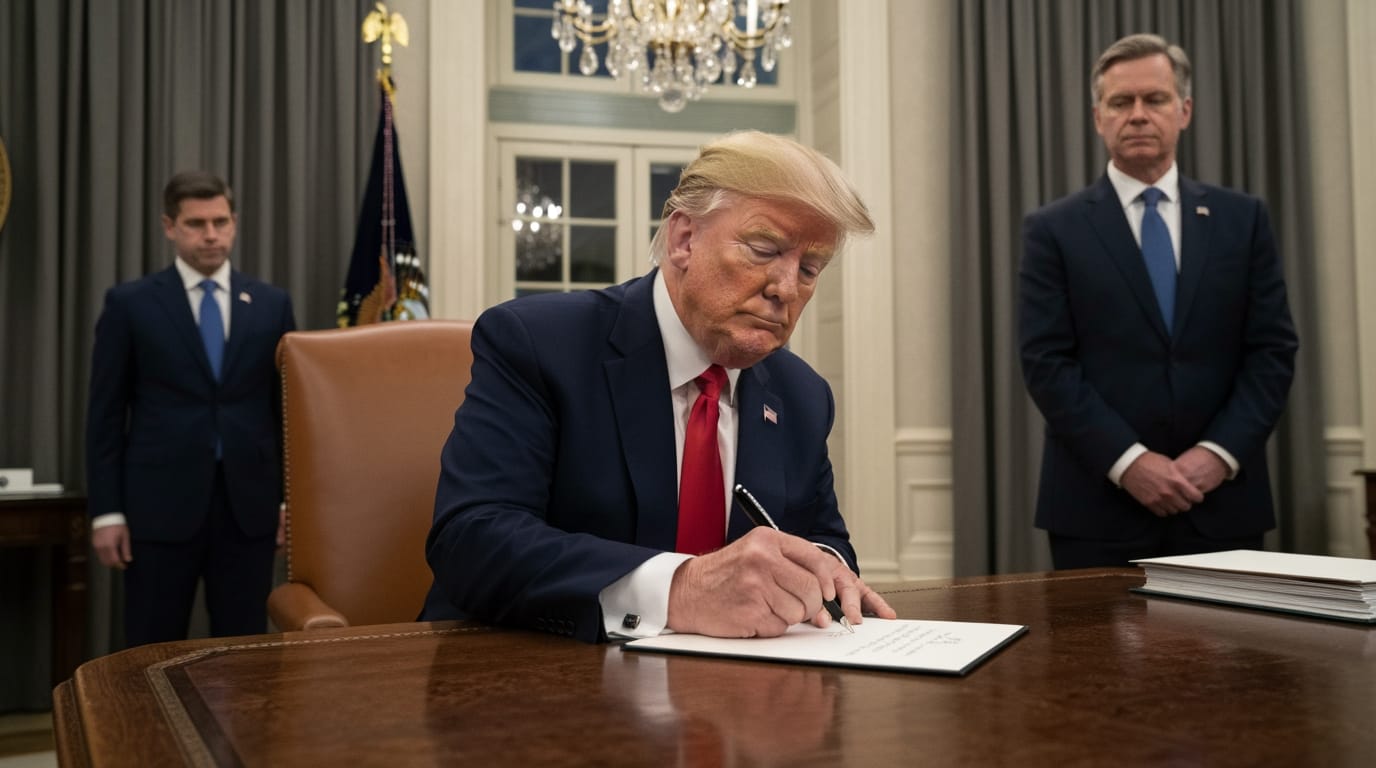
Washington, D.C. – Former President Donald Trump has explicitly tied his aggressive pursuit of Greenland to his frustration over not receiving the Nobel Peace Prize, according to an extraordinary letter sent to Norwegian Prime Minister Jonas Gahr Støre over the weekend. The communication, confirmed by Støre, has ignited a fresh diplomatic firestorm, linking a long-standing geopolitical ambition with a personal grievance and threatening to further strain transatlantic relations.
The correspondence from the former U.S. President arrived amidst escalating rhetoric regarding the autonomous Danish territory, with Trump having recently threatened tariffs against several European nations if a deal for Greenland is not reached. The letter's contents, widely reported, reveal a direct connection between his perceived Nobel snub by Norway and his current foreign policy posture, suggesting a departure from "purely of Peace" in favor of what he deems "good and proper for the United States of America."
A Diplomatic Gambit and a Personal Grievance
In his letter to Prime Minister Støre, President Trump articulated a clear shift in his diplomatic approach. He stated that "Considering your Country decided not to give me the Nobel Peace Prize for having stopped 8 wars PLUS, I no longer feel an obligation to think purely of Peace, although it will always be predominant, but can now think about what is good and proper for the United States of America." This declaration underscores a transactional view of international relations, where a perceived slight regarding one of the world's most prestigious awards directly impacts significant policy decisions.
The Norwegian Prime Minister, Jonas Gahr Støre, confirmed receipt of the message and reiterated a fundamental point of international understanding: the Nobel Peace Prize is awarded by an independent Nobel Committee and not by the Norwegian government itself. Støre noted that he has repeatedly conveyed this information to the former President. The Norwegian leader indicated that Trump's letter was, in part, a response to a prior communication from Støre and Finnish President Alexander Stubb, which urged a de-escalation of recent tariff disputes initiated by Trump against European allies.
Greenland: A Strategic Prize and Persistent Pursuit
The renewed focus on Greenland is not a new development for the former President. During his first term in 2019, Trump expressed interest in purchasing the vast Arctic island, a proposal that was swiftly rejected by Danish Prime Minister Mette Frederiksen as "absurd." However, since beginning his second term in 2025, Trump has intensified his campaign to acquire Greenland, going as far as threatening invasion or annexation, actions that would contravene international law.
His argument centers on Greenland's strategic importance, asserting that Denmark is incapable of protecting the territory from the growing influence of Russia and China in the Arctic. In his letter, he questioned Denmark's historical claim to Greenland, suggesting it was based merely on a "boat landed there hundreds of years ago." He concluded that "The World is not secure unless we have Complete and Total Control of Greenland." This push is underscored by the U.S. historical interest in the island, with previous attempts to purchase it dating back to 1867, and a secret offer made in 1946. The U.S. currently maintains the Pituffik Space Base in Greenland, and a 1951 treaty allows for the establishment of additional NATO bases if deemed necessary, although any increase in military presence requires consent from Denmark and Greenland.
Further escalating the diplomatic pressure, President Trump recently announced intentions to impose a 10% tariff on imports from several European nations, including Denmark, Norway, Sweden, France, Germany, the United Kingdom, the Netherlands, and Finland, beginning February 1. This tariff is slated to increase to 25% by June 1, continuing "until such time as a Deal is reached for the Complete and Total purchase of Greenland."
The Nobel Peace Prize and Perceived Overlooks
The Nobel Peace Prize, awarded annually by the Norwegian Nobel Committee, is meant to recognize individuals or organizations who have "done the most or the best work for fraternity between nations, for the abolition or reduction of standing armies and for the holding and promotion of peace congresses." The committee operates independently of the Norwegian government.
President Trump has been nominated for the prestigious award on multiple occasions, primarily for his role in brokering the Abraham Accords and efforts towards peace between Serbia and Kosovo. Despite these nominations, he has not been awarded the prize, a fact he has frequently lamented and, at times, conflated with actually winning the award. His recent letter indicates that this perceived snub has significantly influenced his current foreign policy considerations, suggesting a personal dimension to what would typically be considered purely geopolitical strategy.
International Repercussions and Mounting Tensions
The former President's letter and his tariff threats have drawn significant international concern. The European Union is reportedly weighing retaliatory tariffs, potentially valued at billions of euros, in response to Trump's escalating trade measures. These actions risk igniting a broader trade conflict between the U.S. and its European allies.
Furthermore, Greenlanders themselves have voiced opposition to the prospect of a U.S. acquisition, with protests against Trump's desires reported. The aggressive nature of Trump's proposals, including the implied threat of force, has led some academics and commentators to describe U.S. actions as a form of hybrid warfare. Even within U.S. political circles, some figures have expressed discomfort, with one Republican senator reportedly calling related remarks "amateurish" and "absurd." The situation highlights growing fissures in transatlantic alliances and raises questions about the future of international diplomacy.
The direct link established by President Trump between his personal disappointment over the Nobel Peace Prize and his strategic foreign policy objectives marks an unusual juncture in international relations. As the United States continues its assertive posture regarding Greenland, and European nations contemplate their responses, the broader implications for global stability and diplomatic norms remain uncertain. The unfolding "Greenland crisis," as some have termed it, is poised to test the resilience of long-standing alliances and redefine the boundaries of international engagement.


