Trump Ratchets Up Pressure on Cuba with Tariff Threat Against Oil Suppliers
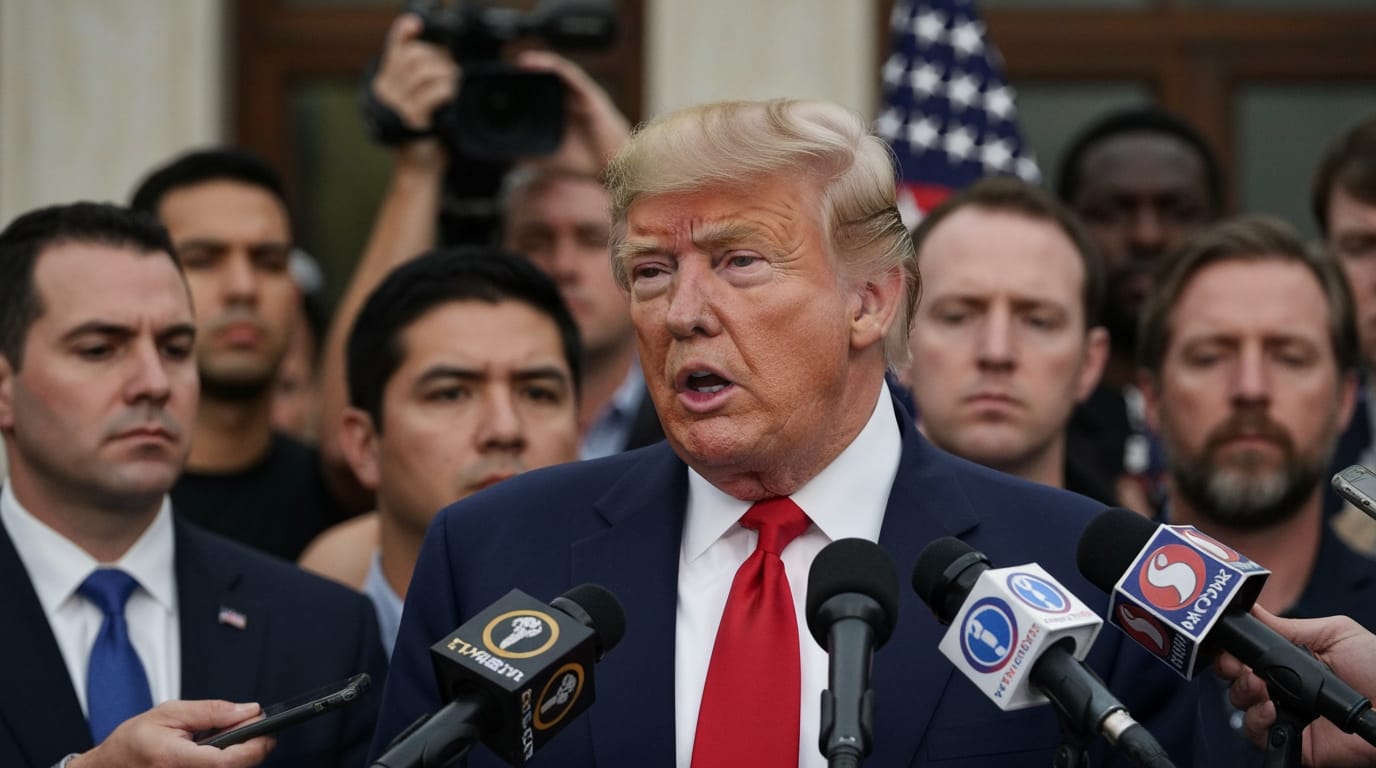
WASHINGTON D.C. – In a significant escalation of its long-standing policy toward Cuba, the United States, under President Donald Trump, has threatened to impose tariffs on goods from any country that sells or provides oil to the communist island nation. The executive order, signed on Thursday, marks a renewed hardline stance aimed at destabilizing Havana's government and has immediate implications for key regional allies, particularly Mexico, which has recently emerged as a primary oil supplier to Cuba.
The White House justified the directive by citing Cuba's alleged ties to "hostile powers" including Russia, Hamas, and Hezbollah, characterizing these relationships as an "unusual and extraordinary threat to US national security and foreign policy." This move intensifies the economic squeeze on Cuba, which is already grappling with a severe energy crisis characterized by widespread blackouts and fuel shortages.
Executive Order Targets Cuba's Lifeline
President Trump's executive order establishes a process for the U.S. Secretaries of State and Commerce to assess and implement tariffs against nations found to be supplying oil to Cuba. While specific tariff rates have yet to be detailed, the order's intent is clear: to further isolate Cuba and sever its critical energy lifelines. This action represents one of the most assertive steps taken by the Trump administration to undermine the Cuban government, following what it describes as a need for "immediate response to protect American citizens and interests."
The order follows weeks of increasing pressure from Washington on countries, including Mexico, to halt their oil deliveries to Cuba. The U.S. Secretary of State, Marco Rubio, a vocal opponent of the Cuban regime and of Cuban descent, is widely seen as a key architect of the administration's hardline policies toward both Cuba and Venezuela.
Shifting Supply Chains and International Reactions
Historically, Venezuela served as Cuba's primary oil provider, a relationship that deepened significantly during Hugo Chávez's presidency. Venezuela supplied approximately 70,000 barrels per day (bpd) to Cuba, a figure that dwindled to about 30,000 bpd and eventually around 9,528 bpd due to mounting U.S. sanctions and the recent arrest of Venezuelan leader Nicolás Maduro. A U.S. government analysis also indicated that Cuba reportedly resold about 60% of this Venezuelan oil—approximately 40,000 bpd—to Asian markets for profit, even as its own population faced shortages.
In the wake of Venezuela's reduced capacity, Mexico emerged as Cuba's largest oil supplier in 2025, providing an estimated 12,284 bpd, accounting for 44% of Cuba's crude imports. Russia and Algeria also contribute to Cuba's oil supply.
Mexican President Claudia Sheinbaum acknowledged a temporary cessation of Mexican oil shipments to Cuba but asserted that this was a "sovereign decision" and not a direct result of U.S. pressure. Sheinbaum has indicated Mexico's commitment to continued "humanitarian aid" to Cuba and has offered to serve as an intermediary in discussions between the U.S. and Cuba, despite the implicit pressure.
Internationally, China has voiced its support for Cuba, criticizing the U.S. for its unilateral sanctions and reaffirming Cuba's right to sovereignty. Meanwhile, Cuba's ambassador to Colombia has openly accused the U.S. of "international piracy" in its efforts to block oil deliveries, highlighting the heightened tensions in the Caribbean.
Cuba's Deepening Energy Crisis and Human Impact
The U.S. tariff threat arrives as Cuba faces one of its most severe economic and energy crises in decades, with conditions often compared to the post-Soviet Union era. The island nation, home to approximately 8 million people, is highly dependent on oil imports, with its GDP comparable to that of Rhode Island. Recent reports suggest Cuba possesses only 15 to 20 days' worth of oil inventory.
The scarcity of fuel has translated into daily hardships for ordinary Cubans. Havana experiences regular power outages lasting up to four hours, while rural areas suffer even longer blackouts, sometimes extending for dozens of hours daily. This power instability severely disrupts water supply, garbage collection, and other essential services. Gasoline rationing and long queues at fuel stations have become commonplace, exacerbating the already dire situation. Tourism, a vital source of revenue for Cuba, has also plummeted, with visitor numbers dropping significantly since 2018, further straining the economy. The cumulative economic cost to Cuba from decades of U.S. sanctions is estimated to be in the hundreds of billions, contributing to chronic blackouts, shortages of food and medicine, and declining tourism.
Historical Context of U.S.-Cuba Sanctions
The U.S. embargo against Cuba, the longest-standing trade embargo in modern history, dates back to 1960. It was initially imposed after Cuba nationalized American-owned oil refineries and other assets, following the Cuban Revolution. While loosened briefly during the Cuban thaw of 2015-2017, the sanctions have been progressively tightened since, particularly over human rights concerns.
This latest tariff threat underscores a consistent pattern of U.S. administrations employing economic pressure to influence political outcomes in Cuba. The White House explicitly stated its intention to "topple the Communist government" through these measures. However, critics argue that such broad sanctions often inflict the greatest suffering on the civilian population rather than inducing desired political changes within the leadership.
An Uncertain Future
The immediate future for Cuba's energy supply and economic stability remains highly precarious. The executive order introduces a new layer of uncertainty for countries like Mexico, which must now weigh their trade relations with Cuba against potential economic penalties from the U.S. The exact impact of the new tariffs will depend on the rates imposed and the willingness of other nations to risk U.S. retaliation.
As the U.S. ratchets up its campaign, the humanitarian situation in Cuba is likely to deteriorate further, intensifying calls for alternative solutions and prompting global scrutiny of the efficacy and ethical implications of such coercive economic measures. The coming weeks will reveal whether Cuba can find new avenues for oil procurement or if the heightened pressure will lead to an even more profound crisis on the island.


