Trump Renews Threat of U.S. Troop Reductions in Germany Amid Alliance Tensions
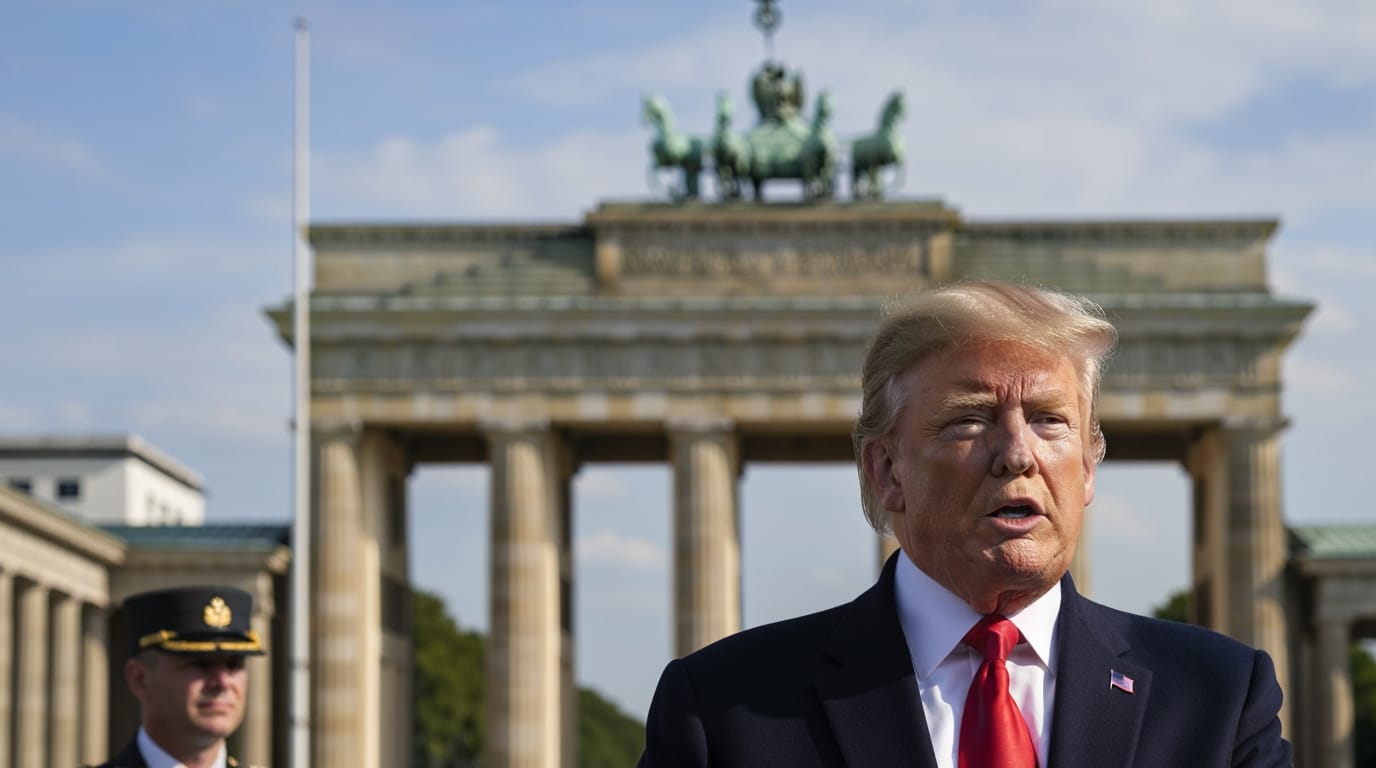
Washington D.C. – Former President Donald Trump has once again signaled a potential reduction in the number of U.S. troops stationed in Germany, renewing a contentious point of friction within the transatlantic alliance. The announcement, made through social media in late April 2026, comes amidst escalating criticism of Germany's stance on the ongoing US-Israel war against Iran, alongside long-standing disputes regarding defense spending commitments. This latest threat revives a policy approach from his previous administration, which aimed to recalibrate the American military footprint in Europe and has consistently drawn concern from allies and strategic analysts alike.
The Recurring Threat and its Stated Justifications
Trump's recent pronouncement indicated that his administration was "studying and reviewing the possible reduction of Troops in Germany, with a determination to be made over the next short period of time." This mirrors previous intentions during his first term when a plan was announced in June 2020 to withdraw approximately 9,500 out of 34,500 U.S. troops then stationed in Germany, capping the total at 25,000. The initial rationale centered heavily on Germany's perceived failure to meet its financial obligations within the North Atlantic Treaty Organization (NATO).
NATO members had agreed at the 2014 Wales Summit to aim for spending at least 2% of their Gross Domestic Product (GDP) on defense by 2024. Trump consistently argued that Germany, despite its economic strength, was "delinquent" in meeting this target, spending a smaller percentage of its GDP on defense compared to the United States. More recently, the renewed threat follows a public disagreement with German Chancellor Friedrich Merz, who had criticized the U.S. handling of the conflict with Iran, suggesting American leadership was being "humiliated" by Iranian negotiators and lacked a clear strategy. This public spat appears to have fueled the latest consideration of troop cuts, intertwining defense spending concerns with broader geopolitical disagreements.
A Legacy of Presence: The Historical Role of U.S. Forces in Germany
The substantial U.S. military presence in Germany is a direct legacy of post-World War II and Cold War strategic imperatives. Following 1945, the U.S., alongside the United Kingdom and France, occupied Western Germany, playing a crucial role in establishing a demilitarized democratic society. The Cold War cemented this presence, transforming West Germany into a frontline state against the Soviet Union. At its peak in 1989, just before the fall of the Berlin Wall, approximately 250,000 U.S. soldiers were stationed across West Germany, occupying numerous bases and playing a critical deterrence role.
While troop numbers have significantly decreased since the end of the Cold War, Germany continues to host the largest contingent of U.S. troops in Europe, and the second largest worldwide after Japan, with figures around 35,000 to 50,000 active-duty personnel in recent years. These forces are concentrated in states such as Rhineland-Palatinate, Bavaria, Baden-Württemberg, and Hesse, with major facilities including Ramstein Air Base. Ramstein Air Base is a particularly vital asset, serving as a primary logistics hub for U.S. operations across Europe, Africa, and the Middle East, and hosting several critical command centers. The U.S. military also maintains key medical facilities, such as the Landstuhl Regional Medical Center, the largest American military hospital outside the United States.
Beyond deterrence, the presence of U.S. forces has also fostered deep cultural and economic ties. U.S. military personnel and their families often reside in German communities, contributing to local economies through salaries and purchases of goods and services. Germany itself has spent over $1 billion in the past decade to support the costs associated with hosting U.S. troops, acknowledging the mutual benefits of the arrangement.
German and Alliance Reactions to Withdrawal Threats
The prospect of significant U.S. troop withdrawals from Germany has consistently met with strong reactions from both German officials and other NATO allies. In 2020, German lawmakers expressed significant concern, with some stating that such a move would be "very regrettable" and lacked a factual basis. There was a consensus that an unconsulted withdrawal would undermine the fundamental leadership principles of the U.S. and benefit geopolitical rivals like Russia and China by creating discord within the Western alliance.
European nations have repeatedly emphasized the strategic importance of the U.S. presence for regional security and NATO cohesion. The potential reallocation of forces raised fears of weakening the alliance's collective defense posture, particularly against a resurgent Russia. Concerns also extended to the operational capabilities of NATO, with a U.S. drawdown potentially exposing weaknesses in areas like strategic airlift, intelligence, surveillance, reconnaissance (ISR), and integrated air and missile defense, which remain heavily reliant on American assets.
While some within Germany have expressed a desire for less reliance on the U.S., the German government has consistently affirmed its commitment to NATO, viewing the alliance as the cornerstone of its defense and security policy. When the Biden administration took office in 2021, it formally halted the planned withdrawal of U.S. troops from Germany, a decision welcomed by the German government. This move underscored the belief that the stationing of American troops serves European and transatlantic security interests.
Strategic Implications and the Future of Transatlantic Security
The debate surrounding U.S. troop levels in Germany highlights fundamental questions about burden-sharing, strategic priorities, and the enduring strength of the transatlantic alliance. A withdrawal of U.S. forces could have profound strategic implications, potentially diminishing Washington's influence in Europe and creating a security vacuum. Military experts have underscored that U.S. facilities in Germany are critical not just for European defense, but also for supporting unilateral U.S. military operations across Europe, the Middle East, and Africa.
The focus on the 2% GDP defense spending target, while a recurring point of contention, has also spurred some European nations, including Germany, to increase their defense budgets. However, some analysts argue that an overemphasis on this single metric can obscure a more nuanced understanding of military capabilities and contributions to alliance security.
The Biden administration's actions since 2021 have, in many ways, countered the previous administration's withdrawal plans, particularly in response to Russia's full-scale invasion of Ukraine in 2022. Additional U.S. troops have been deployed to Eastern Europe, including Germany, Poland, and Romania, to reinforce NATO's eastern flank. This demonstrates a renewed commitment to European security in the face of evolving geopolitical threats, suggesting a dynamic and sometimes contradictory approach to the U.S. military presence abroad.
Conclusion
The renewed threat by former President Trump to reduce U.S. troop numbers in Germany underscores the persistent tension between the desire for burden-sharing within NATO and the strategic realities of global security. While arguments for troop reductions often cite economic considerations and allied defense spending, the deeper implications for transatlantic unity, European security, and global power dynamics remain a critical concern. The historical foundation of the U.S. presence in Germany, its vital role in collective defense, and the complex interplay of economic, political, and security factors ensure that any substantial alteration to this arrangement will continue to be a subject of intense debate and international scrutiny. The ongoing fluctuations in U.S. policy towards its European allies reflect a complex and evolving strategic landscape, where the future shape of the transatlantic alliance remains subject to political shifts and geopolitical pressures.