Trump Set to Reshape Davos Agenda as "America First" Takes Center Stage at WEF 2026
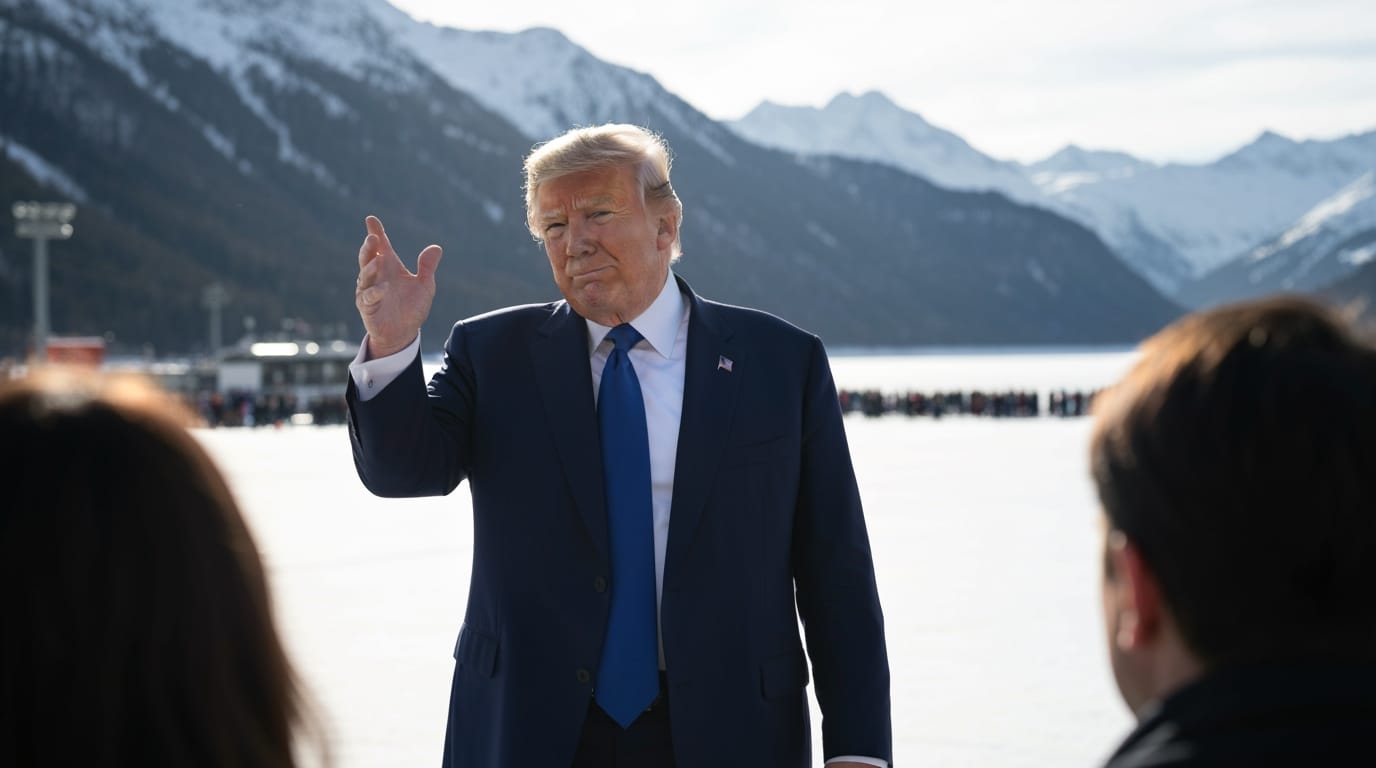
Davos, Switzerland – The elite gathering at the World Economic Forum (WEF) in Davos is poised for an unprecedented shake-up this week as U.S. President Donald Trump arrives leading the largest American delegation in the forum's history. His presence, expected to dominate discussions from January 19 to 23, signals a direct collision between the WEF's traditional multilateral ethos and the President's resolute "America First" agenda, promising a politically charged meeting amidst a deeply uncertain global landscape.
President Trump's return to the Swiss Alpine resort six years after his last in-person appearance as President, and a virtual address delivered last year, is widely anticipated to steer conversations on global trade, climate policy, and international cooperation. His administration's emphasis on national interests over global consensus is set to challenge the very foundation of the forum, which prides itself on fostering dialogue and collaborative solutions to the world's most pressing issues.
"America First" on the Global Stage
The U.S. delegation to Davos 2026 is described as exceptionally robust, featuring a formidable lineup of cabinet members and key advisors. Among those accompanying President Trump are Secretary of State Marco Rubio, Treasury Secretary Scott Bessent, Commerce Secretary Howard Lutnick, Energy Secretary Chris Wright, U.S. Trade Representative Jamieson Greer, Special Envoy Steve Witkoff, and son-in-law Jared Kushner. This substantial presence underscores the administration's intent to actively project its policies onto the international stage, with President Trump scheduled to deliver a key address on Wednesday.
Expectations are high that the President will use this platform to reiterate his core principles: prioritizing American economic interests, advocating for energy independence through increased oil and gas production, and promoting deregulation across various sectors. Such pronouncements directly contrast with global efforts towards a just and inclusive energy transition, a stated key challenge for the WEF 2026 agenda. The presence of top oil executives from companies like Exxon Mobil and Shell, reportedly eager to hear President Trump's energy dominance agenda, further highlights this divergence.
A Spirit of Dialogue Versus Unilateralism
The World Economic Forum's annual meeting theme for 2026 is "A Spirit of Dialogue," aimed at fostering cooperation in an increasingly contested world. However, President Trump's foreign policy record has often favored unilateral action and challenged existing international norms. His administration's recent military intervention in Venezuela, threats regarding Greenland, and withdrawals from international agreements, alongside the imposition of tariffs, have created significant global tensions. Critics argue that these actions directly undermine the consensus-driven approach that the WEF endeavors to promote.
The juxtaposition of the WEF's ideal of global cooperation with the "America First" doctrine is not new, but it is particularly acute this year. Last year, in a virtual address post-inauguration, President Trump warned nations of punitive tariffs if they did not shift manufacturing to the U.S., a stance that upended decades of open trade policies. This year, his physical presence and the sheer size of his delegation are expected to amplify these policy divergences, forcing global leaders to confront the implications head-on.
Geopolitical and Economic Undercurrents
The 2026 Davos meeting convenes against what WEF President Borge Brende describes as "the most complex geopolitical backdrop since 1945." A new report released by the WEF, in collaboration with the Boston Consulting Group and IMD Business School, indicates that global policy uncertainty has reached a two-decade high. This uncertainty is driven by weakening multilateralism, shifts in trade policy, and the increasing weaponization of economic tools.
Discussions at Davos will therefore be dominated by attempts to navigate these complexities. The WEF agenda aims to address stimulating growth, responding to geopolitical shocks, and stewarding a just energy transition. However, President Trump's focus on national interests, particularly his assertive stance on trade and energy, is expected to reshape these dialogues. Swiss President Guy Parmelin, for instance, has expressed readiness to negotiate with President Trump on a customs agreement, highlighting the immediate economic stakes for participating nations.
The Specter of Disruption
The anticipation surrounding President Trump's visit extends beyond policy debates. Security authorities in Bern and Graubünden are already preparing for potential protests, including unauthorized anti-WEF demonstrations. This reflects broader concerns among global leaders and civil society regarding the potential for further disruption to the international order. The WEF has historically served as a platform for dialogue among diverse stakeholders, including advocacy groups and academics, but the intensified focus on national agendas may overshadow these broader engagements.
With approximately 3,000 participants from 130 countries, including 64 heads of state or government and 850 CEOs, the forum remains a critical venue for global elites. However, many will be observing how the "Davos elite" adapt to a forum potentially dominated by a leader whose policies often contradict the forum's foundational principles. This dynamic creates a unique tension: an international gathering dedicated to cooperation, facing the overwhelming influence of a staunch proponent of national sovereignty.
Conclusion
As the World Economic Forum 2026 unfolds, President Donald Trump's commanding presence and his unwavering commitment to "America First" policies are set to define the annual meeting. His arrival with an unprecedented delegation, coupled with his historical challenge to multilateralism, transforms Davos from a traditional platform for consensus-building into a pivotal arena for direct engagement with a powerful, nationalist agenda. The global community will watch closely to see how the "Spirit of Dialogue" navigates this formidable challenge, and what implications it holds for international cooperation and the future trajectory of the world economy.