Trump Signs Interim Agreement to End Iran Conflict, Reopening Vital Shipping Lanes
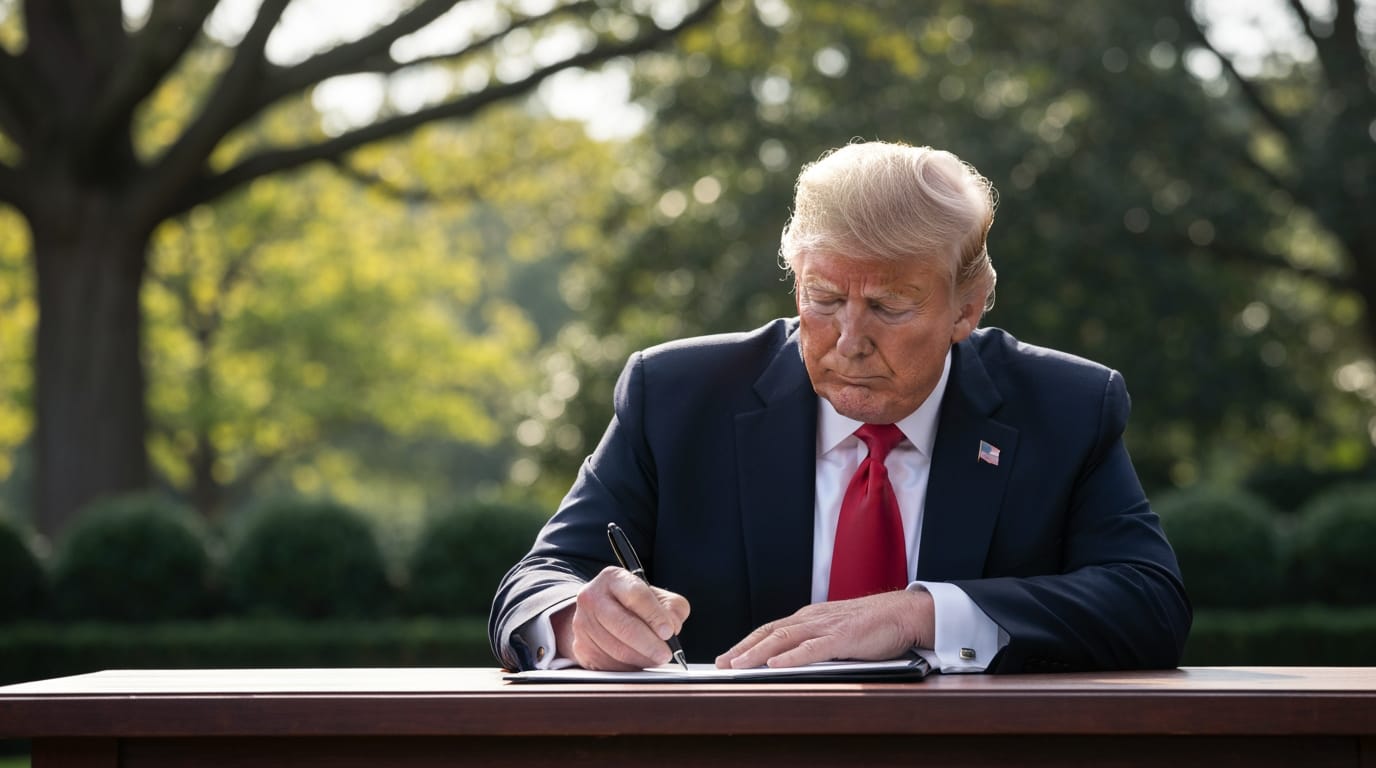
EVIAN-LES-BAINS, France – In a dramatic turn of events, President Donald Trump has formally signed an interim agreement with Iran, aiming to bring an end to the four-month conflict that has destabilized the Middle East and sent shockwaves through the global economy. The signing, confirmed by a U.S. official to AFP on Wednesday, reportedly took place during a dinner with French President Emmanuel Macron following the G7 summit, marking a pivotal moment in the volatile U.S.-Iran relationship. This preliminary accord, set to usher in a 60-day period of intensive negotiations for a comprehensive peace, immediately targets the reopening of the crucial Strait of Hormuz and the resumption of Iranian oil sales, offering a glimmer of hope for de-escalation in a region on edge.
The agreement emerges from a period of intense hostilities, a conflict that began in February 2026 and claimed American lives, inflicted economic damage, and severely disrupted global energy markets. Details of the interim deal, which are still emerging, indicate significant concessions from both sides, prompting a mixed chorus of relief and sharp criticism from international observers and domestic political factions alike. The deal is framed by the Trump administration as a necessary step to avert a "worldwide depression" and stabilize key trade routes, while critics lament its perceived weaknesses and strategic gains for Tehran.
The Core of the Interim Accord: A Pathway to De-escalation
At the heart of the newly signed memorandum of understanding (MOU) lies a concerted effort to restore stability and de-escalate military tensions. A primary provision is the immediate reopening of the Strait of Hormuz, a critical maritime chokepoint through which a significant portion of the world's oil supply transits. The Strait had been effectively blocked by Iran since the conflict intensified, leading to soaring energy prices and immense pressure on the global economy.
Alongside the reopening of this strategic waterway, the interim agreement permits Iran to immediately resume selling its oil and fuel, a vital economic lifeline for the Islamic Republic that had been severely curtailed by sanctions. This measure is expected to alleviate some of the economic pressures on Iran and contribute to stabilizing global energy markets. The deal also includes assurances that Iran will not pursue nuclear weapons, with some reports suggesting commitments to "down-blending" or "destroying" enriched uranium stockpiles. These steps are intended to extend a tenuous ceasefire, initially announced in April, by another 60 days, creating a crucial window for further negotiations.
Furthermore, the accord outlines a framework for the potential lifting of a broader array of international sanctions against Iran and the unfreezing of billions of dollars in Iranian assets. There is also discussion of a potential $300 billion reconstruction fund for Iran, reportedly to be financed by regional partners in the Gulf, though President Trump has clarified that the U.S. would not be contributing to this fund. The inclusion of Lebanon in the ceasefire provisions is also noteworthy, signaling an intent to restrain Israeli military operations in the country.
From Escalation to Agreement: The Four-Month Conflict
The interim agreement brings a momentary pause to a conflict that saw heightened tensions and direct military engagements between the U.S. and Iran, with Israel also playing a significant role. The hostilities escalated following a breakdown in negotiations over Iran's nuclear program. In April 2025, U.S. President Donald Trump had set a 60-day deadline for Iran to agree to new nuclear talks, threatening serious military consequences if a deal was not reached. After this deadline passed without resolution, Israel reportedly launched strikes against Iran in June 2025, initiating what some refer to as the "Twelve-Day War." The U.S. also conducted strikes on Iranian nuclear sites in June 2025, followed by a ceasefire declared by Trump.
However, the more recent and intense "four-month war" began around February 2026, marked by large-scale strikes against Iranian military assets and leadership, including reports of the death of Supreme Leader Ayatollah Ali Khamenei. The conflict saw the Strait of Hormuz blocked, disrupting global trade and leading to significant economic fallout. Throughout this period, diplomatic efforts, including G7 involvement and mediation by countries like Qatar and Pakistan, sought to de-escalate the situation. The imperative to prevent a wider regional conflict and a global economic downturn ultimately propelled both sides toward the interim agreement.
This marks a significant shift in U.S. policy compared to President Trump's first administration, during which the U.S. withdrew from the Joint Comprehensive Plan of Action (JCPOA) in 2018. That decision, aimed at increasing pressure on Iran through sanctions, led to a period of heightened antagonism and Iran's accelerated nuclear program. The current agreement, despite its interim nature, represents a stark departure from the "maximum pressure" campaign of the past.
A Deal Under Scrutiny: Apprehension and Opposition
While the international community largely welcomed the de-escalation, the interim agreement has been met with significant apprehension, particularly within the United States. Republican Senator Bill Cassidy, for instance, denounced the deal as "the worst foreign policy blunder in decades," arguing that Iran has gained too much without sufficiently curbing its nuclear ambitions. Critics point to the loss of American lives and the immense financial cost of the conflict, questioning whether the concessions made to Tehran justify these sacrifices.
Concerns have also been raised that the deal is weaker than the original JCPOA, which President Trump abandoned in his first term. Some analysts suggest that Iran has strategically benefited from the conflict and the subsequent agreement, bolstering its regional position and potentially using the interim period to consolidate gains. The deal's failure to explicitly address Iran's ballistic missile program or its support for regional proxy groups has also fueled criticism among hardliners in the U.S. and Israel, who had urged Trump against making such a deal. Israel, a key U.S. ally, has historically maintained an unwavering commitment to dismantling Iran's nuclear program and was "wholly opposed" to previous negotiations in 2025.
The Road Ahead: Fragile Peace and Enduring Challenges
The signing of this interim agreement opens a crucial 60-day window for U.S. and Iranian negotiators to iron out a comprehensive, permanent peace deal. Discussions are expected to delve into the intricate details of Iran's nuclear activities, the long-term status of sanctions relief, and broader regional security arrangements. However, the path forward remains fraught with challenges. The fragility of the current ceasefire is underscored by continued tensions, such as recent Israeli airstrikes in southern Lebanon, which threaten to undermine diplomatic progress.
President Trump himself has cautioned that the ceasefire is not a final deal, warning of potential renewed military action if Tehran fails to comply with its commitments. The deep distrust that has historically characterized U.S.-Iran relations, coupled with complex technical and political hurdles, continues to impede progress toward a lasting resolution. The success of these ongoing negotiations will ultimately depend on the ability of both sides to bridge significant divides and address the deeper geopolitical disputes that have fueled instability across the Middle East for decades.
As the world watches, the interim agreement represents a delicate balance – a necessary, albeit precarious, step back from the brink of a wider war. Whether this fragile peace can evolve into a durable settlement remains the central question facing diplomats and leaders in the coming months.


