U.S. and Iran Ink Landmark 14-Point Initial Agreement, Halting Hostilities and Paving Way for Broader Peace
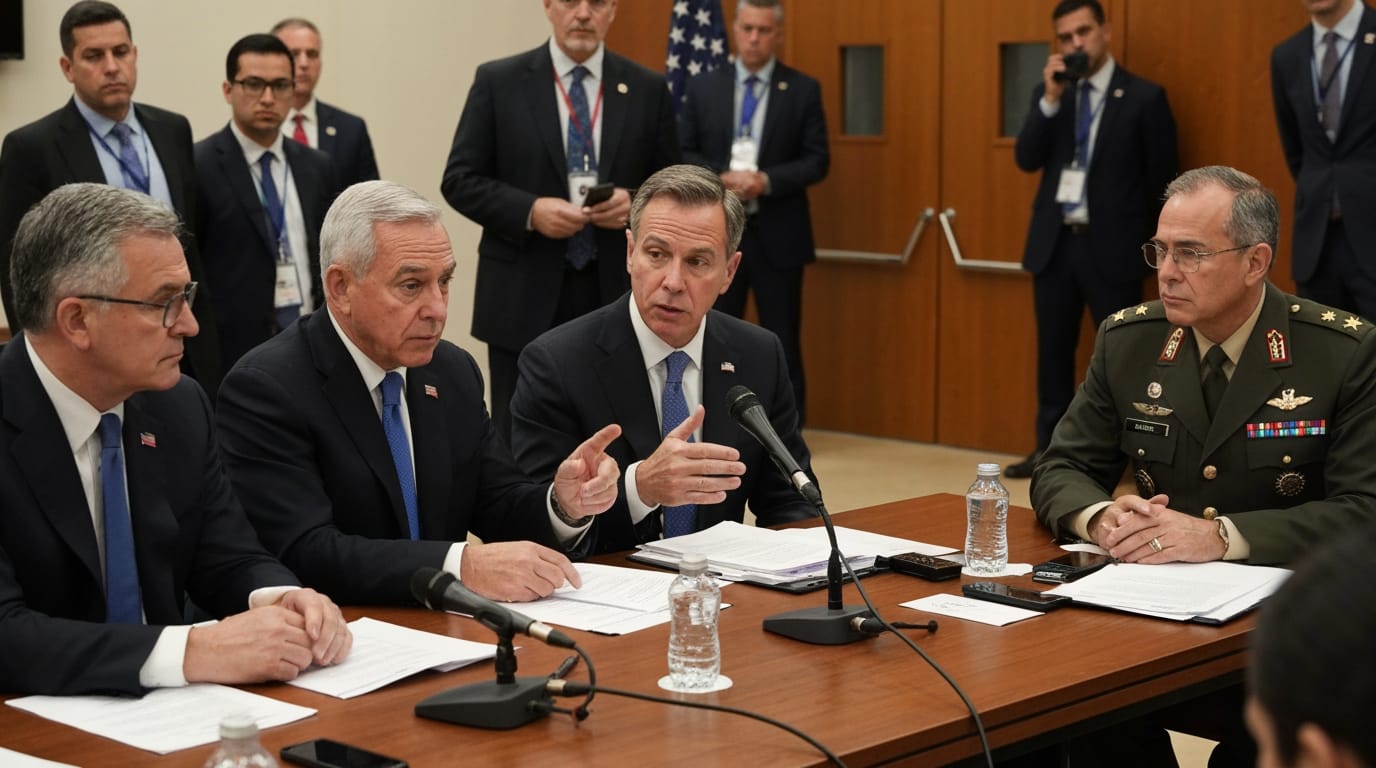
Washington D.C. – In an unexpected and pivotal development, the United States and Iran have forged a 14-point initial agreement, a Memorandum of Understanding (MOU), designed to immediately cease military operations and initiate a 60-day negotiation period for a comprehensive peace deal. The accord, announced by the Trump administration on Wednesday, June 17, 2026, marks a dramatic shift in the protracted conflict between the two nations, which had escalated tensions across the Middle East. President Donald Trump hailed the agreement as a "major win" for the United States, even as it includes significant concessions to Tehran, aiming to avert a "worldwide depression" by reopening vital maritime routes.
The interim agreement, which was signed digitally by President Trump, Vice President J.D. Vance, and Iranian parliamentary speaker Mohammad Bagher Ghalibaf on Sunday, is expected to be formally signed in Switzerland on Friday. While senior U.S. officials, speaking anonymously, dictated the terms to journalists, the full text has not yet been officially released by either side, leading to some uncertainty regarding exact wording and back-channel commitments. Nonetheless, the broad strokes outline a pathway to de-escalation, economic relief for Iran, and renewed negotiations on thorny issues, particularly Iran's nuclear program.
Immediate De-escalation and Regional Stability
At the core of the 14-point MOU is the "immediate and permanent termination of military operations on all fronts," explicitly including Lebanon. This provision signals a significant reprieve for a region long gripped by proxy conflicts and direct military confrontations. Both the United States and Iran, along with their respective allies, have pledged to refrain from initiating any further hostilities or the threat of force against each other, and to respect each other's sovereignty and territorial integrity, committing to non-interference in internal affairs.
The inclusion of Lebanon within the ceasefire provisions is particularly noteworthy. The agreement aims to restrain Israel from conducting military operations in the country and includes a clause ensuring Lebanon's territorial integrity. This element addresses a key Iranian demand and suggests a broader attempt to stabilize regional flashpoints. However, the exact implications for Israel's continued presence in parts of Lebanon remain a point of discussion. The agreement further mandates that U.S. forces will withdraw from areas in the proximity of the Islamic Republic of Iran within 30 days after a final deal is reached.
Economic Lifeline and Maritime Freedom
A crucial component of the interim agreement focuses on providing substantial economic incentives to Iran. Immediately upon the MOU's signing, the United States is to begin lifting its naval blockade on Iranian ports, with the full removal expected within 30 days. This measure is designed to facilitate the resumption of commercial vessel traffic, particularly in the vital Strait of Hormuz, a critical conduit for 20% of the world's global oil supply. In return, Iran has committed to ensuring the safe and toll-free passage of ships through the Strait of Hormuz for 60 days, pledging to restore pre-war levels of maritime traffic.
Beyond the naval blockade, the agreement paves the way for significant sanctions relief. The U.S. has committed to terminating all types of sanctions against Iran – including those imposed by the United Nations Security Council, the International Atomic Energy Agency, and all unilateral U.S. sanctions – on an agreed schedule as part of the final deal. Immediate waivers are to be issued for Iranian crude oil and petrochemical exports, as well as related services such as banking, insurance, and shipping. Furthermore, billions of dollars in frozen Iranian assets are slated for unfreezing, providing a much-needed financial injection into the Iranian economy.
Perhaps one of the most ambitious economic pledges is the U.S. undertaking, in coordination with regional partners, to develop a comprehensive plan for Iran's rehabilitation and economic development, valued at a minimum of $300 billion. This reconstruction fund, intended to be financed by regional partners in the Gulf, underscores the magnitude of the international effort to stabilize and rebuild Iran post-conflict.
Nuclear Commitments and Future Negotiations
The agreement also touches upon Iran's nuclear program, a persistent source of international concern. Iran "reaffirms that it shall not procure or develop nuclear weapons." While the MOU defers many of the most intricate details of winding down Iran's nuclear program to the 60-day negotiation period, it stipulates that the two sides have agreed to resolve the disposition of stockpiled enriched material. This includes the "down-blending" of some 440 kg of highly enriched uranium that is near weapons-grade, to be supervised by the International Atomic Energy Agency.
The G7 leaders, in a joint statement, welcomed the deal as an "historic opportunity to prevent Iran from acquiring any nuclear weapon and tackling the threats related to its regional and ballistic activities." However, they also indicated that a follow-on agreement would be necessary to address Iran's ballistic missile program, an issue not directly detailed in the initial memorandum. This suggests that while the immediate crisis may be defused, significant diplomatic challenges lie ahead in reaching a comprehensive and lasting resolution.
The Road Ahead: Hopes and Hurdles
Despite the celebratory tone from some U.S. officials, the path to a final peace agreement is fraught with potential obstacles. President Trump himself issued a stern warning, stating that the agreement is "not final" and that the U.S. could resume bombing "if they don't behave." This cautious stance, coupled with mixed messages regarding the status of the naval blockade immediately after the initial announcement, highlights the delicate and sometimes unpredictable nature of the negotiations.
Furthermore, some U.S. officials have downplayed the MOU's ultimate significance, characterizing it as a "political document" that does not fully capture critical back-channel commitments made by Iran regarding its nuclear program. Members of the U.S. Senate have also expressed concerns about not having seen the details of the agreement, with some demanding a vote on any final deal. The issue of Israel's military presence in Lebanon, a point of contention for Iran, will also require careful navigation in future talks.
The 60-day period for negotiating a final deal, extendable by mutual consent, will be critical. It demands sustained diplomatic engagement and a willingness from both sides to overcome deep-seated mistrust and complex geopolitical challenges. The world watches with bated breath as this historic initial agreement transitions into what both sides hope will be a durable peace.
Conclusion
The 14-point initial agreement between the United States and Iran represents a monumental, albeit preliminary, step toward ending a volatile conflict. By immediately halting military operations, opening vital trade routes, and laying the groundwork for significant economic relief for Iran, the MOU offers a tangible pathway to de-escalation. While many complex issues, particularly those surrounding Iran's nuclear ambitions and regional security, remain to be resolved in the forthcoming negotiations, the sheer act of reaching this initial understanding signals a remarkable diplomatic breakthrough. The coming weeks will undoubtedly test the commitment of both nations to transform this fragile truce into a lasting peace, with profound implications for the Middle East and global stability.


