Trump Throws Full Support Behind Venezuela's Interim Leader Amid Deepening Crisis
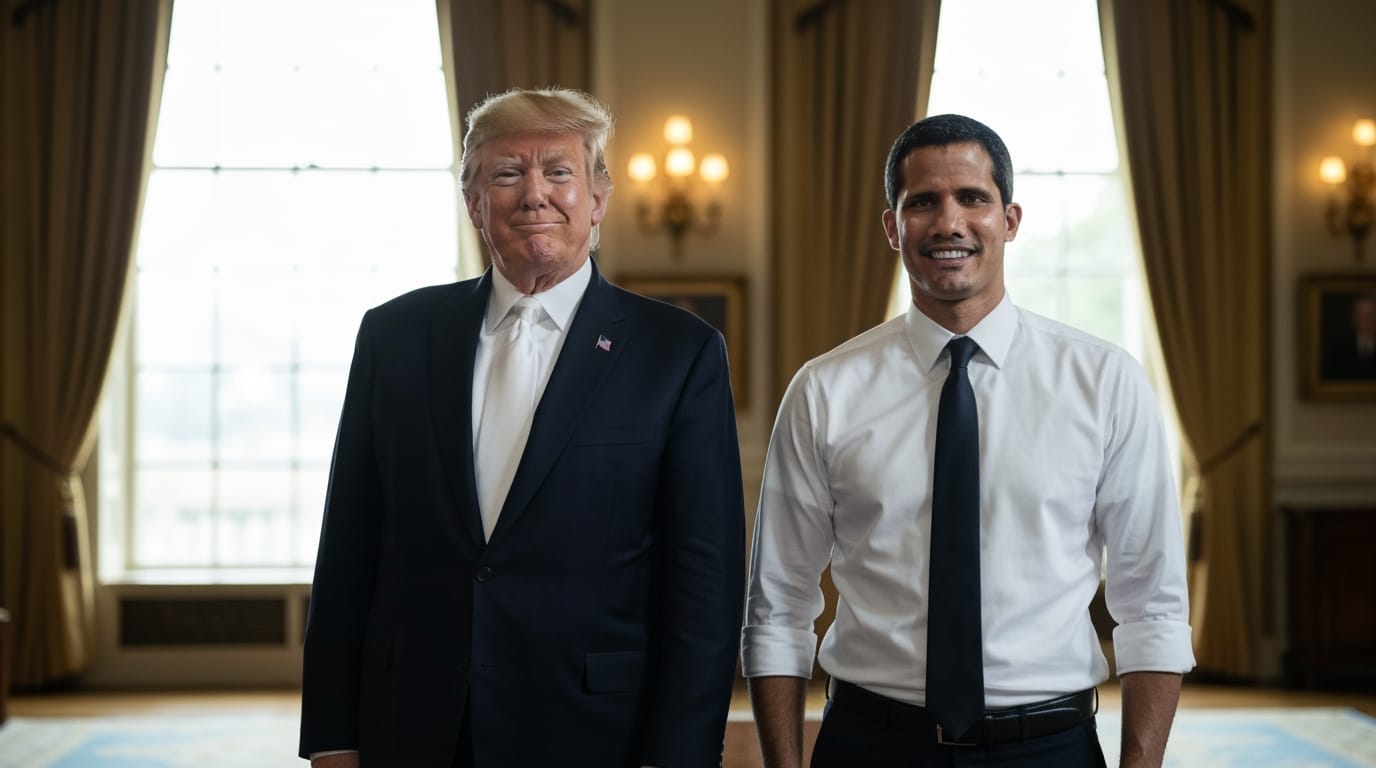
In a bold diplomatic maneuver that underscored a significant shift in U.S. foreign policy, then-President Donald Trump publicly embraced Juan Guaidó, Venezuela's self-proclaimed interim president, injecting considerable momentum into the opposition's challenge against Nicolás Maduro's contested rule. Trump's resounding endorsement of Guaidó, whom he lauded as a "terrific" leader, marked a critical juncture in the years-long political and humanitarian crisis gripping the South American nation, positioning the U.S. firmly behind efforts to restore democracy in Venezuela.
The Genesis of a Diplomatic Recognition
The political landscape in Venezuela dramatically altered on January 23, 2019, when Juan Guaidó, then president of the opposition-controlled National Assembly, declared himself interim president. His claim was rooted in articles of the Venezuelan constitution, which he argued rendered the presidency vacant following what the opposition deemed Nicolás Maduro's illegitimate re-election in 2018. The international community quickly became divided, but the United States was swift and unequivocal in its response. Within minutes of Guaidó's declaration, President Trump officially recognized him as Venezuela's legitimate interim leader. This pivotal decision was quickly echoed by numerous other nations, including Canada and a significant bloc of Latin American and European countries, signaling a broad international alignment against Maduro's government.
The U.S. administration, under Trump, had already been intensifying pressure on Maduro, with Vice President Mike Pence publicly calling Maduro a "dictator with no legitimate claim to power" days before Guaidó's declaration. This rhetoric laid the groundwork for the formal recognition, framing the Venezuelan crisis as a struggle between democracy and authoritarianism. Trump's statement emphasized the National Assembly as "the only legitimate branch of government duly elected by the Venezuelan people," and pledged to use the "full weight of United States economic and diplomatic power to press for the restoration of Venezuelan democracy." In response, Maduro vehemently accused Washington of orchestrating a coup and promptly announced the severance of diplomatic ties with the U.S.
A 'Terrific' Alliance and Sustained Diplomatic Offensive
The relationship between President Trump and Juan Guaidó deepened publicly over the subsequent year. Trump's verbal endorsements were strong and consistent, frequently referring to Guaidó as the "one true president" of Venezuela. A significant demonstration of this support occurred in February 2020 when Guaidó was an unexpected guest at Trump's State of the Union address. During the address, Trump publicly praised Guaidó, drawing bipartisan applause in a rare moment of unity in the U.S. Congress. Trump used the platform to reiterate his condemnation of Maduro, whom he labeled a "tyrant," and to reaffirm American solidarity with the Venezuelan people's "righteous struggle for freedom."
Beyond rhetorical backing, the Trump administration pursued a robust diplomatic and economic offensive aimed at dislodging Maduro. This included a comprehensive sanctions regime targeting key Venezuelan government officials, including Maduro himself, his wife, and other high-ranking figures. Critical economic sanctions were also imposed on Venezuela's state-owned oil company, Petróleos de Venezuela, S.A. (PDVSA), in January 2019, aiming to cut off the Maduro regime's primary source of revenue. These measures, while intended to pressure the government, also drew criticism for potentially exacerbating Venezuela's dire humanitarian situation.
Venezuela's Enduring Crisis and International Divisions
Despite the concerted international pressure, Nicolás Maduro managed to maintain his grip on power, supported by key international allies such as Russia, China, Iran, Cuba, and Turkey. These countries often framed U.S. and allied actions as interference in Venezuela's sovereignty, further entrenching the geopolitical divide. The political stalemate continued against a backdrop of a severe and worsening humanitarian and economic crisis within Venezuela. Hyperinflation, widespread shortages of food and medicine, and a collapsing infrastructure triggered one of the largest migratory crises in recent Latin American history, with millions of Venezuelans fleeing the country.
Human rights organizations documented extensive human rights abuses by the Maduro regime, including repression of dissent, jailing of opponents, and prosecution of civilians in military courts. The United Nations Human Rights Council, in September 2019, established an international investigative mechanism to probe alleged atrocities in Venezuela, highlighting the grave concerns of the global community.
The Waning of Interim Leadership and Shifting Tides
Despite strong U.S. backing and initial widespread international recognition, Juan Guaidó faced significant challenges in translating his interim presidency into tangible control within Venezuela. He struggled to gain the support of the Venezuelan military, a crucial factor in any successful transition of power. Although mass protests initially galvanized support for Guaidó, the Maduro government's repressive tactics and enduring control over state institutions gradually eroded the opposition's momentum.
As time progressed without a clear path to unseating Maduro, the international consensus around Guaidó began to fray. In December 2022, the opposition-led National Assembly, which had originally appointed Guaidó, voted to dissolve his interim government, effectively ending his claim to the interim presidency. Following this decision, the United States, under the subsequent Biden administration, adjusted its policy, ending its recognition of Guaidó as interim president in January 2023. Instead, the U.S. shifted its recognition to the 2015 National Assembly itself as the "only legitimate branch" of Venezuela's government.
Conclusion
President Trump's vocal embrace and sustained support for Juan Guaidó represented a pivotal, though ultimately complex, chapter in the international response to Venezuela's protracted crisis. The decision to back Guaidó galvanized international attention and brought unprecedented diplomatic and economic pressure on the Maduro regime. However, despite the strong U.S. endorsement and the widespread humanitarian emergency, Maduro's government demonstrated a remarkable resilience, maintaining its hold on power. The trajectory of Guaidó's interim presidency, from initial hope to eventual dissolution, underscores the profound challenges in resolving Venezuela's deep-seated political divisions and the enduring complexities of international intervention in sovereign nations. The legacy of this period remains etched in the ongoing struggle for Venezuela's future, a future that continues to be defined by political uncertainty, economic hardship, and the aspirations of a populace yearning for change.