Trump to Host Venezuelan Opposition Leader Machado Amidst Shifting Geopolitical Landscape
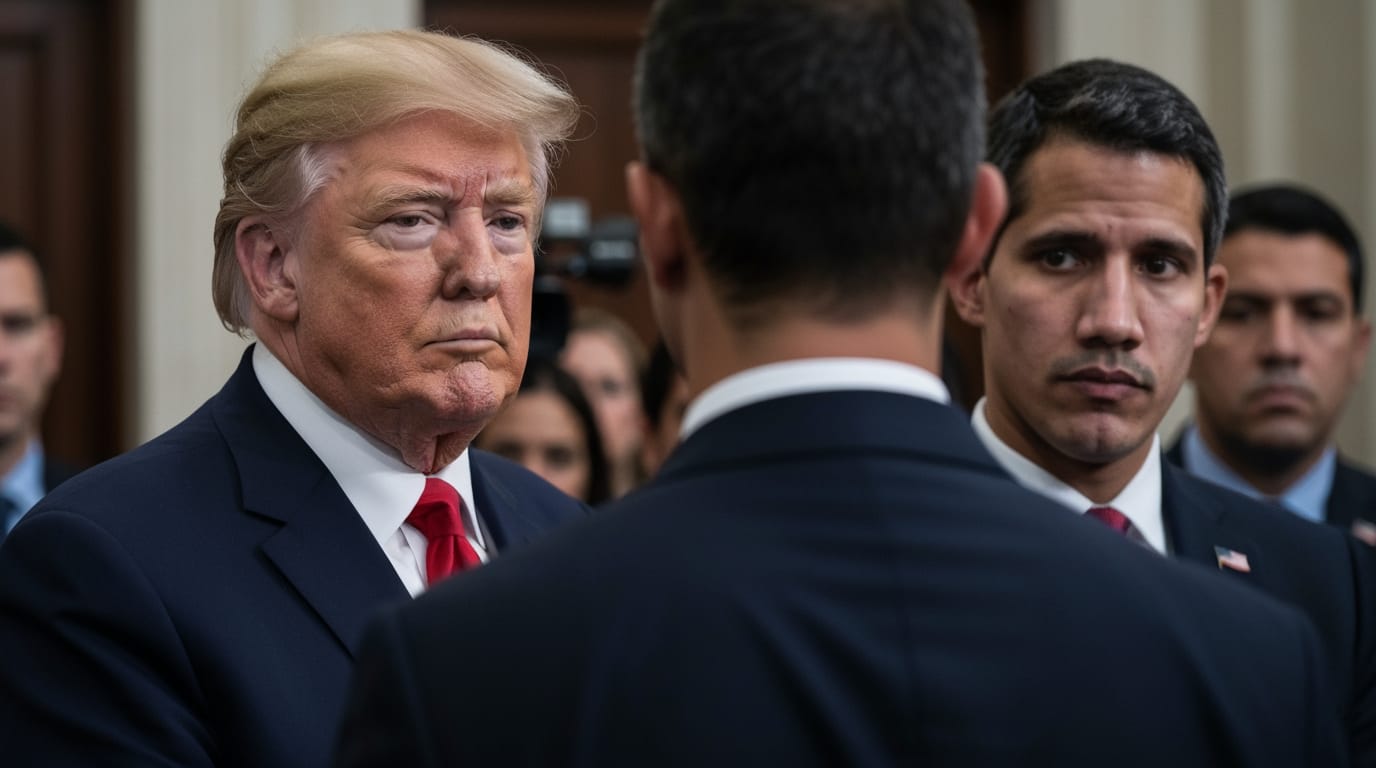
Washington, D.C. — In a pivotal moment for U.S.-Venezuelan relations, President Donald Trump is set to meet with Venezuelan opposition leader and 2025 Nobel Peace Prize laureate María Corina Machado at the White House on Thursday. The high-profile encounter comes less than two weeks after a U.S. military operation led to the capture and extradition of former Venezuelan President Nicolás Maduro, dramatically reshaping the political dynamics in the South American nation. This meeting signals a potentially significant recalibration of U.S. engagement with the Venezuelan opposition, even as uncertainties persist regarding the country's future leadership and Washington's long-term strategy.
The upcoming discussion between Trump and Machado takes place against a backdrop of complex and rapidly evolving circumstances. Following Maduro's apprehension on January 3, his vice president, Delcy Rodríguez, was sworn in as interim president, maintaining a measure of continuity for the former regime's structure. While the U.S. has maintained that its actions aimed to restore stability and facilitate a democratic transition, President Trump has previously expressed public reservations about Machado's capacity to lead Venezuela, stating she "doesn't have the support within, or the respect within, the country." This prior skepticism, coupled with the administration's initial engagement with the interim Rodríguez government, adds layers of intrigue to Thursday's scheduled talks, underscoring the delicate balance of power and influence at play.
Machado's Ascent and the Nobel Recognition
María Corina Machado emerges as a central figure in Venezuela's tumultuous political saga, lauded internationally for her unwavering commitment to democratic principles. The 2025 Nobel Peace Prize recipient has been a vocal critic of both Hugo Chávez and Nicolás Maduro, actively participating in and leading opposition movements for over a decade. An industrial engineer with a master's degree in finance, Machado co-founded Súmate, a civil society organization focused on electoral transparency, in the early 2000s. Her political career includes a stint in the National Assembly from 2011 to 2014, where she gained prominence for directly confronting Chávez.
Despite her popularity, Machado has faced relentless persecution from the socialist government. She was disqualified from holding public office for 15 years, a ruling upheld by Venezuela's Supreme Tribunal of Justice, which effectively barred her from running in the 2024 presidential election. Nevertheless, she won the opposition's primary by an overwhelming margin in 2023, underscoring her broad support among Venezuelans. When her candidacy was blocked, she endorsed Edmundo González Urrutia, who, according to opposition reports, soundly defeated Maduro in the 2024 election before the results were ignored. Machado recently garnered global attention when she secretly left Venezuela to accept her Nobel Peace Prize, dedicated to the suffering Venezuelan people and, in a notable gesture, to President Trump. Her policy proposals include robust support for civil liberties, free markets, and the privatization of the state-controlled oil industry, a significant departure from decades of state control.
Trump's Venezuela Doctrine: Power, Oil, and Influence
President Trump's approach to Venezuela has been marked by a blend of military action, geopolitical maneuvering, and economic interests. The recent U.S. military operation that led to Maduro's capture was a dramatic escalation, with Trump asserting that the U.S. is "taking charge of Venezuela for now" and intends to be "heavily involved in its oil market for potentially years." This emphasis on Venezuela's vast oil reserves—the largest in the world—has been a consistent theme in Trump's foreign policy rhetoric, with his administration reportedly planning to encourage U.S. oil companies to invest in the country's energy sector.
Beyond economic considerations, the U.S. intervention has been framed within a broader doctrine of hemispheric security. President Trump has explicitly invoked the 1823 Monroe Doctrine, and even an expanded "Don-roe" Doctrine, to justify U.S. actions and assert influence over the Western Hemisphere. Secretary of State Marco Rubio has highlighted the goal of a "transition to democracy" for Venezuela, indicating a dual focus on economic stability and political reform. However, the administration's fluctuating public stance—from initially sidelining Machado to now hosting her—reflects an intricate strategy that observers say seeks to balance various interests and outcomes in a post-Maduro Venezuela.
A Nation in Limbo: Venezuela's Uncertain Path Forward
Despite the removal of Nicolás Maduro, Venezuela remains ensnared in a complex web of political and humanitarian challenges. The interim presidency of Delcy Rodríguez signifies that the authoritarian structures of the former regime largely persist, with loyalists still controlling key government ministries and security forces. A 90-day state of emergency has been declared, granting security forces extensive powers and continuing to stifle dissent. Human rights organizations continue to press for the release of hundreds of political prisoners, a demand that Machado herself reiterated during a recent meeting with Pope Leo XIV.
The political opposition, though invigorated by Maduro's ouster, faces significant hurdles. While Machado enjoys immense popular support, the immediate danger she would face upon returning to Venezuela, with pro-regime elements still in control, is a pressing concern. The U.S. administration's engagement with Rodríguez, even if temporary, has sown some confusion and frustration among parts of the Venezuelan opposition and international observers who see it as legitimizing a government that upheld Maduro's policies. The path to free and fair elections, which Machado and many international bodies advocate for, is fraught with challenges, including deeply entrenched corruption, economic instability, and a polarized society. Experts warn that underestimating the potential for political violence and the deeply divided nature of Venezuelan society could undermine any attempts at genuine transition.
Conclusion: High Stakes for a Fragile Future
The meeting between President Trump and María Corina Machado is more than a diplomatic formality; it is a critical juncture in the narrative of Venezuela's future. It represents an opportunity for the United States to clarify its commitment to democratic ideals in Venezuela, even as its immediate interests in the country's vast oil resources remain a prominent factor. For Machado, it is a chance to solidify international support for a genuine democratic transition and to advocate for the aspirations of millions of Venezuelans who seek an end to authoritarian rule.
However, the path ahead is fraught with uncertainty. The legacy of Maduro's regime, the continued influence of his allies, and President Trump's pragmatic, often unpredictable, foreign policy underscore the volatility of the situation. The success of any transition will depend not only on the outcomes of high-level diplomatic engagements but also on the ability of Venezuelan society to overcome deep divisions and rebuild institutions from the ground up. As the world watches, the discussions this week will undoubtedly shape the trajectory of a nation grappling with its past and desperately seeking a stable, democratic future.


