Trump Unleashes Sweeping 25% Tariff on Iran's Trading Partners Amid Escalating Tensions
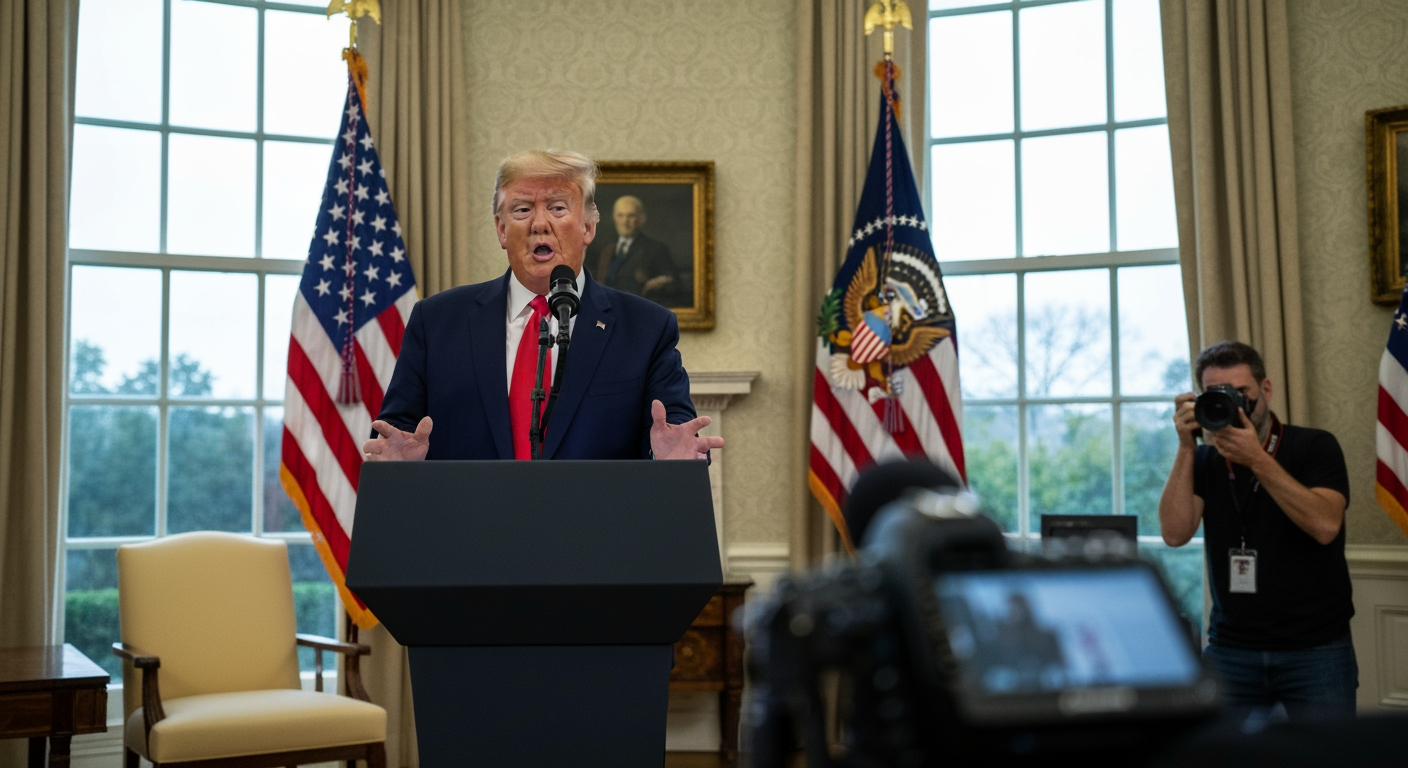
Washington D.C. – In a dramatic escalation of pressure against the Islamic Republic of Iran, President Donald Trump announced a blanket 25% tariff on all business conducted with the United States by any country found to be trading with Tehran. The directive, issued via the President's social media platform Truth Social on Monday, January 12, 2026, is effective immediately and aims to compel Iran to cease its violent crackdown on widespread anti-government protests.
This assertive move by the Trump administration marks a significant hardening of its "maximum pressure" campaign, intertwining economic leverage with a stark warning that military options remain on the table. The announcement has sent immediate ripples through global trade markets and diplomatic circles, particularly impacting major Iranian trading partners such as China, Brazil, Turkey, and Russia, who now face substantial economic repercussions for maintaining commercial ties with Iran.
A New Front in the "Maximum Pressure" Campaign
President Trump's announcement on Truth Social was unequivocal: "Any Country doing business with the Islamic Republic of Iran will pay a Tariff of 25% on any and all business being done with the United States of America. This Order is final and conclusive." The White House clarified that the tariffs are a direct response to the Iranian regime's violent suppression of nationwide protests, which human rights activists report have claimed the lives of nearly 600 people, including 510 protesters, over the past two weeks.
The President's statement indicated that Iran's actions are "starting to cross" a redline, leading his national security team to weigh "very strong options." White House spokesperson Karoline Leavitt emphasized that while a diplomatic solution remains the priority, military actions, including airstrikes on Iranian facilities, cyberattacks, and expanded sanctions, are among the options being considered. This comes even as Trump mentioned receiving contact from Iranian leadership expressing interest in resuming nuclear negotiations, though he cautioned that action might precede any talks. This dual approach underscores the administration's intent to apply immense pressure while leaving a narrow opening for dialogue on its terms.
Economic Fallout and Global Trade Disruptions
The imposition of these new tariffs is poised to create significant economic upheaval, particularly for countries that have substantial trade relationships with Iran. China, identified as Iran's largest importer of oil, stands to be among the most affected, as it navigates existing trade tensions with the U.S. and now faces punitive measures for its energy ties to Tehran. Other nations like India, Turkey, Brazil, and Russia, which have continued to engage in various forms of commerce with Iran, will also find their trade with the United States subject to the new 25% levy.
Details on the enforcement mechanism, specific affected countries, or potential exemptions remain unclear, contributing to immediate uncertainty in global markets. This lack of clarity could complicate existing trade agreements and spark new trade frictions, particularly as countries assess the economic feasibility of maintaining Iranian trade in the face of steep U.S. tariffs. Experts suggest that the new tariffs are likely to cause significant disruptions to global supply chains and could lead to companies seeking alternative trading partners to reduce their dependence on the United States. The move highlights President Trump's continued reliance on tariffs as a primary foreign policy and economic tool, a characteristic feature of his "second term" trade policy, which has seen an expansion in scope and intensity compared to his first administration.
Geopolitical Repercussions and International Reactions
The tariffs arrive at a highly volatile moment in global politics. The widespread anti-government protests in Iran have drawn international attention, with the European Union expressing support for the demonstrators and reportedly considering its own additional sanctions against Tehran for human rights abuses. The European Parliament has gone a step further, banning all Iranian diplomats and representatives from its premises.
However, Iran has vehemently pushed back against international criticism, with Foreign Minister Abbas Araghchi claiming the domestic situation is "under total control" and blaming external actors like Israel and the U.S. for instigating the violence. The Iranian foreign ministry has summoned diplomats from France, Germany, Italy, and the U.K. to object to their governments' statements supporting the protesters.
This new round of U.S. tariffs further complicates the already delicate geopolitical landscape, particularly in the Middle East. With the Trump administration explicitly threatening military action and Iran warning of retaliation against the U.S. and Israel, the potential for wider regional destabilization is a growing concern. The tariffs are seen as an attempt to leverage economic pressure to achieve political goals, but they risk deepening the isolation of the Iranian populace, who are already struggling under existing sanctions and internal turmoil.
The Intensification of Economic Nationalism
President Trump's decision to deploy broad tariffs against Iran's trading partners is consistent with a broader economic nationalism agenda that has characterized his tenure, particularly in his current term. His administration has increasingly utilized the International Emergency Economic Powers Act (IEEPA) to impose wide-ranging tariffs, affecting a greater number of sectors and countries than before. While the legal grounds for these tariffs remain rooted in national security and economic concerns, their application has become a potent instrument of foreign policy.
This expanded use of tariffs has already led to significant shifts in global trade patterns, with an overall average effective U.S. tariff rate rising sharply over the past year. The administration views trade deficits as inherently harmful and believes tariffs promote domestic manufacturing and protect national security. However, this approach has often been met with retaliatory measures from affected countries, leading to trade wars and increased uncertainty for businesses worldwide. The situation with Iran's trading partners adds another complex layer to this evolving global trade dynamic.
An Uncertain Path Forward
As the international community grapples with President Trump's latest tariff declaration, the path forward remains highly uncertain. The immediate economic impact on Iran's trading partners and their subsequent responses will shape the trajectory of global trade and diplomatic relations. More broadly, the aggressive use of economic sanctions and tariffs as a tool to influence the internal affairs of sovereign nations raises fundamental questions about international law and cooperation.
The fate of the Iranian protests, the potential for direct military confrontation, and the willingness of Iran's trading partners to absorb the U.S. tariffs will all play a critical role in determining the efficacy and long-term consequences of this unprecedented economic maneuver. The world watches anxiously as Washington's "maximum pressure" campaign against Tehran enters a new, potentially far more disruptive, phase.
Related Articles

Ratko Mladić, "Butcher of Bosnia" and Convicted War Criminal, Dies at 84
THE HAGUE, Netherlands – Ratko Mladić, the former Bosnian Serb military commander known as the "Butcher of Bosnia" and convicted of genocide, war crimes, and crimes against humanity, has died at the age of 84. Serbian...

Long-Awaited 9/11 Mastermind Trial Set for 2028, Decades After Attacks
GUANTANAMO BAY, Cuba – Nearly a quarter-century after the devastating terror attacks of September 11, 2001, a military judge has finally set a trial date for Khalid Sheikh Mohammed, the alleged mastermind behind the...