Trump's Auto Tariffs Deal Massive Blow to German Carmakers
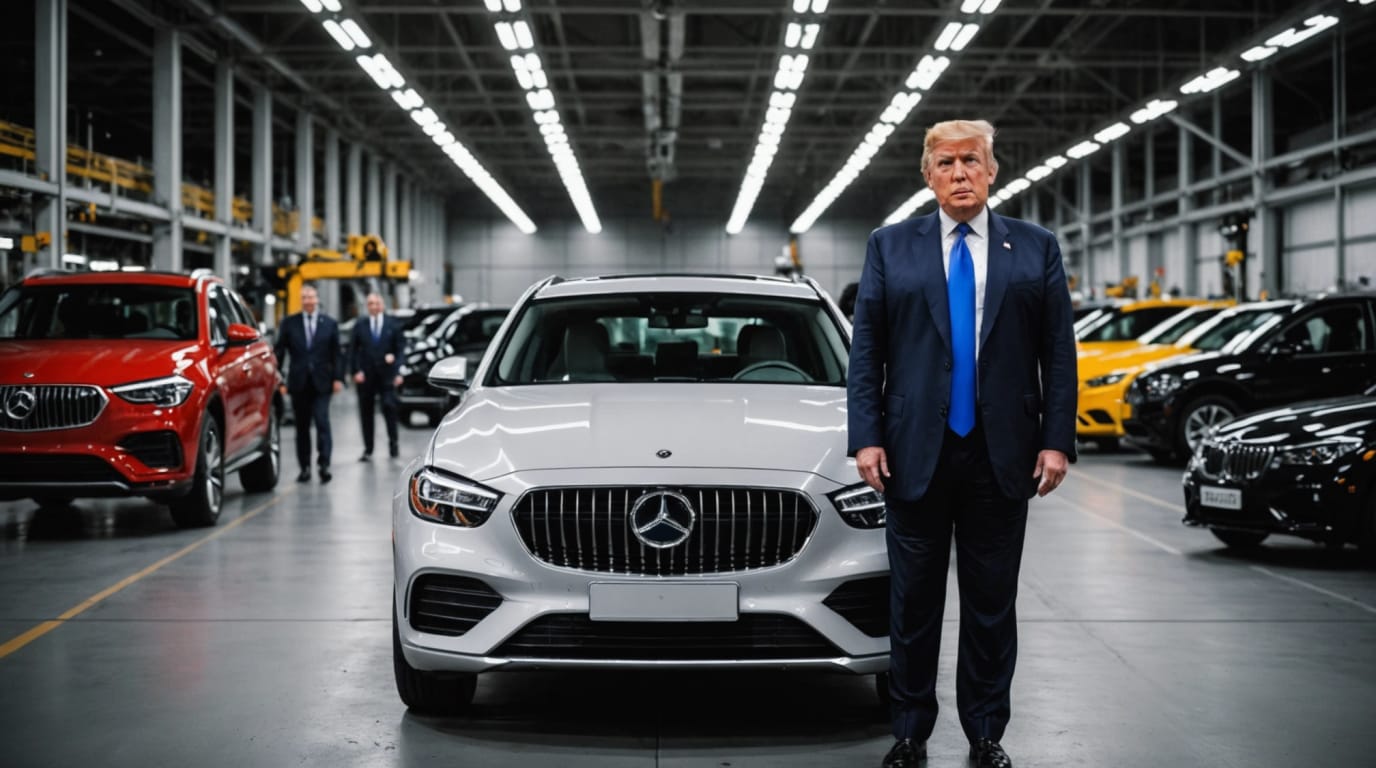
President Donald Trump's decision to impose a 25% tariff on all vehicles imported into the United States, set to take effect on April 2, is poised to deliver a significant blow to German automakers and spark a potential trade war with the European Union. The move, aimed at boosting domestic manufacturing, has been met with strong criticism from both European officials and industry leaders, who warn of dire consequences for the global economy.
Impact on German Automakers
Germany's auto industry, a cornerstone of the nation's economy, is particularly vulnerable to the new tariffs. Companies like Volkswagen, BMW, and Mercedes-Benz, which heavily rely on exports to the U.S. market, are expected to bear the brunt of the increased costs. In 2024, European automakers exported 749,000 cars to the U.S., valued at €38.5 billion. The tariffs could significantly reduce the competitiveness of German vehicles in the U.S., potentially leading to decreased sales and production.
Hildegard Müller, the head of Germany's powerful VDA car lobby, described Trump's measures as "a fatal signal for free and rules-based trade" and called for immediate negotiations. German Economy Minister Robert Habeck urged the European Union to provide a "decisive response" and asserted that the levies "ultimately harm the U.S. and the EU, and global trade as a whole."
The tariffs could also force German automakers to reconsider their production strategies. Some companies may decide to shift production to the U.S. to avoid the tariffs, which could lead to job losses in Germany. Matthias Wissel, a site manager at Volkswagen, explained that tariffs "could make companies decide to move to the US to produce there, which might also mean jobs are lost here in Germany."
Broader Economic Implications
The impact of the tariffs extends beyond German automakers. The automotive supply chain is highly complex and intertwined, with parts and cars often crossing borders multiple times before reaching dealerships. The additional 25% tax on automotive parts, scheduled to begin in May, will further disrupt the industry and increase costs for manufacturers, including those in the U.S.
Matthias Zink, president of automotive supplier lobby CLEPA, warned that the tariffs "risk breaking apart a trading partnership built over decades." The European Automobile Manufacturers' Association (ACEA) expressed deep concern, stating that the tariffs come "at a watershed moment for our industry's transformation and as fierce international competition mounts."
Economists predict that the tariffs will lead to higher prices for consumers in the U.S., potentially squeezing some would-be car buyers out of the market. Even vehicles assembled in the U.S. could face price hikes as automakers attempt to spread the new costs across their lineups.
EU Response and Potential Trade War
The European Union has vowed to retaliate against the U.S. tariffs, raising the specter of a full-blown trade war. French Finance Minister Eric Lombard stated that "the only solution for the European Union will be to raise tariffs on American products in response." The EU had already been planning to re-impose suspended tariffs on a range of U.S. goods in mid-April as part of a previous dispute over trade in steel and aluminum.
Ursula von der Leyen, the European Commission President, said the EU would "assess this announcement, together with other measures the U.S. is envisaging in the next days" and "continue to seek negotiated solutions, while safeguarding its economic interests." However, some officials, like Germany's Robert Habeck, have adopted a more assertive tone, arguing that the EU should "not back down in the face of the USA."
A trade war between the U.S. and the EU could have severe consequences for the global economy, disrupting supply chains, increasing prices, and slowing economic growth. The International Monetary Fund and other international organizations have warned against protectionist measures and emphasized the importance of free and fair trade.
Uncertainty and Future Outlook
The long-term impact of Trump's auto tariffs remains uncertain. Much will depend on how the EU responds and whether the two sides can reach a negotiated solution. The tariffs could also be subject to legal challenges, both in the U.S. and at the World Trade Organization (WTO).
In the meantime, German automakers are bracing for a difficult period. They will need to adapt to the new tariffs, explore alternative markets, and potentially restructure their operations. The tariffs also come at a challenging time for the industry, which is already facing high energy and labor costs, competition from China, and the transition to electric vehicles.
The coming months will be crucial in determining the future of transatlantic trade relations and the fate of German automakers in the U.S. market. The stakes are high, and the potential for economic disruption is significant.