Trump's Middle East Business Interests Spark Controversy Amid Gaza Crisis
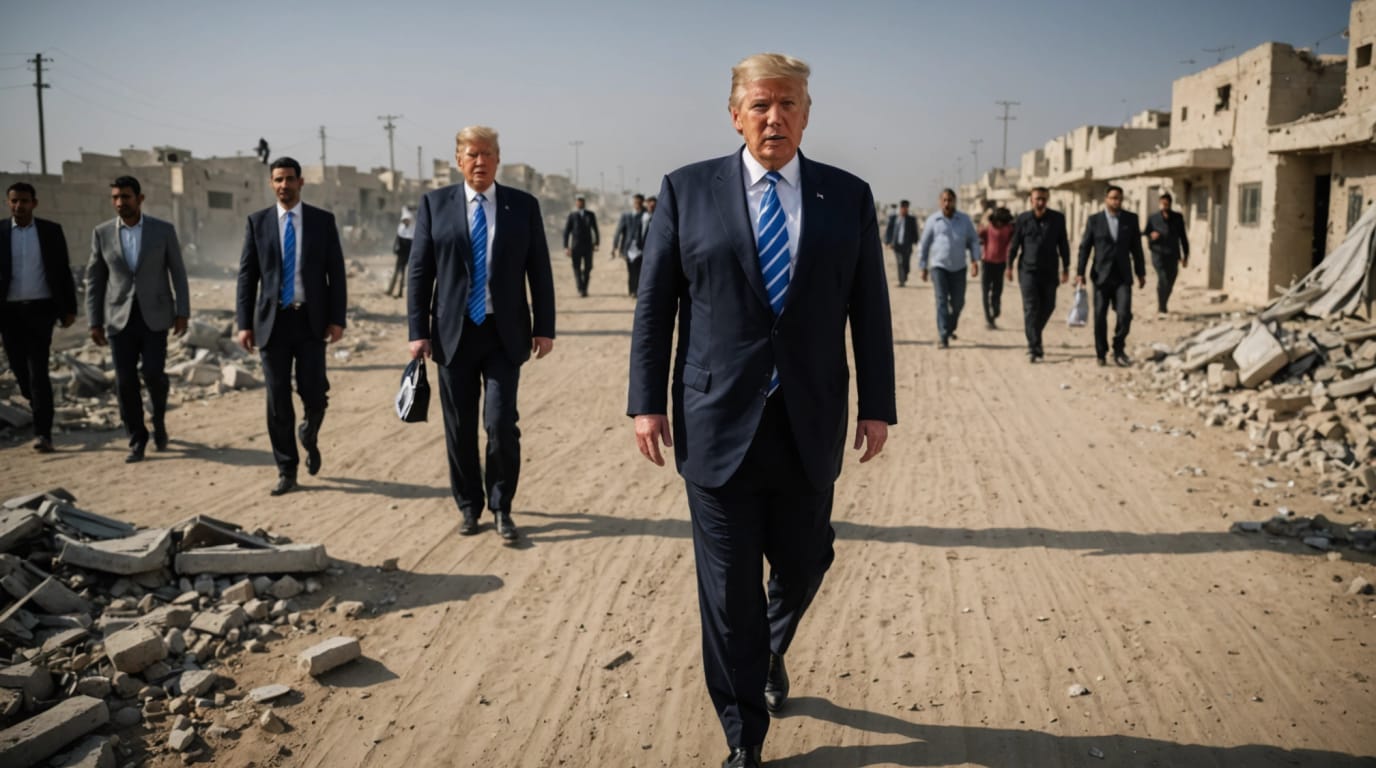
Donald Trump's recent remarks about the possibility of the United States "taking over" Gaza have ignited a firestorm of controversy, raising questions about potential conflicts of interest given his family's extensive business dealings in the Middle East. As the region grapples with ongoing conflict and humanitarian crisis, the Trump Organization's pursuit of lucrative real estate ventures in countries like Saudi Arabia, Oman, and the United Arab Emirates has drawn increased scrutiny.
Trump's Gaza Proposal
During a press conference with Israeli Prime Minister Benjamin Netanyahu in early February, Trump suggested that the United States should "take over" the Gaza Strip, envisioning its transformation into a "Riviera of the Middle East." He proposed permanently relocating the Palestinian population and redeveloping the area into a luxurious seaside haven, creating thousands of jobs. These comments have been met with widespread condemnation, with critics raising concerns about potential violations of international law and the further escalation of conflict in the region. White House officials have since attempted to downplay the remarks, clarifying that there are no plans to deploy U.S. troops to Gaza.
The United Nations experts have warned that such a proposal would shatter the fundamental rules of international order. Across the Middle East, including key Arab allies, the proposal has been met with widespread condemnation. Egypt and Jordan have firmly rejected the plan, emphasizing that it could lead to regional instability and violate international norms. The Arab League has also denounced the proposal, warning that it could exacerbate tensions and undermine efforts toward a two-state solution.
Lucrative Middle East Deals
While Trump's political future remains uncertain, his family's business empire has been actively expanding its presence in the Middle East. The Trump Organization has forged partnerships with major real estate developers in the region, particularly Saudi Arabia's Dar Al Arkan, to develop luxury apartments, golf courses, and hotels. These projects span across Oman, Saudi Arabia, Dubai with the Trump Organization already earning millions.
In December 2024, it was announced that the Trump Organization intends to build Trump Towers in Riyadh and Abu Dhabi, marking its expansion across the Gulf region. These projects will be developed in partnership with Dar Global. Additionally, the Trump Organization has aligned with LIV Golf, a professional league financed by Saudi Arabia's sovereign wealth fund, hosting tournaments at Trump National Doral near Miami for the fourth consecutive year this April.
Potential Conflicts of Interest
The timing of these business ventures, coinciding with Trump's renewed political ambitions and his controversial statements about Gaza, has raised concerns about potential conflicts of interest. Critics argue that Trump's personal financial interests could influence his policy decisions regarding the Middle East, particularly in relation to the Israeli-Palestinian conflict.
Jared Kushner, Trump's son-in-law and former Middle East envoy, also has significant financial ties to the region. His private equity fund, Affinity Partners, received a $2 billion investment from Saudi Arabia. These connections have fueled further scrutiny of the Trump family's motivations and the potential impact on U.S. foreign policy.
U.S. Policy in Gaza
The United States has long been involved in the Israeli-Palestinian conflict, with the stated goal of promoting a two-state solution. However, U.S. policy toward Gaza has been complex and often reactive, particularly since the 2006 Palestinian elections. The U.S. has largely disengaged from Gaza, seeking to weaken Hamas while strengthening the Palestinian Authority. This approach has limited the U.S.'s ability to deliver aid and exert influence in the region.
Despite these challenges, the U.S. has periodically become more involved in Gaza due to flare-ups and humanitarian crises, focusing on stabilization efforts. Some experts suggest that the U.S. could play a more proactive role in maintaining the ceasefire between Israel and Hamas by creating a mechanism for sustained engagement during peacetime.
The Future of Gaza
The future of Gaza remains uncertain, with the ongoing conflict exacerbating the already dire humanitarian situation. Trump's proposal to "take over" the territory has been widely rejected, but it highlights the complex geopolitical dynamics at play. As the Trump family continues to pursue business opportunities in the Middle East, questions about potential conflicts of interest and the impact on U.S. foreign policy are likely to persist.
The United States has provided significant assistance to the Palestinians over the years, but its approach to Gaza has been constrained by its stance on Hamas. Finding a sustainable solution to the conflict will require a comprehensive approach that addresses the needs of both Israelis and Palestinians, while also navigating the complex web of regional and international interests.