Trump's Shifting Stance Creates Diplomatic Ripples Over Strategic Chagos Islands Deal
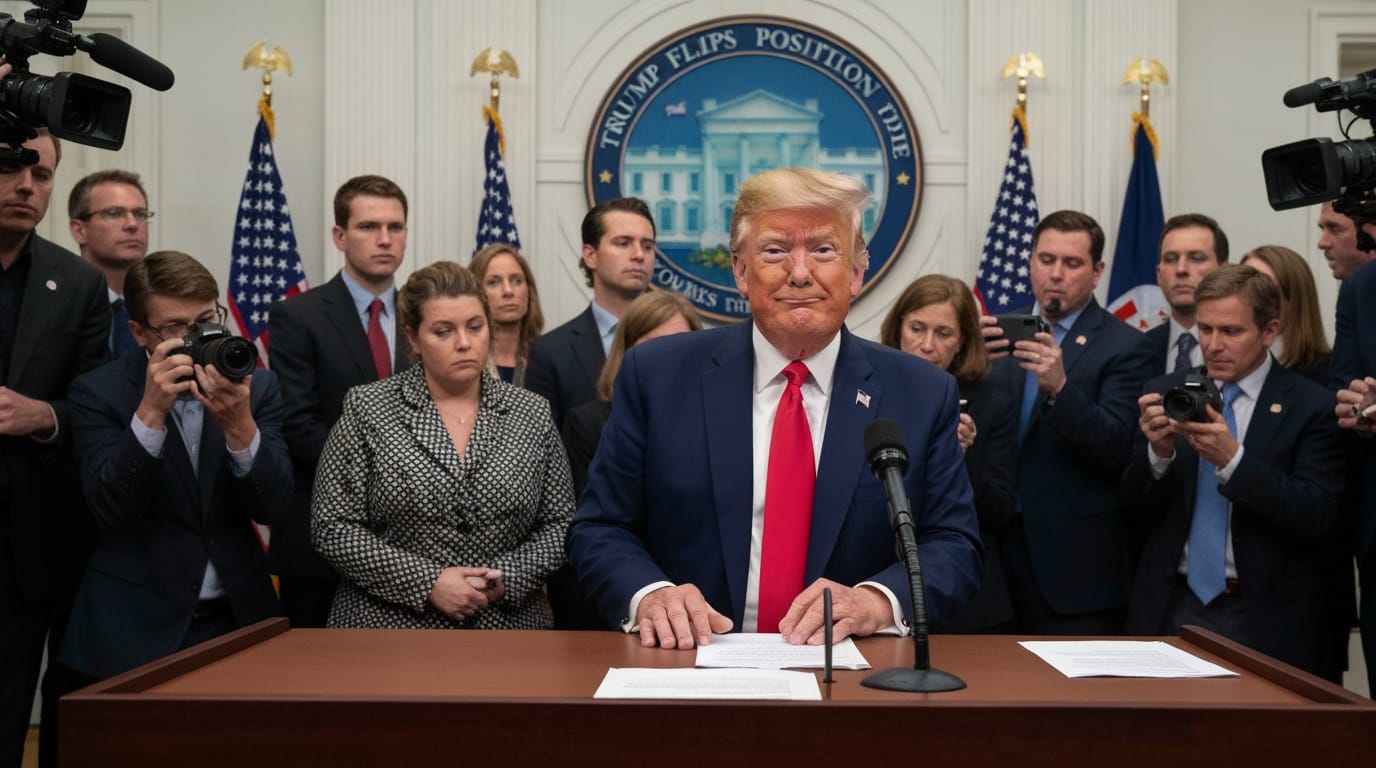
WASHINGTON – In a series of abrupt reversals, U.S. President Donald Trump has injected fresh uncertainty into a landmark agreement between the United Kingdom and Mauritius concerning the Chagos Archipelago, a remote Indian Ocean territory home to the vital joint U.S.-UK military base on Diego Garcia. His latest declaration, deeming the sovereignty transfer a "big mistake" just days after his administration publicly supported it, has sparked confusion among allies and underscored the unpredictable nature of U.S. foreign policy, particularly concerning critical geopolitical assets. The diplomatic whiplash follows months of oscillating positions from the White House, leaving observers questioning the stability of agreements designed to resolve long-standing colonial disputes and secure crucial defense interests.
A Deal Designed to Resolve Decades of Dispute
The agreement, formally signed in May 2025 by British Prime Minister Keir Starmer and Mauritian Prime Minister Navin Ramgoolam, aimed to conclude a contentious sovereignty dispute that has persisted since Mauritius gained independence in 1968. Under the terms, the UK agreed to transfer sovereignty over the Chagos Archipelago to Mauritius, with a pivotal provision: the joint UK-U.S. military base on Diego Garcia, the largest island, would remain operational under a new 99-year lease. This arrangement stipulated that the UK would pay Mauritius an estimated £101 million annually for the lease.
The deal emerged from significant international pressure on the United Kingdom. In 2019, the International Court of Justice (ICJ) issued an advisory opinion concluding that the UK's 1965 separation of the Chagos Archipelago from Mauritius was unlawful and that London was obligated to end its administration "as rapidly as possible." The United Nations General Assembly subsequently voted overwhelmingly to endorse this opinion. British officials had characterized the agreement as a necessary step to secure the long-term future of the base, which they argued was under threat from international legal challenges.
Initially, the Trump administration appeared to endorse this diplomatic solution. In May 2025, then-Secretary of State Marco Rubio hailed the agreement as a "monumental achievement," ensuring the "long-term, stable, and effective operation" of the Diego Garcia facility. President Trump himself had reportedly expressed support for the deal during a meeting with Prime Minister Starmer at the White House.
The "Great Stupidity" and Greenland Gambit
However, this consensus proved short-lived. On January 20, 2026, President Trump abruptly reversed course, taking to his social media platform, Truth Social, to denounce the UK's decision as an "act of great stupidity." He asserted that the UK was "giving away extremely important land" for "no reason whatsoever" and linked this perceived weakness to his long-standing desire for the U.S. to acquire Greenland. Trump's public broadside suggested that China and Russia would perceive the UK's actions as a sign of "total weakness," thereby diminishing the standing of Western allies on the global stage.
This unexpected condemnation sent shockwaves through London and Washington. British Cabinet Minister Pat McFadden suggested that Trump's outburst might be less about the Chagos Islands and more a reflection of his frustration over European resistance to his Greenland ambitions. Nonetheless, the declaration intensified criticism of the deal from within the UK, where opposition parties, including the Conservative Party and Reform UK, had already labeled it a "massive strategic blunder" and a threat to national security. They argued that relinquishing sovereignty could potentially open the door to interference from adversaries.
A Fleeting Reconsideration and Renewed Opposition
The narrative took another turn on February 5, 2026, when President Trump appeared to soften his stance after a "very productive" phone call with Prime Minister Starmer. In a subsequent Truth Social post, Trump acknowledged that he understood the agreement was "the best" Starmer could have negotiated. He reaffirmed Diego Garcia's critical importance for U.S. national security and global military operations, highlighting the success of U.S. military actions over the past year due to the base's strategic location. While seemingly an endorsement, this statement also contained a caveat: Trump reserved the right to "Militarily secure and reinforce the American presence" on Diego Garcia if the lease deal ever "falls apart" or if U.S. operations were threatened.
This period of tempered criticism, however, proved brief. Just one day after the U.S. State Department publicly reiterated its support for the UK-Mauritius agreement on February 17, 2026, President Trump delivered his third and most emphatic reversal. On February 18, 2026, he reportedly told Prime Minister Starmer that transferring the islands to Mauritius would be a "big mistake." Trump explicitly cited the military base's potential role in a U.S. strike against Iran, warning of a "highly unstable and dangerous regime" and emphasizing that the lease arrangement was "tenuous" and "no good." He urged Starmer, "DO NOT GIVE AWAY DIEGO GARCIA!"
The Enduring Strategic Importance of Diego Garcia
At the heart of this diplomatic imbroglio lies Diego Garcia, an island of immense strategic value. The joint UK-US military facility, often described as an "unsinkable aircraft carrier," serves as a crucial hub for power projection across the Indian Ocean, the Middle East, Africa, and the Indo-Pacific region. Its deep-water port, extensive airfields capable of accommodating heavy strategic bombers like the B-2 Spirit, B-52 Stratofortress, and B-1B Lancer, and advanced surveillance capabilities provide the U.S. and UK with irreplaceable security assets.
Since its establishment in the early 1970s, the base has been instrumental in numerous military operations, including the Persian Gulf War, the War in Afghanistan, and the Iraq War, enabling rapid deployment and logistical support without reliance on regional allies. Its central location in the third-largest ocean makes it a key strategic outpost for countering rising threats, particularly from China and Russia, in an increasingly contested geopolitical landscape.
The Human Element: Chagossian Displacement
Beyond the geopolitical maneuvers and military strategy lies a profound human story: the forced displacement of the Chagossian people. Between 1967 and 1973, the indigenous inhabitants of the Chagos Archipelago were systematically removed by the UK to make way for the U.S. military base on Diego Garcia. This act, described by Human Rights Watch as a "crime against humanity," led to decades of poverty, legal identity struggles, and the severance of cultural ties for thousands of Chagossians, primarily resettled in Mauritius and the Seychelles.
The UK-Mauritius agreement ostensibly aimed to address these "wrongs of the past." It included provisions for Mauritius to implement a resettlement program on islands within the archipelago, excluding Diego Garcia, and for the UK to establish a new trust fund for the benefit of the Chagossians. However, many Chagossians expressed frustration over the lack of direct consultation and voiced concerns that the deal might further complicate their long-cherished aspiration to return to their ancestral homeland.
Looking Ahead: Uncertainty and Alliance Strain
President Trump's latest declaration has reintroduced significant ambiguity into a deal that was years in the making and had received prior endorsement from his own administration. His shifting positions not only complicate the future of the Chagos Archipelago but also strain the "special relationship" between the United States and the United Kingdom. While the U.S. State Department continues to affirm its support for the agreement, Trump's public criticisms underscore a transactional approach to international relations, where long-term diplomatic solutions can be upended by immediate political considerations.
The international community, particularly nations invested in a rules-based order and the principles of decolonization, will closely watch the fallout from these pronouncements. The future of Diego Garcia, its strategic importance undiminished, remains entwined with the complex legacy of colonialism and the unpredictable currents of global power politics. The stability of a critical military asset and the resolution of a deeply felt human rights issue now face renewed uncertainty, prompting fundamental questions about alliance reliability and the coherence of U.S. foreign policy.


