Turkish Football Rocked by Sprawling Betting Scandal: Arrests and Suspensions Mount
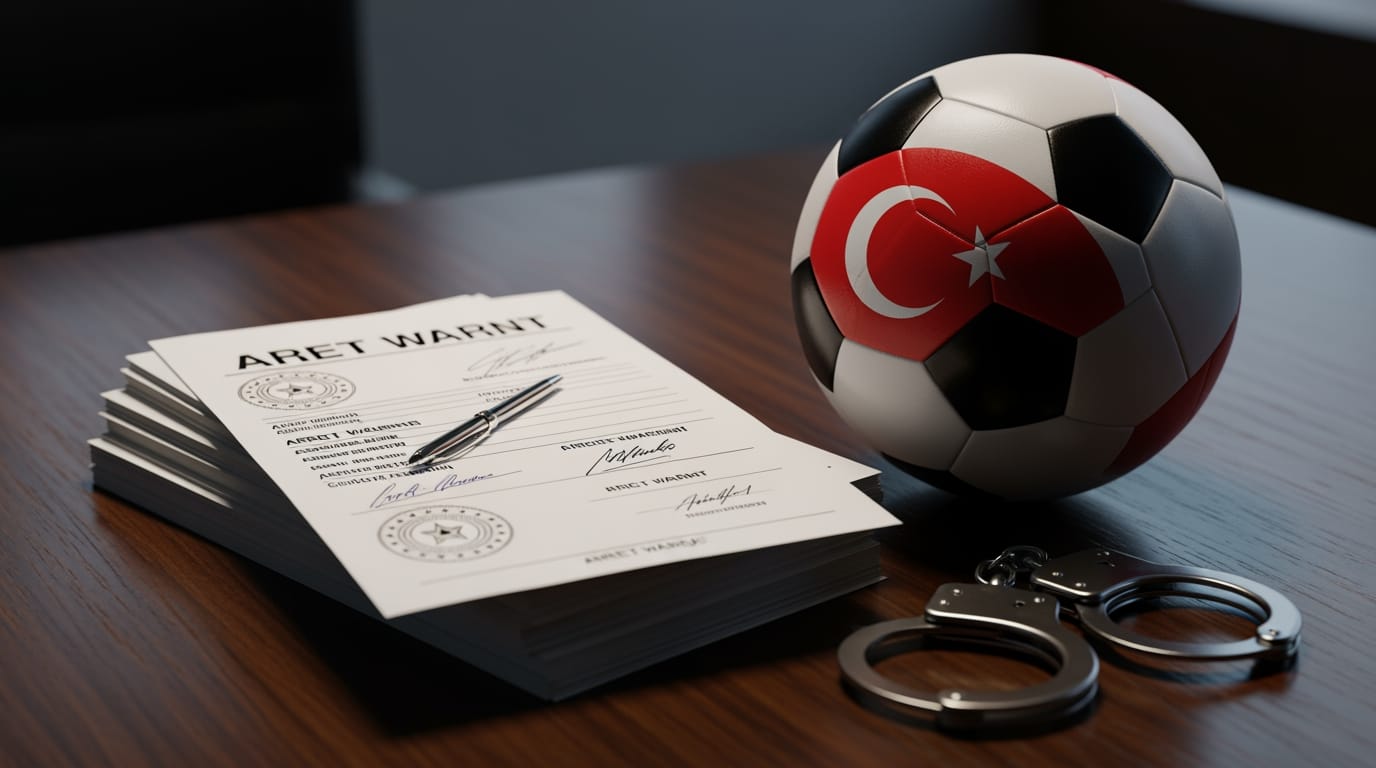
Turkish football finds itself embroiled in an extensive betting and match-fixing scandal, leading to a fresh wave of arrest warrants and hundreds of suspensions across the country's professional leagues. The widening investigation, which initially targeted referees, has now implicated players, club officials, and prominent sports figures, sending shockwaves through the sport and prompting calls for a thorough cleansing of its integrity.
The Istanbul Chief Public Prosecutor's office has recently issued arrest warrants for 46 individuals, including 29 professional football players, as part of an expanding probe into illegal betting activities. This development follows earlier warrants in November for 21 people, including 17 referees and a top-tier club president. Authorities have confirmed the detention of 35 of the 46 individuals named in the latest warrants, bringing the total number of arrests and detentions to a significant figure.
A Deep Dive into the Allegations and Initial Crackdown
The scandal began to unravel publicly in late October 2025, when the Turkish Football Federation (TFF) disclosed findings from an internal investigation. It revealed that an alarming 371 out of 571 active referees in professional leagues maintained betting accounts, with 152 of them actively placing wagers on football matches. Some statistics were particularly stark: one referee was found to have placed an astonishing 18,227 bets over five years, while 42 others had bet on more than 1,000 matches each. This initial revelation led to the immediate suspension of 149 referees and assistant referees, with penalties ranging from eight to twelve months.
Among the initial wave of arrests in November was Murat Ozkaya, the chairman of Eyupspor, a club competing in Turkey's top-flight Super Lig. He, along with seven others, faces accusations of abuse of power and match-fixing. The TFF President, Ibrahim Haciosmanoglu, publicly condemned the situation, describing it as a "moral crisis in Turkish football" and pledging to rid the sport of "scandal, decay, and corrupt relationships."
Players and Club Officials Caught in the Net
The investigation's scope has since broadened considerably, now extending to players, club executives, and other influential figures within Turkish football. The December 5th raids, conducted simultaneously across 16 provinces, saw the detention of prominent individuals. Among those reportedly detained or summoned for questioning are Fenerbahçe midfielder Mert Hakan Yandaş, alleged to have placed bets through another person's account, and former referee and well-known TV pundit Ahmet Çakar, whose bank accounts showed suspicious financial transactions.
Furthermore, two club presidents are under investigation for allegedly attempting to manipulate the outcome of a third-division fixture during the 2023–2024 season. This particular match drew suspicion after neither team reportedly managed a single shot on goal, an anomaly that Turkish media suggest catalyzed the broader probe.
The TFF has not only focused on officials but has also referred 1,024 players from across all professional leagues to its disciplinary committee for betting offenses. This staggering number includes 27 players from the Super Lig, Turkey's elite division. Notable players like Galatasaray defender Eren Elmali, a Turkish national team representative, and his club teammate Metehan Baltaci have been suspended. Elmali, who received a 45-day ban, stated via Instagram that his alleged betting activity occurred five years ago on a match that did not involve his team at the time, attributing it to a youthful misunderstanding of the rules.
The immediate consequences for the lower leagues have been severe, with all matches in Turkey's third and fourth divisions suspended for two weeks to manage the fallout. While the top-tier Super Lig and the second tier have continued play, many clubs are facing challenges with depleted squads due to the widespread suspensions.
Echoes of the Past: A Recurring Challenge for Turkish Football
This is not the first time Turkish football has grappled with the specter of match-fixing and betting scandals. A significant incident in 2011 saw Fenerbahçe at the heart of a corruption investigation, which resulted in various sanctions and widespread turmoil. That scandal, which involved allegations of establishing a criminal organization, bribery, and match manipulation, profoundly impacted the league's integrity and its perception both domestically and internationally.
The persistent nature of such issues highlights a deeply rooted problem within the sport's infrastructure. Distrust in officiating and the authorities has been a recurring theme, with fanbases of major clubs often viewing controversial decisions with suspicion. This history of skepticism underscores the monumental task facing the TFF and judicial authorities as they attempt to restore faith in the game.
Implications and the Path Forward
The current scandal carries significant implications for the future of Turkish football. The widespread nature of the allegations, involving players and officials at various levels, threatens to undermine the sport's credibility. FIFA's Code of Ethics strictly prohibits players, referees, and club officials from betting on games, with potential bans of up to three years and substantial fines.
The TFF has signaled its intent for radical change, introducing measures such as an AI-enhanced VAR apparatus and a whistleblower hotline in its fight against match-fixing. TFF President Haciosmanoglu's strong stance suggests a departure from previous approaches that may have dismissed allegations as mere conspiracy. The challenge will be to see this aggressive clean-up through to its conclusion, ensuring that the integrity of the game is genuinely restored.
As the investigations continue, more arrests are anticipated, and the full extent of the systemic corruption is yet to be uncovered. The ongoing crisis tests the resilience of Turkish football, raising critical questions about regulation, funding, and ethical standards within the global sport. The outcome of this probe will undoubtedly shape the landscape of Turkish football for years to come, determining whether it can emerge from this period of turmoil with renewed trust and a commitment to fair play.