Turkish Police Employ Water Cannons Against Protesters in Izmir Amid Deepening Political Turmoil
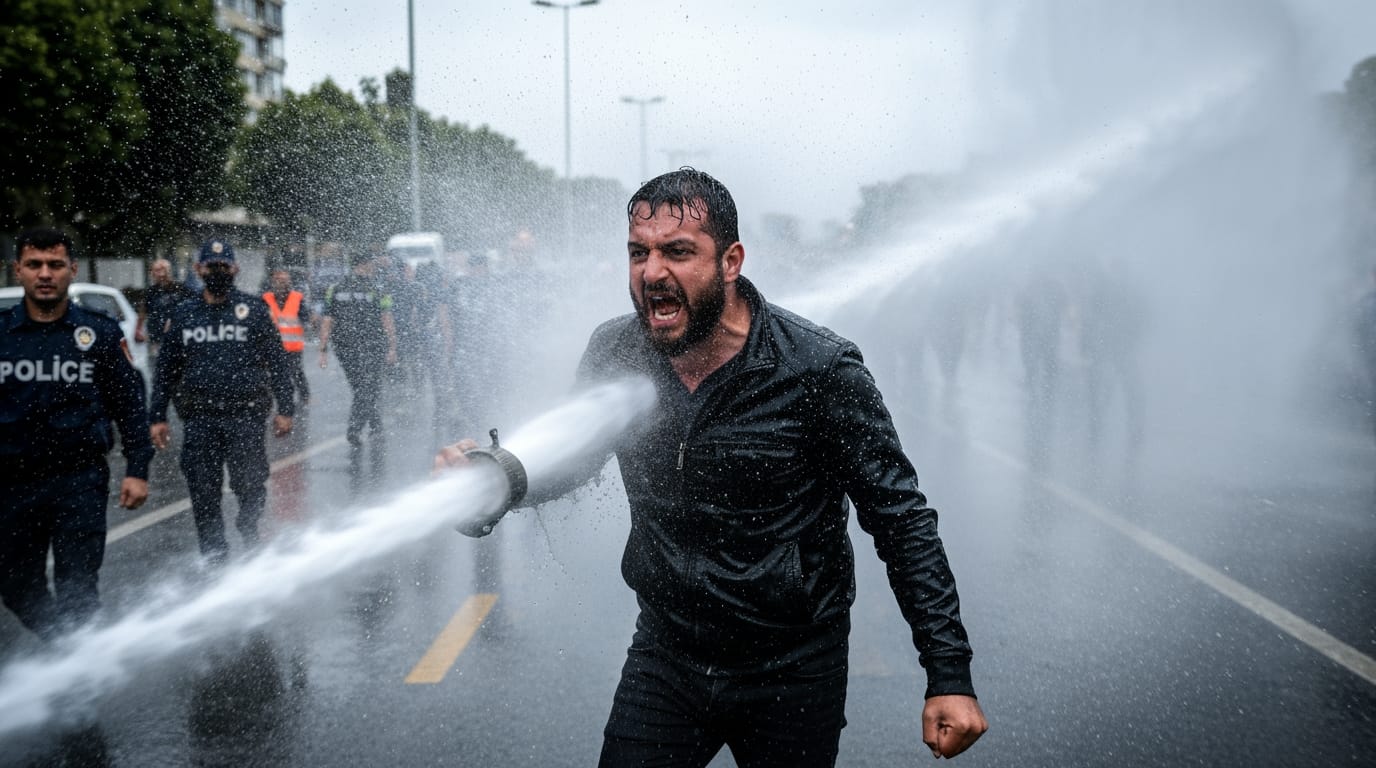
Izmir, Turkey – Riot police in the western Turkish city of Izmir deployed water cannons and tear gas on Tuesday to disperse a large crowd of demonstrators protesting the controversial ousting of the main opposition party leader, Özgür Özel. The confrontation unfolded as supporters of the Republican People's Party (CHP) gathered to rally against a recent court ruling that nullified the 2023 party congress, effectively removing Özel from his leadership position and reinstating his predecessor. The incident marks a significant escalation in the ongoing political tensions gripping Turkey, raising concerns about the state of democratic processes and freedom of assembly in the country.
The protests, which drew an estimated crowd of more than a thousand individuals, centered around Cumhuriyet Square, a traditional hub for public demonstrations in Izmir. Ahead of the planned rally, local authorities, acting under the Izmir Governor's Office, had issued orders to close the square, deploying a substantial contingent of riot police equipped with water cannon trucks and steel barricades. Despite these restrictions, flag-waving protesters converged on the area, chanting slogans that reflected their frustration and defiance. As demonstrators attempted to breach the police blockade and access Cumhuriyet Square, officers responded by firing water cannons, often mixed with pepper spray, into the crowd. Eyewitness accounts and local media reports detailed scenes of citizens being doused by powerful streams of water as they sought to reach the rally point. One notable moment captured a demonstrator climbing onto a police water cannon vehicle, reportedly attempting to interfere with its spraying system, a vivid illustration of the palpable tension between protesters and security forces.
The immediate catalyst for the Izmir protest was a court decision issued on Thursday, May 21, 2026, which overturned the results of the 2023 CHP party congress. This ruling effectively dismissed Özgür Özel, who had been elected party leader at that congress, and provisionally reinstated Kemal Kılıçdaroğlu, Özel's long-standing rival and former leader of the CHP. The court case reportedly stemmed from allegations of delegate bribery during the 2023 congress vote, claims that the CHP leadership vehemently denies, asserting their intention to appeal to the Supreme Court. This judicial intervention has plunged Turkey's oldest and largest opposition party into significant internal chaos, prompting accusations from Özel and his supporters that the move is politically motivated. They argue it represents a deliberate attempt to undermine the CHP, especially given its recent successes in the 2024 local elections, where it secured major victories against President Recep Tayyip Erdoğan's ruling Justice and Development Party (AKP) in key cities like Istanbul and Ankara.
The events in Izmir on Tuesday were not isolated but followed a similar pattern of confrontation in the capital. Just two days prior, riot police forcibly entered the CHP's headquarters in Ankara, using tear gas and physically removing party members who had reportedly barricaded themselves inside. This aggressive intervention at the party's central offices further fueled outrage among opposition sympathizers and raised alarms about the shrinking space for dissent. Özel himself linked these actions to a broader strategy to neutralize the opposition, telling Agence France-Presse that President Erdoğan had "lost all restraint" and was attempting to "effectively shut down the political party that could defeat him." Such statements underscore the perception among the opposition that the judiciary is being used as a tool to stifle political challengers, contradicting the government's insistence on judicial independence.
The use of force against protesters in Izmir, coupled with the judicial maneuverings against the CHP, has significant implications for Turkey's democratic future and its international standing. Critics argue that these actions erode fundamental rights, including freedom of assembly and association, which are cornerstones of a democratic society. Protesters' chants, such as "Shoulder to shoulder against fascism" and "Fighting we will win," reflect a deep-seated belief that the country is veering away from democratic principles. The slogan "Chairman Özgür, free Turkey," a play on Özel's first name meaning "free," highlighted the aspirations for greater political freedom. The CHP, traditionally a secularist party, has been a bulwark against what many perceive as the increasing authoritarianism of the current administration. The ongoing crackdown on the party, particularly after its electoral gains, suggests a hardening stance from the government towards any form of significant political challenge.
The political crisis unfolds as Turkey was preparing for the four-day Eid al-Adha holiday, a period typically marked by national tranquility. Özel, despite the police intervention, eventually addressed supporters from a nearby square, urging unity and calling for an immediate party congress to allow members to elect their leadership through a vote. He openly challenged Kılıçdaroğlu to convene a new congress, emphasizing that the issue was not merely an internal party matter but a larger struggle against the ruling party's "march toward ultimate power." The incident in Izmir serves as a stark reminder of the fragile state of political pluralism in Turkey, where the line between legitimate judicial process and perceived political interference appears increasingly blurred, and the government's response to public dissent often involves robust displays of force.
In conclusion, the deployment of water cannons and tear gas against opposition supporters in Izmir underscores the volatile political climate in Turkey. The judicial ruling against Özgür Özel and the subsequent police actions against CHP protests reveal a deepening struggle for democratic space and civil liberties. As the CHP grapples with internal leadership challenges exacerbated by external pressure, the broader implications for freedom of assembly, political pluralism, and the rule of law in Turkey remain a critical concern for both domestic and international observers. The events signal a continuing pattern of state intervention in political processes, challenging the very foundations of democratic governance and raising questions about the future trajectory of Turkish politics.


