U.S. and Israel Conclude Summit Without Definitive Iran Agreement, Diplomacy to Continue Amid Regional Tensions
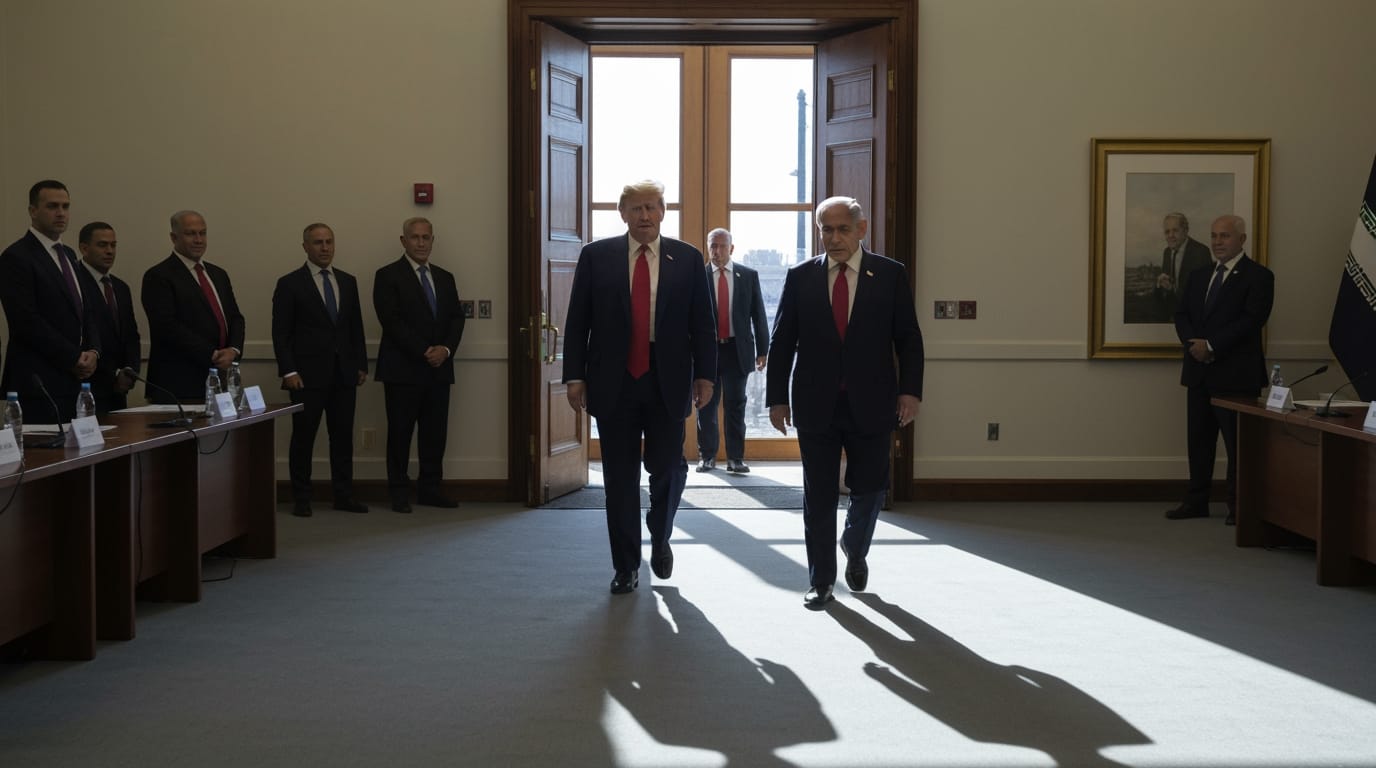
Washington D.C. – A highly anticipated meeting between U.S. President Donald Trump and Israeli Prime Minister Benjamin Netanyahu at the White House on Wednesday concluded without a definitive agreement on a unified strategy concerning Iran, though President Trump affirmed that negotiations with Tehran would proceed. The closed-door discussions, lasting over two and a half hours, highlighted a continued divergence in approach between the two key allies on how best to address the Islamic Republic's nuclear ambitions and regional activities.
The lack of a concrete joint declaration underscores the complexities facing Washington and Jerusalem as they navigate the volatile geopolitical landscape of the Middle East. While President Trump publicly stated that "nothing definitive reached" beyond his insistence on ongoing talks with Iran, Prime Minister Netanyahu had arrived in Washington with a clear objective: to press for a comprehensive deal that extends beyond Iran's nuclear program to encompass its ballistic missile capabilities and support for proxy militant groups.
Divergent Diplomatic Paths Emerge
The White House summit, the seventh such encounter since President Trump's return to office last year, unfolded with a notable absence of the customary joint press conferences or public statements by both leaders. Instead, President Trump conveyed the meeting's outcome via social media, characterizing it as "very good" but emphasizing his resolve for continued dialogue with Iran. "There was nothing definitive reached other than I insisted that negotiations with Iran continue to see whether or not a Deal can be consummated," Trump posted, adding, "If it can, I let the Prime Minister know that will be a preference. If it cannot, we will just have to see what the outcome will be."
This position signals President Trump's continued preference for a diplomatic resolution, despite escalating military posturing and past punitive actions. Conversely, Prime Minister Netanyahu, who expedited his trip to Washington, expressed Israel's "security needs" within the context of negotiations. Israeli officials have consistently voiced concerns that a narrow agreement focusing solely on the nuclear issue would fail to dismantle Iran's broader "threat ecosystem," including its ballistic missile program and its financial and military backing of groups like Hamas, Hezbollah, and the Houthis.
These divergent priorities were evident in the lead-up to the meeting. Senior U.S. and Iranian envoys held indirect talks in Oman just days prior, on February 7, 2026, which reportedly focused exclusively on Iran's nuclear program. Iranian officials have repeatedly stated that their missile capabilities are non-negotiable, further complicating any efforts to forge a comprehensive agreement that satisfies Israel's broader security demands.
A Backdrop of Regional Instability and Military Readiness
The discussions between President Trump and Prime Minister Netanyahu occurred amid heightened tensions across the Middle East. The U.S. has been steadily increasing its military presence in the region, with reports indicating a second aircraft carrier strike group might be deployed. This military buildup follows U.S. strikes on Iranian nuclear facilities in June 2025, which President Trump referenced in his post-meeting remarks by recalling "Midnight Hammer" and warning Iran to be "more reasonable and responsible" in future negotiations. Iran, for its part, has vowed retaliation in the event of further attacks and has reportedly worked to restore damaged ballistic missile infrastructure.
Beyond Iran's nuclear program, the leaders also addressed the ongoing situation in Gaza, where President Trump touted "tremendous progress" in a ceasefire agreement he helped broker. However, progress on his 20-point plan for the war-torn enclave has reportedly stalled, with significant obstacles remaining, particularly concerning the disarmament of Hamas as Israeli troops withdraw. The broader regional context includes a severe crackdown on anti-government protests in Iran last month, which drew threats of military intervention from President Trump, although he ultimately held off.
Israel, a long-standing U.S. ally, views Iran as its arch-foe and a significant threat to regional stability. Netanyahu's insistence on a robust approach is rooted in Israel's profound security concerns regarding Iran's nuclear potential and its network of proxy forces. The Israeli Prime Minister believes that any diplomatic overture with Tehran must fundamentally alter the regime's behavior, not merely defer a critical challenge.
Looking Ahead: A Tenuous Path Forward
The White House meeting underscores the delicate balance between diplomacy and deterrence that characterizes current U.S. policy towards Iran. While President Trump has articulated a preference for a deal, the specifics of such an agreement, particularly its scope and enforceability, remain a point of contention between the U.S. and Israel. The continued US-Iran dialogue, hinted at by Trump, suggests further rounds of negotiations are on the horizon, with the potential for additional talks as early as next week.
However, the path forward is fraught with challenges. Iran's steadfast refusal to negotiate on its missile program, coupled with Israel's deep-seated skepticism about a limited nuclear deal, creates a complex diplomatic puzzle. The international community watches closely as the U.S. and its allies seek to contain Iran's influence while attempting to avoid a broader regional conflagration. The outcome of these ongoing negotiations will undoubtedly have profound implications for the future of Middle Eastern security and global non-proliferation efforts.


