U.S. Communities Push Back: The Growing Battle Over Data Center Expansion
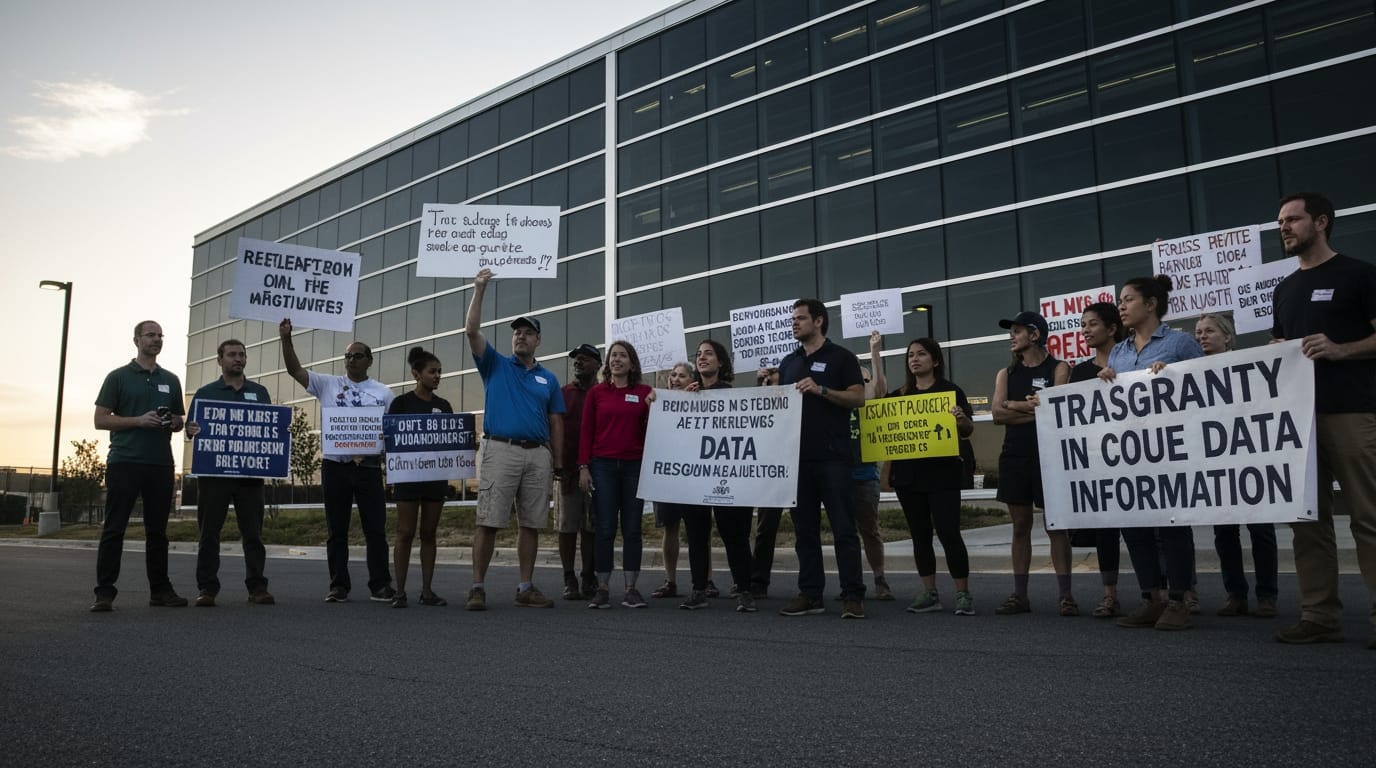
Across the United States, a groundswell of citizen activism is challenging the rapid, often unchecked, expansion of data centers, marking a significant turning point in the nation's digital infrastructure boom. Local communities, increasingly alarmed by the environmental footprint and economic burdens associated with these massive facilities, are organizing protests, advocating for moratoriums, and ultimately delaying or blocking billions of dollars in projects. This mounting opposition underscores a growing tension between technological advancement and local well-being, forcing a reevaluation of how the digital age is physically built.
The Unseen Costs of the Digital Age
The proliferation of data centers, driven by surging demand for artificial intelligence (AI), cloud computing, and streaming services, is reshaping landscapes and straining local resources at an unprecedented pace. What once seemed like innocuous, job-creating developments are now widely viewed as imposing significant environmental and financial liabilities on host communities. A recent Gallup survey in March 2026 revealed that 71% of Americans oppose a data center in their area, with a Reuters/Ipsos poll in June 2026 indicating only 14% would support one nearby. This widespread sentiment is fueled by tangible concerns over soaring electricity consumption, immense water usage, and pervasive noise pollution.
Data centers are prodigious consumers of energy. A single modern AI data center can demand as much power as 100,000 homes, with larger facilities consuming up to 20 times that amount. Projections suggest that data centers could account for 10% to 15% of total U.S. electricity demand by 2030, a dramatic increase that puts immense strain on regional power grids and often necessitates the continued operation, or even construction, of fossil fuel-based power plants. This heightened demand frequently translates into higher utility bills for residential customers, with some states experiencing electricity price increases of up to 267% over the last five years due to data center concentration. The energy-intensive nature of these operations also raises concerns about air pollution and greenhouse gas emissions, particularly when facilities rely on gas-fired generation for routine operations or diesel generators for backup power.
Equally contentious is the massive water footprint of data centers, primarily used for cooling their heat-generating servers. Mid-sized facilities can consume up to 300,000 gallons of water daily, while larger operations can require as much as 5 million gallons per day, a volume comparable to the daily usage of a small town. Estimates suggest that by 2028, AI-related data centers in the U.S. could demand up to 32 billion gallons of water annually. This insatiable thirst poses a critical problem for many communities, particularly those located in water-stressed regions, where two-thirds of U.S. data centers built or in development since 2022 are situated.
Beyond utility consumption, the constant mechanical hum from cooling systems, the rumble of diesel generators, and the whirring of fans contribute to significant noise pollution, disturbing nearby residents and impacting their quality of life. This relentless auditory presence has become a flashpoint for opposition, leading to zoning amendments and project rejections in communities like Chandler, Arizona, where residents endured nearly a decade of persistent noise before local action was taken.
Local Battles, National Repercussions
The growing backlash is not isolated but a widespread movement, with at least 142 activist groups organizing across 24 states. These grassroots efforts have yielded significant results: in the last two years, $18 billion worth of data center projects have been blocked, and an additional $46 billion have been delayed due to community opposition. More recently, the first three months of 2026 alone saw 75 major projects, valued at over $130 billion, delayed or canceled. On July 18, 2026, a coordinated national day of protest against data centers took place across 42 states, highlighting the unified front against unchecked development.
Specific examples abound:
- In Fauquier County, Virginia, a $400 million data center project was withdrawn in July 2024 following intense resident opposition focused on noise, water, power demands, and environmental conservation.
- An attempt to rezone 300 acres of Ohio farmland for data center development was ultimately withdrawn due to widespread community pushback.
- Newton County, Georgia, faced damaged local wells and soaring municipal water prices after Meta began construction on a data center in 2018, leading to concerns about a potential water deficit by 2030. This prompted nearby Coweta County to approve a moratorium on future data center projects.
- Voters in Port Washington, Wisconsin, passed a ballot referendum this spring specifically designed to block a proposed data center.
In a landmark move, New York Governor Kathy Hochul recently signed an executive order establishing the nation's first moratorium on new hyperscale data centers, following the New York State Assembly's passage of a similar bill. This legislative action signals a growing recognition at the state level of the need to pause and assess the impact of these facilities. Pennsylvania, Michigan, and South Carolina are reportedly considering similar measures, and over 300 cities, towns, and counties have already implemented their own bans or moratoriums.
Industry Adaptation and Regulatory Tensions
For years, data center developers often encountered little community resistance, with projects typically welcomed for their promised tax revenue and limited impact on public infrastructure like roads and schools. However, that era has concluded. The "permission to operate" has now emerged as a critical, and increasingly scarce, fourth input alongside chips, power, and capital. Developers can no longer ignore this resistance and are being compelled to integrate community consent, local benefits, and ratepayer protections into their planning from the outset. Some are exploring more proactive community engagement strategies and considering on-site power generation to alleviate stress on local grids and mitigate concerns about water use, noise, and air quality.
Concurrently, the regulatory landscape is shifting. Historically, state legislation often focused on offering tax incentives to attract data center development. However, the focus is now turning towards environmental impacts and ratepayer protection. In early 2026, more than 300 bills addressing data centers were filed across 30 states. States like Virginia have begun to tie tax exemptions directly to corporate commitments for renewable energy.
This local and state-level scrutiny contrasts with federal efforts to fast-track data center development. The Trump Administration's Executive Order 14318, signed on July 23, 2025, aims to accelerate permitting for data centers and related infrastructure to bolster U.S. competitiveness in AI. The U.S. Environmental Protection Agency (EPA) has also indicated efforts to streamline Clean Air Act reviews for these facilities. This creates a tension between national strategic priorities and local environmental and economic concerns.
Charting a Sustainable Digital Future
The public's mixed opinions on data centers highlight the complexity of the issue. While a Pew Research Center survey indicates that Americans view data centers negatively regarding environmental impact, home energy costs, and quality of life, they tend to see positive effects on local jobs and tax revenue. Yet, these perceived economic benefits are often overshadowed by concerns over the tangible impacts on daily life. Critics argue that the promised jobs are frequently limited, and the tax breaks offered to developers often constitute a "bad deal" for communities.
The mounting pressure from U.S. citizens signifies a demand for greater transparency, accountability, and sustainable development practices in the data center industry. With the digital economy's reliance on these facilities only set to grow, the challenge for both communities and the industry is not simply to accept or reject, but to find new ways to engage, ensuring that the infrastructure powering modern life strengthens local economies and environments rather than compromising them. The ongoing dialogue and increasing legislative actions point towards a future where the physical footprint of the internet must be carefully integrated into communities with respect for their resources and residents' well-being.