U.S. Conducts "Defensive" Strikes on Iranian Drone Operations Amidst Strait of Hormuz Tensions
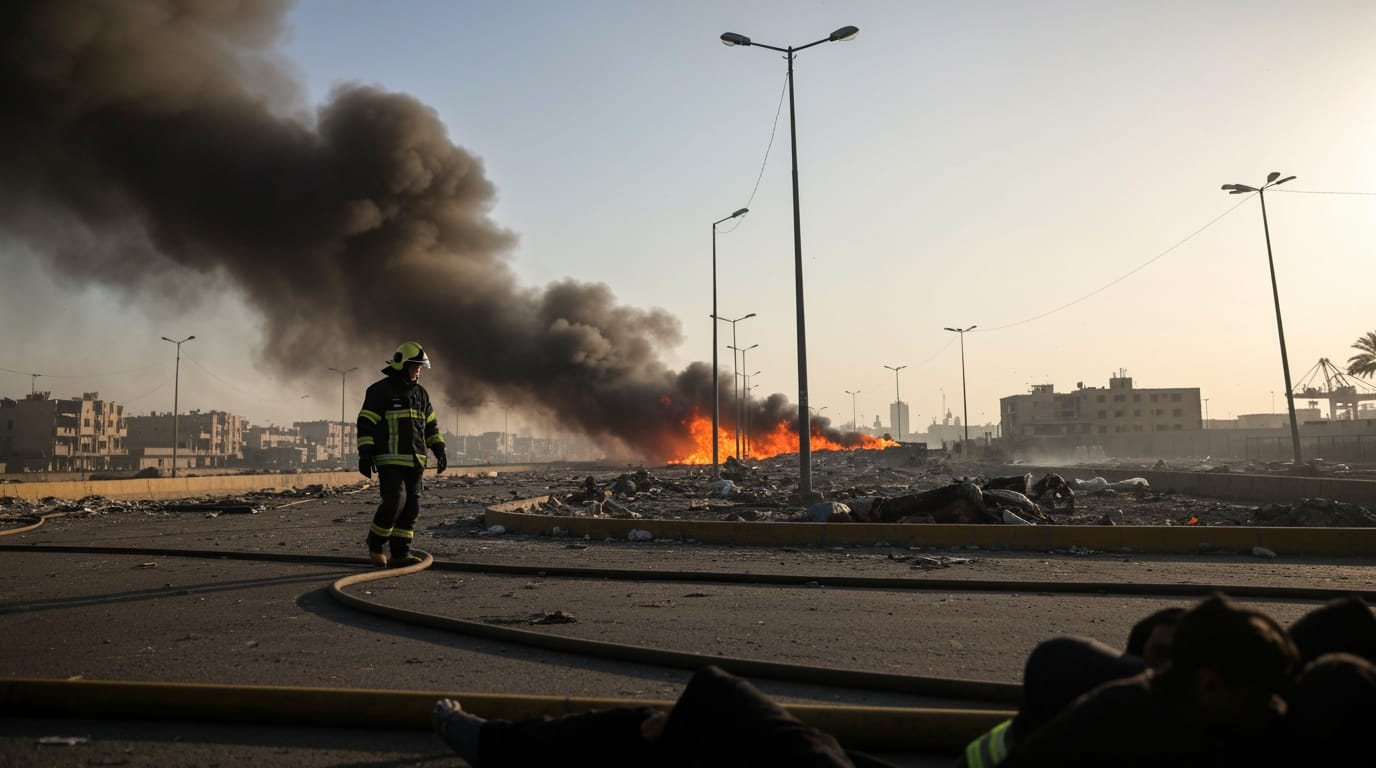
Bandar Abbas, Iran – The United States military executed what it described as "measured, purely defensive" strikes targeting an Iranian drone operation near the strategically vital Strait of Hormuz on May 27-28, 2026, significantly raising regional tensions despite an ongoing ceasefire. The actions included shooting down four Iranian attack drones and striking a ground control station in the port city of Bandar Abbas, which U.S. officials asserted was preparing to launch a fifth drone that posed an immediate threat to American forces and commercial shipping in the critical waterway. This direct engagement marks a perilous escalation in the fragile relationship between Washington and Tehran, underscoring the volatility surrounding maritime security in one of the world's most important energy chokepoints.
Escalation in the Strait: A Swift Response
The events unfolded rapidly, beginning with reports of an Iranian challenge to commercial shipping. According to Iranian state media, the Islamic Revolutionary Guards Navy reportedly fired warning shots toward a U.S. oil tanker attempting to transit the Strait of Hormuz, compelling it to turn back. This incident appears to have directly preceded the American military response. U.S. officials, speaking anonymously to Reuters and other media outlets, confirmed that their forces engaged an Iranian drone operation. Four Iranian one-way attack drones were intercepted and shot down, and a ground control station in Bandar Abbas, identified as the launch point for these unmanned aerial vehicles, was struck to prevent the deployment of a fifth drone.
U.S. Central Command (CENTCOM) described these actions as purely defensive, aimed at neutralizing an "imminent threat" to international maritime activity and American personnel in the Strait of Hormuz. The Strait, a narrow channel connecting the Persian Gulf to the open ocean, is a critical artery for global oil and liquefied natural gas traffic, handling approximately one-fifth of the world's supply before recent hostilities began. Disruptions in this area have immediate and far-reaching economic consequences, as evidenced by the rebound in oil prices following news of the U.S. strikes.
The Fragile Ceasefire and Persistent Tensions
The U.S. strikes come against the backdrop of a ceasefire between Washington and Tehran, which had nominally been in effect since early April. This ceasefire followed a three-month conflict that had already claimed thousands of lives and driven global energy prices sharply higher since its commencement on February 28. The stated purpose of the U.S. military's recent actions was explicitly to "maintain the ceasefire," a seemingly contradictory rationale that highlights the delicate and often paradoxical nature of conflict management in the region.
The broader context of U.S.-Iran relations remains fraught with tension. Weeks prior to these strikes, U.S. President Donald Trump dismissed an Iranian state media report suggesting a deal was close to restoring commercial shipping traffic through the Strait of Hormuz to pre-war levels. This public disavowal, coupled with the latest military confrontation, underscores the deep distrust and unresolved issues that continue to plague any efforts towards a lasting peace or stabilization in the Gulf. The U.S. had also reportedly carried out other "defensive" strikes in southern Iran on May 25, which Iran labeled a "gross violation" of the ceasefire.
Iranian Reaction and Economic Ripple Effects
In Iran, the U.S. strikes were met with immediate, though limited, public response. State media, including Fars News Agency, reported multiple explosions heard east of Bandar Abbas and the activation of the city's air defense systems shortly after midnight. While initial reports did not specify casualties or significant damage, the activation of air defenses indicates a heightened state of alert and preparedness for further engagements. The Iranian government has yet to issue a comprehensive official statement regarding the specific U.S. actions, but previous denunciations of American military presence and interventions in the region suggest a strong condemnation is likely.
The economic implications were felt almost immediately in global markets. After having fallen more than five percent on May 27, oil prices rebounded sharply following the Reuters report of the new strikes. U.S. crude futures saw an increase of nearly two percent, reaching $90.38 a barrel in early Asian trading on May 28. This market volatility reflects the profound sensitivity of global trade and energy supply chains to any instability in the Strait of Hormuz. The incident serves as a stark reminder of how quickly regional security events can translate into worldwide economic disruption.
Navigating a Precarious Balance
The recent U.S. "defensive" strikes in Iran represent a critical juncture in the ongoing efforts to manage escalating tensions in the Middle East. While American officials maintain these actions were necessary to protect U.S. interests and maintain freedom of navigation in international waters, Iran views such interventions as violations of its sovereignty and a destabilizing force. The incident also highlights the complexities of maintaining a ceasefire when underlying grievances and the potential for miscalculation remain high.
The long-term implications of these strikes are multifaceted. They risk unraveling the fragile ceasefire, further entrenching a cycle of retaliation, and making any future diplomatic resolutions more challenging. The continued targeting of drone capabilities by the U.S. military signals a clear intent to counter perceived Iranian threats to maritime security, a stance likely to be met with continued resistance and potentially asymmetric responses from Tehran. As both sides navigate this precarious balance, the international community watches closely, aware that further escalation in the Strait of Hormuz could have profound global consequences.


