U.S. Halts Diversity Visa Lottery Following Brown University Shooting Tragedy
Washington D.C. – In a swift and controversial move, the United States government has announced an immediate pause of the Diversity Visa Lottery program, citing its connection to the perpetrator of a recent deadly shooting spree at Brown University and the subsequent murder of an MIT professor. The decision, revealed by Homeland Security Secretary Kristi Noem on Thursday, comes less than a week after the tragic events in Rhode Island and Massachusetts that left three dead and nine injured.
The pause has ignited a fervent debate over immigration policy, national security, and the long-standing program designed to promote immigrant diversity in the U.S. While administration officials frame the suspension as a necessary security measure, critics argue it prematurely links a complex tragedy to an entire immigration pathway, potentially impacting thousands of innocent applicants.
The Violence That Shook New England
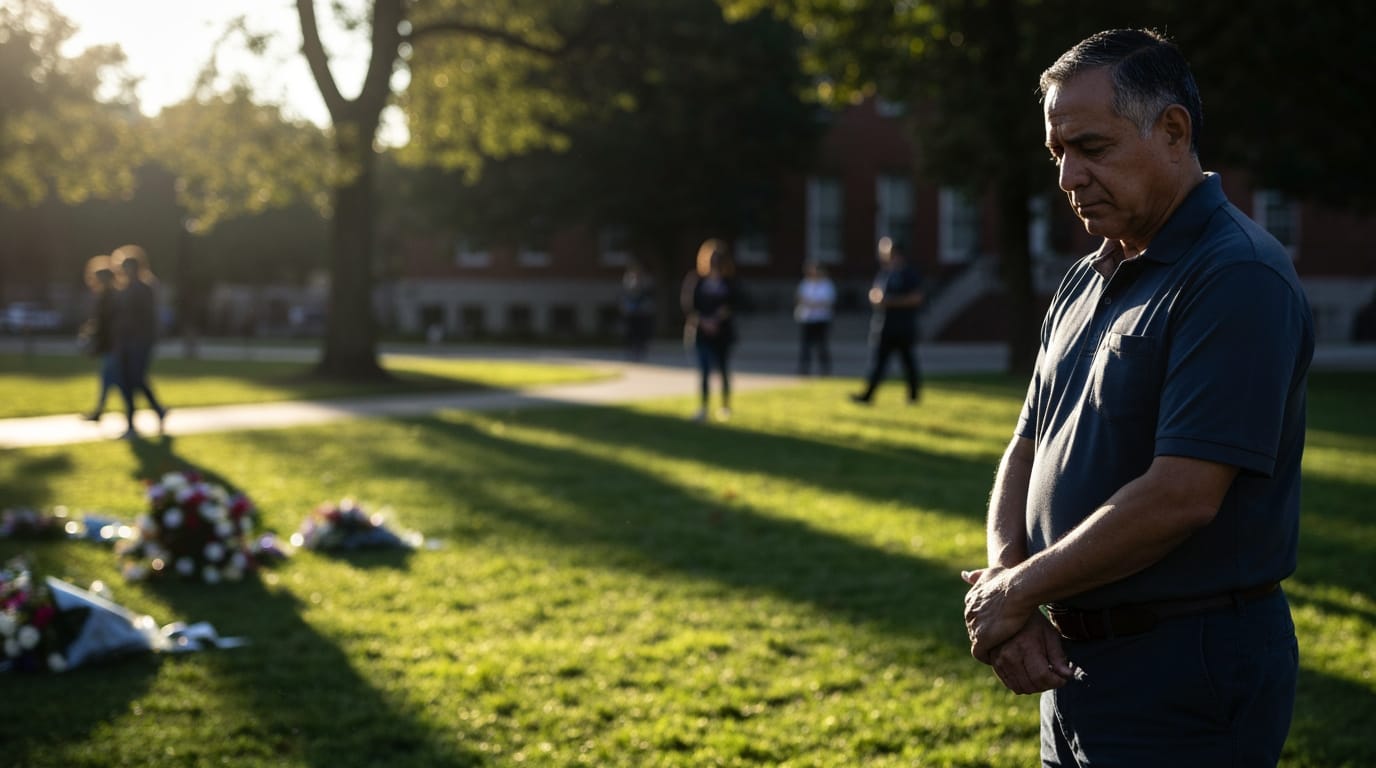
The events leading to this dramatic policy shift began on Saturday, December 13, 2025, when a lone gunman opened fire in the Barus and Holley Building, home to Brown University's School of Engineering, in Providence, Rhode Island. The attack occurred during a final exam review session, claiming the lives of two students, 19-year-old sophomore Ella Cook and 18-year-old freshman MukhammadAziz Umurzokov, and wounding nine others.
The rampage did not end there. Two days later, on December 15, Massachusetts Institute of Technology (MIT) physics professor Nuno Gomes Loureiro was found fatally shot outside his home in Brookline, Massachusetts. Law enforcement agencies quickly established a link between the two incidents, identifying 48-year-old Portuguese national Claudio Manuel Neves Valente as the primary suspect in both killings.
A five-day manhunt ensued, involving the FBI and local police across several New England states. Valente, a former Brown University graduate student who had studied physics there from 2000 to 2001, was ultimately found dead on December 18 in a storage unit in Salem, New Hampshire, believed to be from a self-inflicted gunshot wound. Authorities suspect a prior connection between Valente and Loureiro, noting both had attended the same university in Lisbon, Portugal, in the late 1990s and studied physics. Brown University officials confirmed Valente had no current affiliation with the institution.
Diversity Visa Lottery Halted Amidst Outcry
Homeland Security Secretary Kristi Noem announced the suspension of the Diversity Immigrant Visa Program, often referred to as the "green card lottery," on Thursday, December 19, 2025. Secretary Noem stated that the decision was made at the direction of President Donald Trump. The core justification for the pause, according to Noem, was that the alleged shooter, Claudio Manuel Neves Valente, had entered the United States through the DV-1 program in 2017 and was subsequently granted a green card.
"This heinous individual should never have been allowed in our country," Noem asserted, emphasizing the administration's stance that the program poses a security risk. The Secretary directed U.S. Citizenship and Immigration Services (USCIS) to immediately cease processing applications for the program. The duration of the pause remains unspecified, leading to uncertainty for tens of thousands of individuals worldwide who participate in the annual lottery.
This move aligns with the Trump administration's broader efforts to tighten immigration controls and reduce both legal and illegal immigration pathways. The Diversity Visa program has been a long-standing target of criticism from some policymakers who argue it lacks sufficient vetting and does not prioritize skilled labor or family reunification.
Understanding the Diversity Visa Program
The Diversity Immigrant Visa Program was established by Congress through the Immigration Act of 1990. Its primary purpose is to diversify the immigrant population in the United States by offering up to 50,000 to 55,000 immigrant visas, or "green cards," each year. These visas are allocated to individuals from countries that have historically low rates of immigration to the U.S.
Applicants for the Diversity Visa must meet certain minimum educational or work experience requirements. Winners are then selected through a random lottery system, and those selected must undergo a rigorous vetting process, including reviews by Department of State consular officers abroad and Department of Homeland Security immigration officers upon entry to the United States. These reviews are designed to ensure applicants are not inadmissible to the U.S. on grounds such as criminal convictions, security concerns, or health-related issues. In 2025, nearly 20 million people applied for the lottery, with over 131,000 selected, including spouses, though Portuguese citizens, like Valente, secured only 38 slots.
Historically, the program has provided a unique pathway for individuals who may not otherwise qualify for a U.S. visa through family sponsorship or employment-based categories. However, it has also faced calls for reform or elimination since as early as 2005. Earlier in 2025, registration for the DV-2027 lottery was already delayed due to a government shutdown and the introduction of a new $1 electronic registration fee.
Implications and Future of U.S. Immigration
The sudden suspension of the Diversity Visa Lottery has immediate and far-reaching implications. Thousands of prospective immigrants currently awaiting their lottery results, interviews, or final visa processing are now in limbo. While the program is statutorily required by Congress, implying that a unilateral presidential suspension could face legal challenges, the current order creates significant uncertainty.
The decision also reignites the broader political debate surrounding the efficacy and fairness of various U.S. immigration programs. Proponents of the Diversity Visa program emphasize its role in enriching American society and maintaining a global perspective. Opponents often point to security concerns, as highlighted by the recent events, and argue for a merit-based immigration system.
The administration’s linkage of a single individual's alleged actions to an entire visa category is a tactic that has been employed previously to justify tightening immigration policies. As the nation grapples with the aftermath of the Brown University and MIT shootings, the pause on the Diversity Visa Lottery stands as a stark reminder of how tragic events can rapidly influence national policy and reshape the lives of countless individuals aspiring to enter the United States. The path forward for the program, and for U.S. immigration policy at large, remains uncertain.