U.S. Intensifies Venezuela Strategy with Diplomatic Talks and Oil Seizures
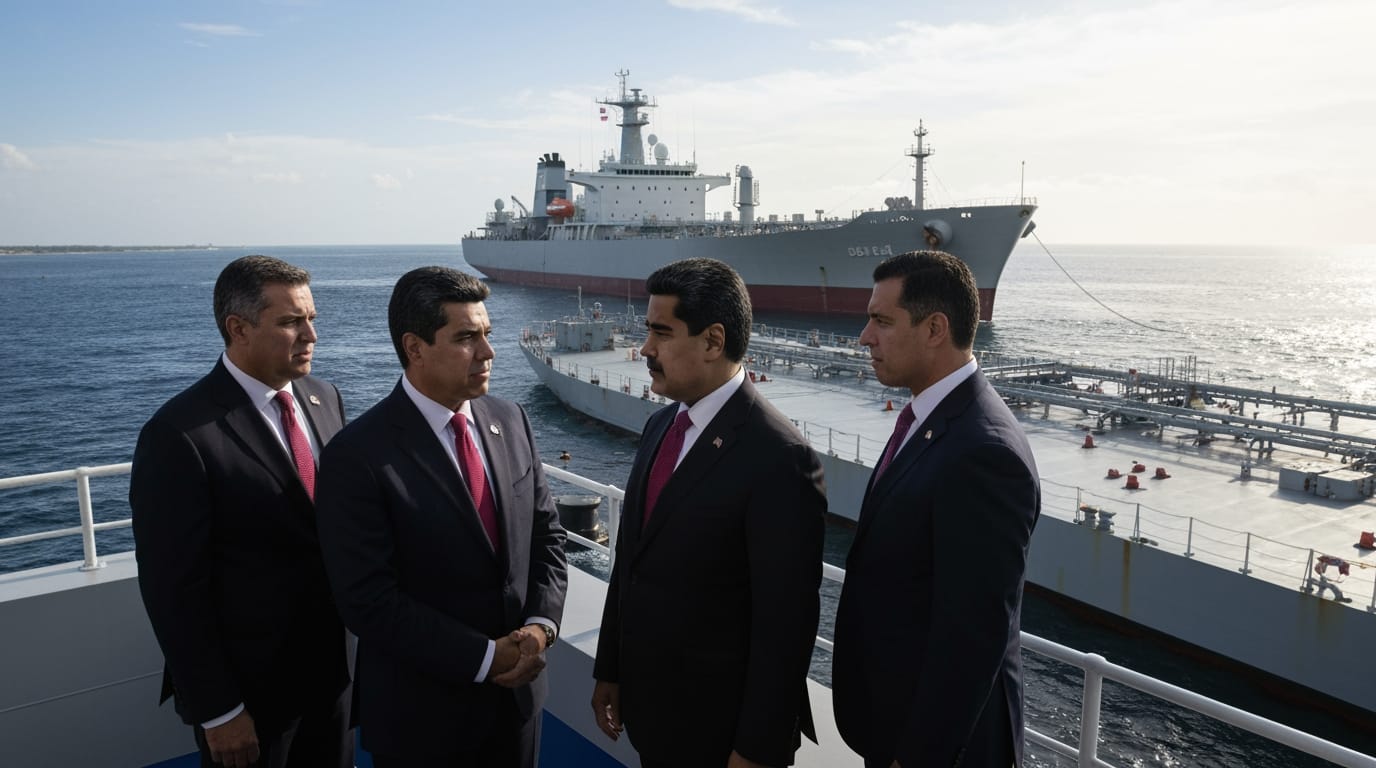
WASHINGTON D.C. – The United States escalated its multifaceted strategy toward Venezuela today, combining high-level diplomatic engagements with assertive military action. President Donald Trump is scheduled to host María Corina Machado, the Venezuelan opposition leader and 2025 Nobel Peace Prize laureate, at the White House. This meeting unfolds just hours after U.S. forces seized another oil tanker, the Veronica, in the Caribbean, marking the sixth such interdiction in recent weeks as Washington seeks to assert control over Venezuela's oil exports following the recent capture of former President Nicolás Maduro. The dual approach underscores a pivotal moment for the oil-rich South American nation, signaling intensified U.S. efforts to shape its political and economic future.
Diplomatic Engagement Amidst Political Flux
The White House meeting between President Trump and María Corina Machado is poised to be a critical juncture in the ongoing efforts to stabilize Venezuela and chart a path forward. Machado, a prominent figure in the Venezuelan opposition, was awarded the 2025 Nobel Peace Prize for her relentless advocacy for democratic rights and a peaceful transition from what she terms dictatorship to democracy. Her political career has been marked by strong opposition to the administrations of both Hugo Chávez and Nicolás Maduro, culminating in her win of the opposition primary for the 2024 presidential election, only to be subsequently barred from running.
The timing of this high-stakes discussion is significant, occurring less than two weeks after U.S. forces apprehended Nicolás Maduro in Caracas on January 3 and transported him to New York to face drug trafficking charges. This dramatic development has plunged Venezuela into an unprecedented political vacuum, with the U.S. now indicating its intent to "run" the country and control its vast oil resources indefinitely. While many initially anticipated Machado would naturally assume a leadership role in a post-Maduro Venezuela, President Trump has reportedly sent mixed signals, at times recognizing Maduro's former Vice-President, Delcy Rodríguez, as an interim leader, and questioning Machado's domestic standing. The meeting will undoubtedly provide insight into the U.S. administration's preferred trajectory for Venezuela's transition and Machado's potential role within it.
Maritime Enforcement: Targeting Venezuela's Oil Lifeline
The diplomatic dialogue is paired with robust enforcement actions on the high seas. On Thursday morning, U.S. Marines and sailors, operating under Joint Task Force Southern Spear, boarded and seized the crude oil tanker Veronica in the Caribbean. The vessel, which marine records suggest was sailing under a Guyanese flag, was apprehended for operating in defiance of President Trump's established "quarantine" of sanctioned vessels. This operation marks the sixth known boarding and seizure by the U.S. military of a foreign-flagged oil tanker linked to Venezuela in recent weeks.
These seizures are integral to Operation Southern Spear, initiated in December 2025, which imposed a blockade on sanctioned oil tankers traveling to and from Venezuela. The U.S. Southern Command emphasized that "the only oil leaving Venezuela will be oil that is coordinated properly and lawfully." This aggressive stance aims to cut off revenue streams to the former Maduro regime and ensure U.S. oversight of Venezuela's petroleum industry. The administration has confirmed its intent to manage the marketing and selling of Venezuelan crude oil, with all proceeds initially settling in U.S.-controlled accounts. This move signals a significant shift in global oil market dynamics, with the U.S. seeking to influence prices and control a substantial portion of the world's largest proven oil reserves.
The Post-Maduro Era: Challenges and Strategic Control
The capture of Nicolás Maduro by U.S. forces on January 3 has ushered in an era of profound uncertainty and strategic maneuvering for Venezuela. The U.S. administration, having effectively removed Maduro, has articulated a plan to rebuild the country's dilapidated oil industry, proposing a $100 billion investment. This ambitious objective comes with the stated aim of controlling Venezuela's oil resources indefinitely. U.S. officials, including Vice President JD Vance, have openly discussed the ability to "control" Venezuela's "purse strings" by dictating where its oil can be sold, asserting that this would allow the U.S. to "exert incredible pressure" without direct military engagement.
However, the path to a stable, democratic Venezuela remains fraught with challenges. The country's economy has been devastated by decades of mismanagement, hyperinflation, and the cumulative impact of international sanctions, with its GDP plummeting significantly between 2012 and 2020. The U.S. approach of asserting control over oil revenues presents a complex economic picture, potentially limiting the interim Venezuelan authorities' access to critical funds needed for public services and budgetary needs. Furthermore, the U.S. has filed warrants to seize dozens more tankers linked to the Venezuelan oil trade, consolidating its hold over the country's economic lifeline. This aggressive posture aims to dismantle a "shadow fleet" of vessels that have historically helped Venezuela evade sanctions.
Machado's Vision and International Support
María Corina Machado's visit to Washington underscores her critical role in Venezuela's future, despite the complex signals from the White House. Her persistent fight for democracy has garnered significant international recognition, culminating in the 2025 Nobel Peace Prize "for her tireless work promoting democratic rights for the people of Venezuela and for her struggle to achieve a just and peaceful transition from dictatorship to democracy." Machado has been an outspoken supporter of President Trump's policies toward Venezuela, describing him as a "visionary" and praising his administration's efforts to isolate Maduro diplomatically and economically. She has publicly expressed gratitude for his actions, even offering to share her Nobel Peace Prize with him, an offer that the Nobel Institute clarified is non-transferable.
Her political journey includes co-founding Súmate, an organization dedicated to strengthening Venezuelan democracy through election monitoring, and leading the Vente Venezuela opposition party. Despite facing disqualification from holding public office, Machado remains a powerful symbol of resistance. Her meeting with Trump suggests a potential recalibration of U.S. support for Venezuelan opposition figures, or at least an acknowledgment of her influence, as the international community watches how the U.S. will balance its strategic economic interests with its stated goals of promoting democracy in Venezuela.
An Uncertain Future for Venezuela
As the U.S. orchestrates a significant intervention in Venezuela's affairs, the nation stands at a crossroads. The simultaneous diplomatic engagement with opposition leader María Corina Machado and the aggressive seizure of oil tankers illustrate a coordinated effort to reshape Venezuela's political and economic landscape. The removal of Nicolás Maduro has opened avenues for a potential democratic transition, yet it also presents formidable challenges concerning governance, economic recovery, and international law. The U.S. administration's determination to control Venezuelan oil resources, coupled with its evolving stance on interim leadership, sets the stage for a period of intense flux. The outcomes of these actions will not only determine Venezuela's future but also profoundly impact regional stability and global energy markets.


