U.S. Realigns Venezuela Policy, Lifts Sanctions on Delcy Rodríguez Amid Sweeping Diplomatic Shift
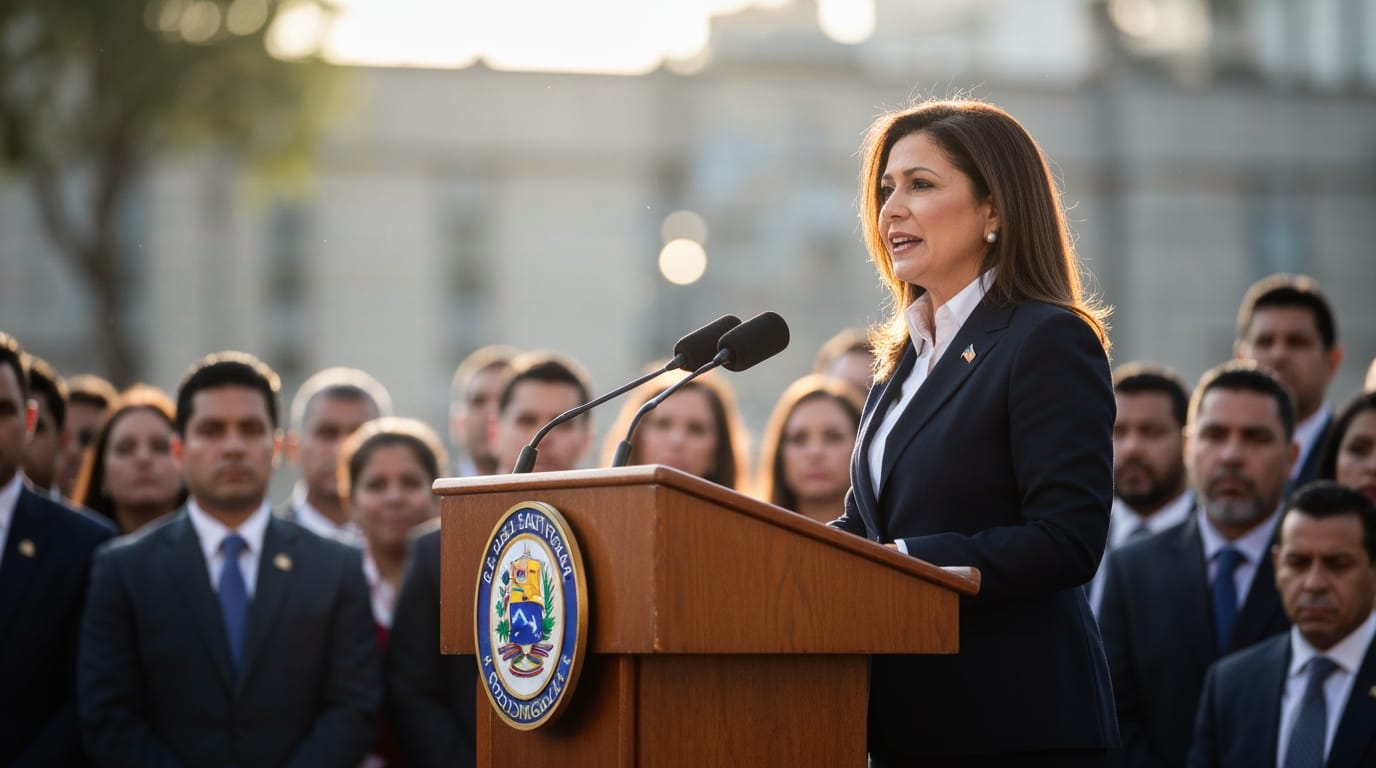
WASHINGTON D.C. – In a dramatic recalibration of its foreign policy toward Venezuela, the United States on Wednesday officially lifted sanctions on Delcy Rodríguez, whom it now recognizes as the acting President of the Bolivarian Republic. This move, confirmed by an entry on the Treasury Department's Office of Foreign Assets Control (OFAC) website, signals a profound shift in Washington's approach to the beleaguered South American nation, coming just months after the U.S. military captured former leader Nicolás Maduro.
The decision marks a pivotal moment in the complex relationship between the two countries, effectively ending years of Washington's efforts to isolate the Venezuelan government and recognize opposition figures. It also suggests a new chapter where direct engagement and economic incentives replace the previous strategy of maximum pressure.
The Unprecedented Shift and Rodríguez's Ascent
The lifting of sanctions on Delcy Rodríguez follows an extraordinary series of events initiated on January 3, 2026, when U.S. military forces executed a daring operation in Caracas, resulting in the capture of Nicolás Maduro and his wife. Both were subsequently extradited to New York to face drug trafficking charges, to which they have pleaded not guilty. In the immediate aftermath of Maduro's apprehension, Venezuela's ruling party-loyal high court declared his absence "temporary" and ordered Rodríguez to assume the role of acting President for an initial period of up to 90 days. This interim mandate has the potential to be extended to six months with the approval of the National Assembly, which is presided over by her brother, Jorge Rodríguez, and remains under ruling party control.
The U.S. recognition of Rodríguez as a legitimate authority in Venezuela is a stark departure from earlier policy. Washington had previously maintained that Maduro's 2018 re-election was illegitimate and had instead recognized opposition leader Juan Guaidó as Venezuela's interim president for several years. The current Trump administration, however, has formally acknowledged Rodríguez as the country's head of state in various legal and diplomatic contexts. This recognition was further solidified last month when the U.S. began taking steps to reopen its embassy in Caracas, which had been closed for seven years, with operations resuming on Monday, March 30.
Rationale Behind the Policy Reversal
U.S. administration officials have articulated several reasons for this significant policy pivot. The move is widely interpreted as an attempt to rebuild and normalize relations with the Venezuelan government following the dramatic upheaval caused by Maduro's removal. One administration official stated that the removal of sanctions "signals our support for a more constructive U.S.–Venezuela relationship and for expanded private sector engagement that can help advance Venezuela's economic recovery and democratic transition." President Donald Trump himself has publicly praised Rodríguez, noting last month that she is "doing a great job" and is "working with U.S. Representatives very well."
The former sanctions against Delcy Rodríguez and her brother, Jorge Rodríguez, were initially imposed in September 2018 during the first Trump administration. These measures targeted them for their alleged roles in undermining Venezuelan democracy, specifically following Maduro's contested re-election, which the U.S. and many international observers deemed fraudulent due to the exclusion of opposition parties and politicians. At the time, the Treasury Department asserted that Maduro had granted Delcy Rodríguez senior government positions to "help him maintain power and solidify his authoritarian rule."
Economic Opportunities and Diplomatic Outreach
Beyond the individual sanctions relief for Rodríguez, the Trump administration has been actively working to foster broader economic engagement with Venezuela. This includes lifting sanctions on key Venezuelan industries. In March, the Treasury Department issued a broad authorization permitting the state-owned oil company, Petróleos de Venezuela S.A. (PDVSA), to directly sell Venezuelan oil to U.S. companies and on global markets. This represents a monumental shift from previous U.S. policy, which had largely restricted dealings with Venezuela's government and its vital oil sector.
Energy Secretary Chris Wright and Interior Secretary Doug Burgum have led high-profile delegations to Venezuela, which boasts the world's largest proven oil reserves, signaling strong U.S. interest in rekindling energy cooperation. This push for renewed economic ties underscores a clear strategy to incentivize U.S. investment in Venezuela's oil sector and support the nation's economic recovery.
Reactions and Future Implications
Delcy Rodríguez has publicly welcomed the lifting of sanctions, taking to her Telegram channel to express her appreciation. She characterized President Trump's decision as "a step toward normalizing and strengthening relations between our countries," and voiced hope that this progress would lead to the lifting of all remaining sanctions against Venezuela. Rodríguez's statement emphasized the potential for building an "effective bilateral cooperation agenda for the benefit of our people."
However, not all reactions have been positive. Some Venezuelan opposition figures, such as Maria Corina Machado, while acknowledging the significance of Maduro's removal, have voiced skepticism regarding Rodríguez. Machado reportedly thanked the Trump administration for its role in Maduro's ouster but expressed distrust in Rodríguez due to her historical ties to the previous regime. This sentiment highlights the delicate balance Rodríguez must maintain as she navigates demands from Washington while also securing support from her domestic political base.
The U.S. policy shift introduces a new dynamic into Venezuelan politics and international relations. While Maduro technically remains Venezuela's president in a legal sense, his capture and the subsequent U.S. recognition of Rodríguez have fundamentally altered the landscape. The move opens avenues for potential economic stabilization in Venezuela and offers a path for normalized diplomatic relations, but it also raises questions about the long-term democratic trajectory of the nation and the implications for regional stability. The coming months will be critical in observing how this new U.S. posture influences Venezuela's internal political environment and its standing on the global stage.


