U.S. Seizes Another Oil Tanker Off Venezuela Amid Escalating Sanctions Blockade
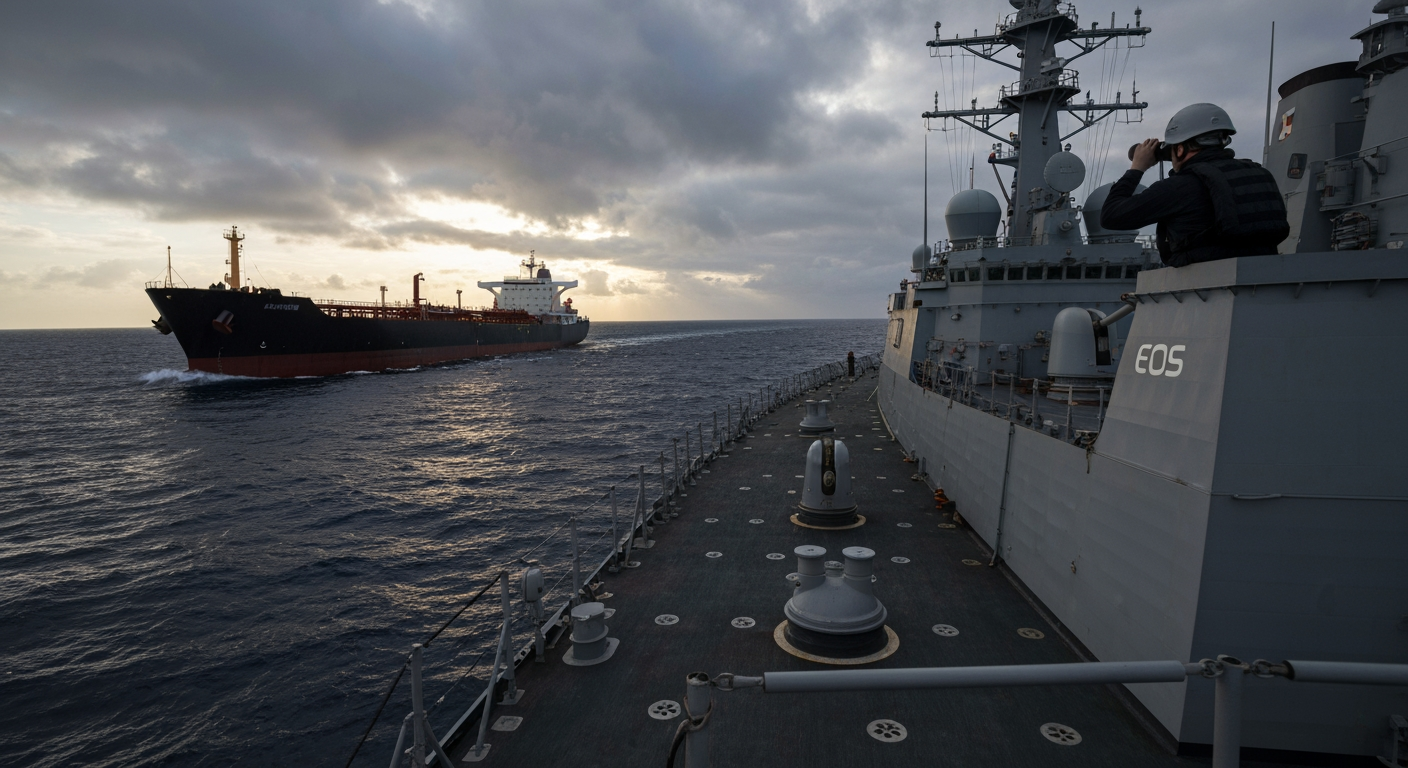
CARIBBEAN SEA – In a significant escalation of its pressure campaign against Venezuelan President Nicolás Maduro, the United States on Saturday seized another oil tanker in international waters off the coast of Venezuela. This latest interdiction marks the second such seizure in recent weeks, following a directive from President Donald Trump to enforce a "total and complete blockade" on all sanctioned oil tankers connected to the South American nation. The move underscores Washington's resolve to disrupt Venezuela's illicit oil trade, which it claims funds narco-terrorism, but has drawn sharp condemnation from Caracas, which labels the actions as "international piracy."
The United States has dramatically increased its military presence in the Caribbean, deploying warships and engaging in aggressive maritime enforcement operations targeting vessels suspected of circumventing stringent U.S. sanctions. These actions intensify an already volatile geopolitical standoff and raise critical questions about international maritime law and the potential for broader conflict in the region.
Second Interdiction Reinforces "Blockade"
The most recent seizure, which took place on Saturday, December 20, was led by the U.S. Coast Guard with support from the Pentagon, according to U.S. officials who spoke on condition of anonymity. Department of Homeland Security Secretary Kristi L. Noem, in a post on social media, stated that the U.S. would "continue to pursue the illicit movement of sanctioned oil that is used to fund narco terrorism in the region." A video accompanying Noem's post reportedly showed helicopters hovering over a vessel as service members rappelled onto its deck, a method consistent with previous reports of such operations. While the specific identity of the vessel seized on Saturday was not immediately disclosed, U.S. officials confirmed it was a sanctioned merchant vessel, following a similar playbook as the earlier interdiction.
This operation follows closely on the heels of the December 10 seizure of the sanctioned oil tanker named "Skipper." The initial seizure of the "Skipper," which was carrying 1.6 million barrels of Venezuelan crude, involved U.S. Coast Guard members, Marines, and special operation forces conducting a fast-rope boarding from helicopters. Attorney General Pam Bondi also shared video footage of that operation, stating that the tanker had been sanctioned for "multiple years" due to its involvement in an illicit oil shipping network supporting foreign terrorist organizations. Venezuelan President Maduro's government swiftly denounced the December 10 seizure as "an act of international piracy" and "blatant theft," claiming the actions violated international law and targeted Venezuela's natural resources.
The "Shadow Fleet" and Sanctions Enforcement
The U.S. government maintains that these seizures are a legitimate enforcement of its sanctions regime aimed at isolating the Maduro government and cutting off its funding sources. The "Skipper" and other targeted vessels are identified as part of a "shadow fleet" or "dark fleet," a clandestine network of approximately 1,000 oil tankers that assist sanctioned countries, including Venezuela, Iran, and Russia, in circumventing international restrictions. The "Skipper" itself had a history of transporting cargoes from Iran and was specifically sanctioned in 2022 for alleged ties to Iran's Islamic Revolutionary Guard Corps and Hezbollah, entities designated as terrorist organizations by the U.S.
U.S. officials argue that the illicit oil trade provides critical revenue for the Maduro regime, which they accuse of corruption and anti-democratic activities. The Trump administration has explicitly linked the enforcement actions to counter-narcotics efforts, with Secretary Noem asserting that the seized oil was intended to fund narco-terrorism. President Trump also publicly asserted that Venezuela "took all of our energy rights" and "illegally took it," indicating a broader rationale behind the aggressive stance. This intensified enforcement phase includes enhanced maritime interdiction and third-party vessel seizure capabilities, marking a significant escalation from previous sanctions phases that primarily targeted government officials and the gold sector before expanding to the crude oil sector in 2019.
Legal Battleground and Geopolitical Tensions
The U.S. actions have ignited a fierce debate over international law. Critics, including Venezuela and its allies like Cuba, contend that seizing vessels in international waters to enforce unilateral U.S. sanctions constitutes an unlawful use of force and a violation of the UN Charter. Francisco Rodriguez, a senior research fellow, was cited as stating that the U.S. lacks jurisdiction to enforce unilateral sanctions on non-U.S. persons outside its territory, calling it a "dangerous precedent" and a "violation of international law." Venezuela has vowed to appeal to all existing international bodies to denounce what it terms a "grave international crime."
Legal experts are divided on the legality of such operations. While some argue that boarding a foreign merchant vessel without the flag state's consent requires specific conditions (e.g., statelessness, piracy), others point to the terrorism designation of entities involved as a potential legal justification for extraterritorial seizures. However, the declaration of a "total and complete blockade" by President Trump raises further concerns, as a blockade is typically considered a wartime naval operation, pushing the boundaries of international legal norms. The ongoing U.S. military buildup in the region, which includes the deployment of the aircraft carrier USS Gerald R. Ford, further underscores the heightened tensions and the potential for miscalculation.
Economic Fallout and Future Prospects
The immediate consequence of these seizures and the broader "blockade" has been a significant decline in Venezuelan crude exports, with many loaded vessels opting to remain in Venezuelan waters rather than risk capture. This disruption could have far-reaching economic implications. While Venezuela's exports represent a relatively small fraction of the global oil market, a prolonged embargo could lead to higher global oil prices if sustained.
The seizures also directly impact Cuba, a key ally and recipient of Venezuelan oil. The "Skipper," for instance, was reportedly scheduled to discharge its cargo in Cuba, highlighting the strategic importance of this energy corridor. Havana has condemned the U.S. actions, linking them to broader efforts to undermine its own energy security. The aggressive U.S. stance has led President Trump to not rule out the potential for open conflict, and even hinted at future "land strikes" against Venezuela, indicating a willingness to further escalate the pressure campaign. This creates a deeply uncertain future for the stability of the Caribbean region and the global energy market.
Conclusion
The recent seizure of another oil tanker off the coast of Venezuela represents a hardening of U.S. policy and a deliberate escalation in its campaign to dismantle the Maduro regime's financial lifelines. Driven by claims of combating narco-terrorism and enforcing sanctions, these actions have propelled the U.S. and Venezuela into a precarious standoff, characterized by conflicting interpretations of international law and the potential for a wider, more dangerous confrontation. The ongoing maritime interdictions, combined with President Trump's declaration of a "complete blockade" and hints of further military action, signal a new, more aggressive phase in U.S. foreign policy toward Venezuela. The repercussions are already impacting global oil markets and regional stability, leaving the international community to grapple with the legal precedents being set and the unpredictable trajectory of this escalating conflict.
Related Articles

Ratko Mladić, "Butcher of Bosnia" and Convicted War Criminal, Dies at 84
THE HAGUE, Netherlands – Ratko Mladić, the former Bosnian Serb military commander known as the "Butcher of Bosnia" and convicted of genocide, war crimes, and crimes against humanity, has died at the age of 84. Serbian...

Long-Awaited 9/11 Mastermind Trial Set for 2028, Decades After Attacks
GUANTANAMO BAY, Cuba – Nearly a quarter-century after the devastating terror attacks of September 11, 2001, a military judge has finally set a trial date for Khalid Sheikh Mohammed, the alleged mastermind behind the...