U.S. Throws Weight Behind Orbán as Hungary Faces Pivotal Election
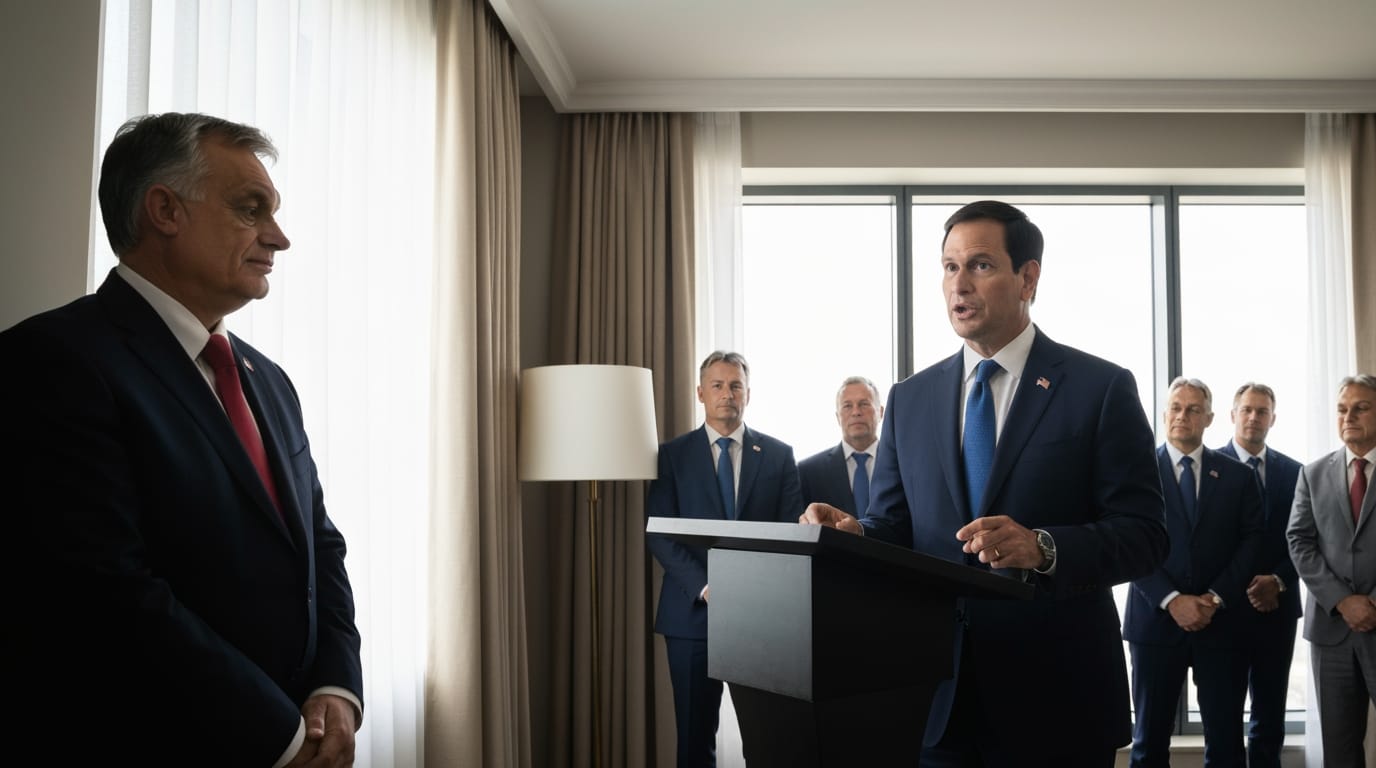
BUDAPEST, Hungary – In a move signaling robust American support, U.S. Secretary of State Marco Rubio visited Budapest this week, offering a resounding endorsement of Hungarian Prime Minister Viktor Orbán just weeks before a critical parliamentary election scheduled for April 12, 2026. Rubio's visit underscored a deepening alignment between segments of the American conservative movement and Orbán's government, characterized by a shared ideological vision and a close personal rapport between Orbán and former U.S. President Donald Trump. This high-profile backing arrives as Orbán, who has led Hungary for 16 years, confronts what is widely considered his most formidable electoral challenge yet.
A "Golden Age" of Transatlantic Conservative Ties
Secretary Rubio, speaking alongside Prime Minister Orbán in Budapest, proclaimed that relations between the United States and Hungary had entered a "golden age." He explicitly linked this period of enhanced cooperation to the strong personal bond between Orbán and Donald Trump, stating that President Trump is "deeply committed to your success, because your success is our success." This sentiment echoed Trump's recent social media endorsement of Orbán as a "truly strong and powerful Leader."
Beyond rhetoric, the visit saw the signing of a civilian nuclear cooperation agreement, paving the way for potential Hungarian purchases of U.S.-supplied small modular reactors (SMRs), nuclear fuel, and spent fuel storage technology. Rubio also addressed Hungary's continued reliance on Russian energy, suggesting that the Trump-Orbán relationship was instrumental in securing Hungary an exemption from U.S. sanctions targeting Russian oil. This move highlights a strategic calculus within the U.S. administration to cultivate allies who align with a specific conservative worldview, even amidst concerns from traditional European partners. The Secretary of State's itinerary also included a stop in Slovakia, another country led by a populist leader critical of the European Union and skeptical of military aid to Ukraine, further illustrating a focus on central European nations as key partners.
The Looming Electoral Battle
The timing of Rubio's endorsement is particularly significant given the tight electoral race unfolding in Hungary. After more than a decade and a half in power, Prime Minister Orbán and his Fidesz party are facing an unexpected and potent challenge from Péter Magyar, the leader of the newly formed Tisza (Respect and Freedom) Party. Recent polls indicate that Fidesz is trailing Magyar's party by double digits, suggesting a shift in voter sentiment.
Magyar, a former insider within Orbán's Fidesz party, has emerged as a vocal critic, building his platform on an anti-corruption message and a pledge to re-align Hungary more closely with Western European values. His rise comes on the heels of a series of domestic controversies, including a scandal involving a presidential pardon in a child abuse case, which sparked widespread public anger and led to key resignations within the government. Economically, Hungary has also faced headwinds, with declining GDP growth, rising state debt, high inflation, and living standards below the EU average, all contributing to a growing sense of discontent among ordinary Hungarians. This confluence of political scandal and economic strain has created fertile ground for Magyar's challenge, making the April 2026 election a true test of Orbán's enduring political dominance.
Ideological Alignment and Geopolitical Tensions
The enthusiastic U.S. backing for Orbán stems from a deep ideological resonance between the Hungarian leader's "illiberal democracy" and a powerful faction within American conservatism. U.S. conservatives frequently cite Hungary as a model for policies they advocate domestically, particularly hardline stances on immigration—exemplified by Hungary's border fence erected in 2015—and the promotion of Christian nationalism. Hungary has cemented its role as a hub for this transatlantic intellectual exchange, regularly hosting events like the Conservative Political Action Conference (CPAC). Orbán himself has embraced this connection, even coining phrases like "Make Europe Great Again," a clear nod to Trump's political slogan.
However, this alignment has also raised significant concerns among traditional U.S. allies and within the European Union. Critics point to Hungary's systematic dismantling of democratic institutions under Orbán, including state capture of public institutions, restrictions on media freedom, and challenges to judicial independence. The European Parliament declared in 2022 that Hungary could no longer be considered a full democracy, and the EU has withheld over €20 billion in funds due to persistent rule-of-law violations.
Furthermore, Orbán's government has maintained close diplomatic and energy ties with Russia and China, often diverging from the unified front presented by the EU and NATO, especially regarding the conflict in Ukraine. European diplomats have expressed apprehension that the overt U.S. endorsement could be perceived as an attempt to sow disunity within Europe and to interfere in the upcoming election. This dynamic underscores a growing divergence in transatlantic relations, where shared conservative principles are, for some, taking precedence over traditional alliances and adherence to liberal democratic norms.
A Crossroads for Hungary and the Transatlantic Alliance
As Hungary approaches its April 12 election, the stakes extend far beyond its borders. Secretary Rubio's visit and the unequivocal endorsement of Viktor Orbán highlight a significant shift in U.S. foreign policy under certain administrations, prioritizing ideological alignment with nationalist leaders over traditional diplomatic concerns regarding democratic standards. While the U.S. administration views Orbán's continued leadership as crucial for its interests, particularly in Central Europe, the move has ignited criticism from those who perceive it as undermining democratic principles and fostering divisions within the European Union. The outcome of the upcoming election will not only determine Hungary's domestic trajectory but also provide a barometer for the evolving landscape of global conservative movements and the future of transatlantic relations.


