Uganda's Army Chief Orchestrates Sweeping Clampdown on Independent Media
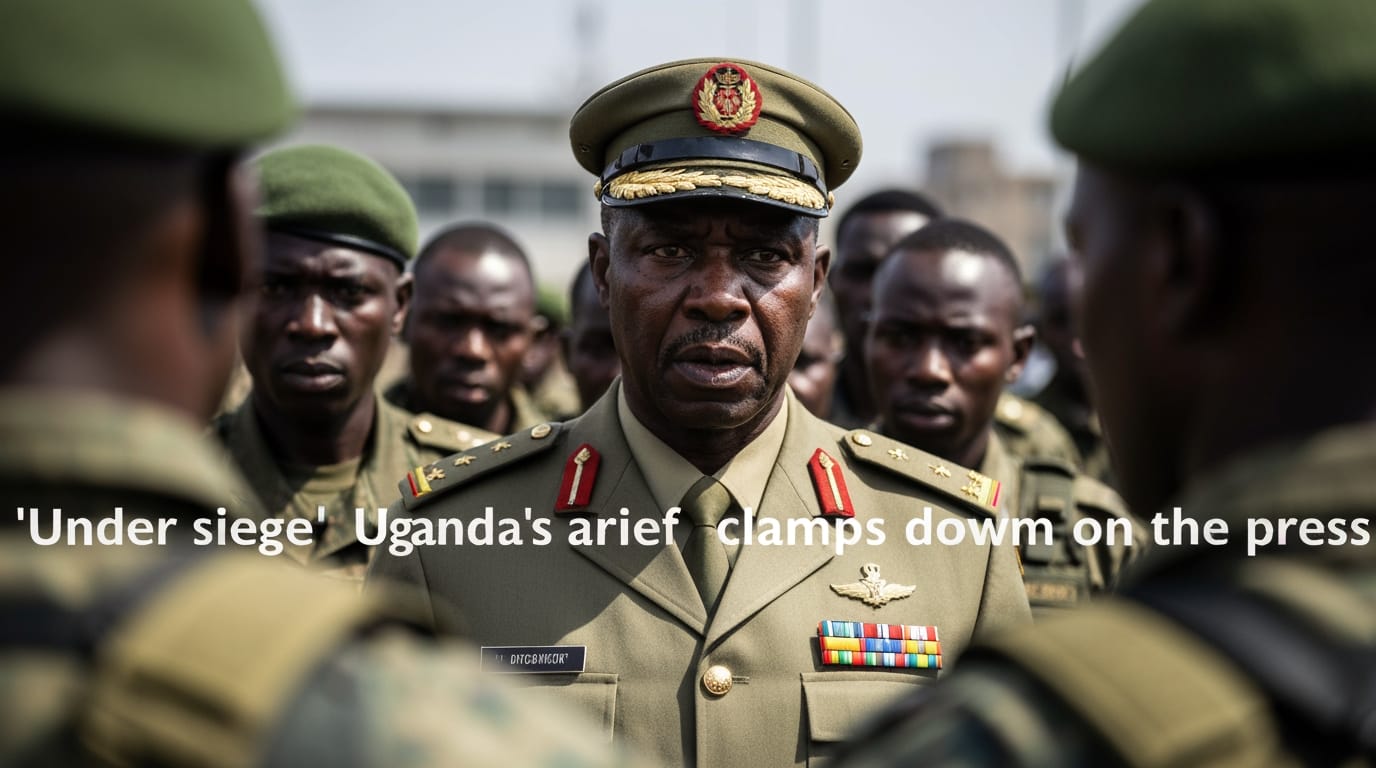
KAMPALA, UGANDA – Uganda's leading independent media conglomerate, Nation Media Group (NMG) Uganda, finds itself under what its management describes as a "military siege" following an abrupt order from General Muhoozi Kainerugaba, the country's Chief of Defence Forces, to cease operations. The unprecedented move, executed on Sunday, June 28, 2026, saw armed soldiers descend upon NMG's offices in Kampala, forcibly taking its prominent television and radio stations off air and effectively silencing influential print publications. The incident has ignited widespread condemnation from press freedom advocates and opposition leaders, raising grave concerns about the erosion of democratic space and freedom of expression in the East African nation.
The drastic measures were initiated in the early hours of Sunday morning when General Kainerugaba, son of long-serving President Yoweri Museveni, declared his intentions via posts on the social media platform X. "In Uganda, I DO NOT believe in a free press! The press should be guided by cadres of the revolution," he asserted, explicitly stating that NTV Uganda and the Daily Monitor would be shut down immediately and would not be permitted to resume operations without his personal authorization. Within hours, these pronouncements materialized into a palpable reality as military personnel surrounded NMG's premises, forcing NTV Uganda and Spark TV off air, their screens displaying only a "Video unavailable" message to viewers. Operations for the Daily Monitor, The East African, Dembe FM, and KFM, along with other NMG platforms, also went silent amidst the military presence, with staff reportedly barred from entering or leaving the facilities.
A Swift and Unyielding Clampdown
The sequence of events on June 28 unfolded with chilling speed, underscoring the military's intent to enforce the army chief's directive without compromise. General Kainerugaba's initial social media declaration, posted around 1:07 a.m. local time, left no ambiguity regarding his stance on media independence. He explicitly stated that NTV and Monitor were to be shut down "from today" and would remain closed "without my permission." This was quickly followed by the deployment of armed soldiers to NMG's Kampala headquarters.
The targeted media outlets form the core of East Africa's largest independent media company, Nation Media Group. In Uganda, NMG operates the 20-year-old NTV Uganda, the widely respected Daily Monitor newspaper, Spark TV, 93.3 KFM, 90.4 Dembe FM, the Ennyanda newspaper, and the Nation Courier. These entities collectively employ over 500 individuals in Uganda and have historically played a crucial role in the country's journalistic landscape, with the Daily Monitor, in particular, holding a significant place. The swift silencing of such a broad and influential media group signals a significant escalation in governmental control over information dissemination.
Preceding Incidents and a Pattern of Intimidation
While the recent shutdown represents an unprecedented level of overt military intervention, the relationship between independent media and state security apparatus in Uganda has been fraught with tension and incidents of intimidation for an extended period. Journalists working for NMG outlets have faced repeated harassment and obstruction in the past. There have been instances where reporters, such as Steven Mbidde, were restrained and physically assaulted while covering live events. Another reporter, Kibwiika, reportedly suffered head injuries and was kicked during coverage of alleged ballot stuffing, necessitating three days of hospitalization.
More recent examples of restriction include an incident in October 2025, when security personnel prevented NTV Uganda and Daily Monitor journalists from accessing parliament, citing specific instructions to deny them entry. Furthermore, since March 2025, reporters from the group have consistently been blocked from covering events involving President Museveni, indicating a systematic effort to limit their access to official information and public figures. These prior acts of suppression set a concerning precedent, culminating in the current military occupation and closure of NMG's operations.
The Army Chief's Justification and Political Landscape
General Kainerugaba's rationale for the media shutdown centers on a stark rejection of the concept of a free press, asserting that media outlets should align with the "cadres of the revolution." He also claimed that these sweeping orders had received the approval of his father, President Yoweri Museveni, who has been at the helm of Uganda for four decades. Kainerugaba also indicated that his authority to close media houses was personally granted by President Museveni as early as 2017. In a defiant follow-up post, the General warned that the closure of NTV and Monitor was "just the beginning" and pledged further arrests, insisting that all media in Uganda would henceforth "follow the rules." This perspective frames media as a tool for state-building rather than an independent watchdog, a position that diverges sharply from democratic principles of press freedom.
The actions of General Kainerugaba are viewed within a broader political context in Uganda. At 52 years old, he has increasingly asserted control and is widely perceived as positioning himself to succeed his 81-year-old father, President Museveni, who secured another term in January. Kainerugaba's growing influence is further evidenced by his political network, the Patriotic League of Uganda, which counts high-ranking officials such as the parliamentary speaker and several government ministers among its members. This consolidation of power by the army chief and the explicit linkage of his actions to presidential approval underscore the top-down nature of the current crackdown.
Widespread Condemnation and Future Implications
The clampdown has been met with immediate and forceful condemnation from various quarters. The Committee to Protect Journalists (CPJ) and prominent opposition leader Bobi Wine have publicly denounced the media shutdown. Other opposition figures and numerous media groups have similarly expressed alarm, characterizing the move as a severe escalation in the ongoing assault on press freedom in Uganda. This sentiment is further amplified by Uganda's standing on the Reporters Without Borders' press freedom index, where the nation ranks 143 out of 180 countries, indicative of a challenging environment where journalists frequently face intimidation and violence.
The Ugandan government has yet to provide an official explanation for the military's actions, with the Uganda Communications Commission (UCC) reportedly seeking "verified information." However, the direct involvement of the army chief and his explicit statements on media control paint a clear picture of state-sanctioned suppression. The shutdown represents not merely a regulatory dispute but a chilling deployment of military force to silence critical voices. This development has profound implications for Uganda's democratic trajectory, further shrinking the space for dissent and independent reporting. It signals a worrying trend where journalistic integrity and public access to diverse information are directly threatened by military fiat, raising international concerns about human rights and governance in Uganda.


