UK Deploys Massive Security for High-Stakes Maccabi Tel Aviv Match Amid Volatile Climate
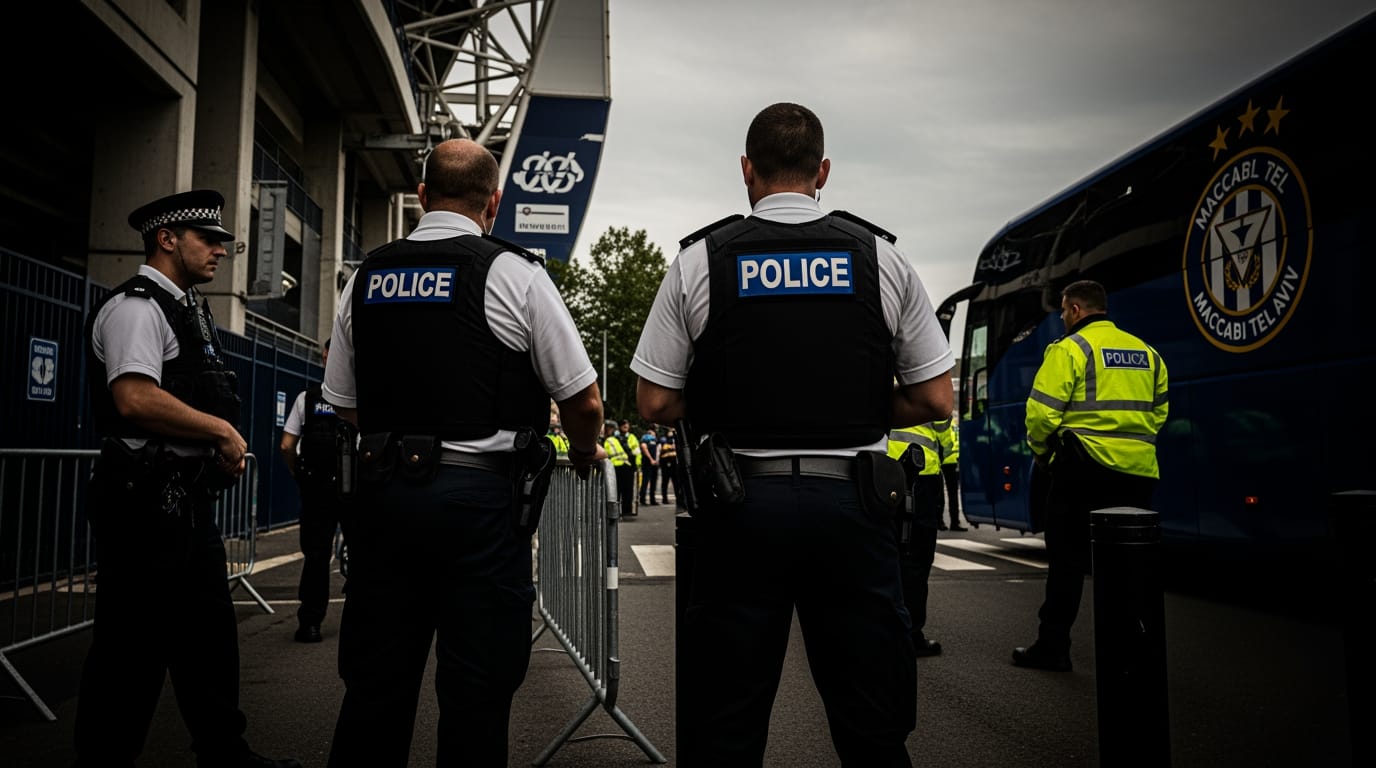
Birmingham, UK – In a demonstration of unprecedented security measures, over 700 police officers were deployed across Birmingham on November 6, 2025, for a UEFA Europa League match between Aston Villa and Israel's Maccabi Tel Aviv. The fixture, classified as "high risk" by West Midlands Police, unfolded under a shroud of tension, marked by the absence of visiting fans, multiple protests, and deep-seated geopolitical sensitivities. The comprehensive operation underscored the ongoing challenges authorities face in balancing public safety with the right to protest, particularly in the current volatile international climate.
Unprecedented Security and Absent Fans
The decision to implement such extensive security protocols stemmed from a confluence of factors, primarily intelligence gathered from previous incidents involving Maccabi Tel Aviv fans in European competition. Most notably, a Europa League match in Amsterdam in November 2024 against Ajax saw violent clashes, "hate crime offenses," and over 60 arrests. Dutch police reported that Maccabi fans engaged in tearing down and burning Palestinian flags, vandalizing vehicles, and shouting anti-Palestinian slogans, which subsequently led to attacks on Maccabi supporters by anti-Israeli groups.
Initially, Birmingham's Safety Advisory Group (SAG) and West Midlands Police took the drastic step of banning all visiting Maccabi Tel Aviv fans from attending the match at Villa Park, citing "serious public order and security concerns." This move, while unusual in European football, was supported by police who pointed to "current intelligence and previous incidents" as justification. Reports from Dutch police further informed British counterparts that a significant number of Maccabi Tel Aviv fans involved in the Amsterdam incidents were "highly organised" and "experienced fighters" with links to the Israel Defense Forces, intent on serious violence.
The ban, however, ignited a fierce political debate across the UK. Prime Minister Keir Starmer publicly criticized the decision, labeling it "the wrong decision" and stressing the importance of ensuring all football fans could enjoy matches without fear of violence or intimidation. UEFA, European football's governing body, also urged British authorities to ensure Maccabi fans could attend, advocating for a safe and welcoming environment for traveling supporters. Despite these high-level interventions and the government's efforts to overturn the ban, Maccabi Tel Aviv ultimately decided to decline their ticket allocation. The club cited paramount safety concerns for their supporters and a "toxic atmosphere" created by "hateful lies and toxic rhetoric" surrounding the fixture.
Protests Converge on Villa Park
Even without official away support, the match became a focal point for various political expressions. Birmingham, the UK's second-largest city, has a substantial Muslim population and has been the site of numerous pro-Palestinian rallies in recent years. As anticipated, pro-Palestinian demonstrators gathered near Villa Park's Trinity Road stand, chanting slogans like "Free Palestine" and displaying banners calling for a boycott of Israel. Counter-protesters, a smaller group of pro-Israel supporters, also held demonstrations, waving Israeli flags and holding signs condemning antisemitism in football.
Chief Superintendent Tom Joyce of West Midlands Police acknowledged the planned protests, stating that the force had developed plans to "balance the right to protest with our duty to protect all communities in Birmingham." The extensive police presence, including officers in protective gear and mounted police, was visibly deployed across the city center and around the stadium to manage the crowds and prevent escalation. Road closures were also implemented, causing significant disruption in the area, a necessary measure to contain the anticipated demonstrations and ensure public safety. Throughout the day, police made 11 arrests related to the various protests and incidents surrounding the match.
The Geopolitical Pitch
The intensified security surrounding the Aston Villa-Maccabi Tel Aviv fixture is emblematic of how broader geopolitical tensions increasingly spill onto the sports arena. Israeli sports teams, in particular, have become a flashpoint for pro-Palestinian protests, especially amidst the ongoing conflict in Gaza. This context elevates routine sporting events into complex security operations, placing considerable strain on local law enforcement and host cities. The incident in Amsterdam the previous year served as a stark reminder of the potential for conflict when these tensions manifest at sporting events.
The initial ban on Maccabi Tel Aviv fans and the subsequent government intervention highlighted the delicate balance authorities must strike. While local police and safety groups prioritized immediate public order concerns based on intelligence and past violence, the government and UEFA emphasized principles of inclusion and the right for fans to support their teams. The ultimate decision by Maccabi Tel Aviv to forgo away tickets, despite official efforts to facilitate their attendance, underscored the club's assessment of the security risks and the highly charged atmosphere. The club had previously insisted its supporters were not involved in the unrest during the Amsterdam match and criticized "hate-filled falsehoods" about its fans creating a "toxic atmosphere."
Conclusion: A Precarious Precedent
The Aston Villa-Maccabi Tel Aviv match stands as a potent symbol of the intersection between sport, politics, and security in an increasingly polarized world. While Aston Villa secured a 2-0 victory on the pitch, the narrative off the field was dominated by the extraordinary security measures, the absence of away fans, and the clashing voices of protesters. The extensive police deployment, the political interventions, and Maccabi Tel Aviv's decision to decline tickets collectively reflect the immense pressure and complexity involved in hosting such fixtures. As geopolitical tensions persist, future events involving teams from conflict-affected regions are likely to necessitate similar, if not greater, levels of scrutiny and security planning, setting a precarious precedent for international sporting competitions.


