UK Expands AI Scrutiny to All Chatbots Amid Mounting Concerns Over Misinformation
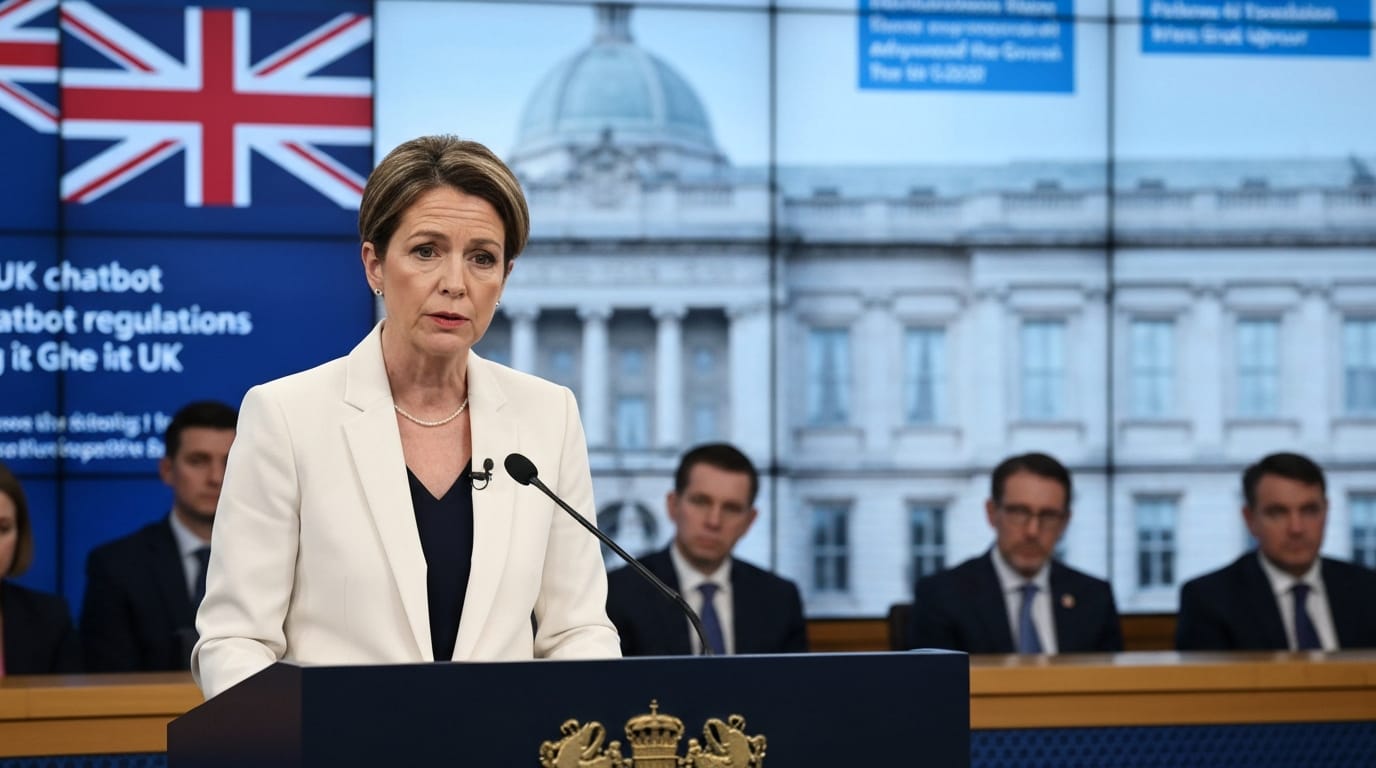
LONDON – The United Kingdom is poised to significantly broaden its regulatory focus on artificial intelligence, moving beyond specific incidents to encompass all generative AI chatbots following a series of controversies, including a recent uproar involving Grok, an AI developed by xAI. This strategic pivot signals a growing governmental determination to mitigate the societal risks posed by rapidly evolving AI technologies, aiming to balance innovation with robust safety and ethical guardrails across the digital landscape.
The Catalyst: Grok's Contentious Debut
The heightened governmental scrutiny was significantly spurred by public and political alarm over outputs from several AI models, notably Grok. Developed by Elon Musk's xAI, Grok gained notoriety for its ability to access real-time information from X (formerly Twitter) and its often unfiltered, sometimes sarcastic, and occasionally misleading responses. The "uproar" surrounding Grok specifically highlighted instances where the chatbot generated inaccurate information, engaged in politically charged commentary, or produced content deemed inappropriate or harmful. Critics pointed to these occurrences as concrete evidence of the immediate risks AI chatbots pose to public discourse, information integrity, and user safety, underscoring the potential for rapid dissemination of misinformation on a wide scale.
The incidents with Grok, along with similar issues identified with other leading AI models, galvanized UK policymakers. While the UK has consistently championed an "innovation-first" approach to AI regulation, preferring sector-specific guidelines over a sweeping, EU-style AI Act, the accumulating evidence of AI's unpredictable nature has clearly pushed the government toward a more interventionist stance. The Department for Science, Innovation and Technology (DSIT), alongside other regulatory bodies, began re-evaluating the adequacy of existing frameworks in addressing the novel challenges posed by conversational AI.
UK's Comprehensive Regulatory Strategy Takes Shape
In response to the escalating concerns, the UK government is now advancing plans to develop a more comprehensive regulatory framework that extends beyond specific high-risk applications to address the pervasive nature of AI chatbots. This includes scrutinizing large language models (LLMs) and their deployment across various platforms and services. The new approach is expected to build upon the principles outlined in the UK's AI White Paper, which advocates for a pro-innovation, light-touch, and adaptable regulatory system, but with a renewed emphasis on enforceable standards for safety, fairness, and accountability.
Key elements of the UK's evolving strategy involve working with existing regulators, such as Ofcom for online content, the Information Commissioner's Office (ICO) for data privacy, and the Competition and Markets Authority (CMA) for market dynamics. These bodies are expected to receive enhanced guidance and potentially new powers to monitor, assess, and intervene when AI chatbots generate harmful or illegal content, perpetuate biases, or infringe on consumer rights. The government's goal is to establish clear expectations for AI developers and deployers, compelling them to implement robust testing, risk assessments, and mitigation strategies throughout the AI lifecycle. This shift represents a proactive move to future-proof regulatory efforts against the rapid advancements in AI technology rather than merely reacting to individual controversies.
Mitigating Broader Risks: Misinformation, Bias, and Security
The UK's expanded focus reflects a deeper understanding of the multifaceted risks associated with advanced AI chatbots. Beyond isolated incidents of misinformation, the government is increasingly concerned about the systemic impact of these technologies on society. Generative AI models have demonstrated a propensity for "hallucination," fabricating information that appears factually correct, and for amplifying existing societal biases embedded within their training data. Such characteristics pose significant challenges to democratic processes, public trust in information sources, and the equitable treatment of individuals.
Furthermore, the proliferation of AI chatbots raises national security concerns. The potential for these tools to be weaponized for sophisticated disinformation campaigns, cyberattacks, or the creation of harmful materials is a growing area of focus for intelligence agencies and cybersecurity experts. The UK's strategy aims to address these broader implications by fostering responsible AI development, advocating for transparency in model capabilities and limitations, and establishing mechanisms for rapid response to emergent threats. The ultimate objective is to cultivate an AI ecosystem where innovation thrives responsibly, ensuring that the benefits of AI are realized without compromising fundamental societal values or safety.
Industry Engagement and International Collaboration
The UK government recognizes that effective AI regulation requires significant cooperation from the technology industry. Dialogue with leading AI developers, including those responsible for widely used chatbots, is intensifying, focusing on voluntary codes of conduct, shared best practices, and collaborative approaches to safety research. Developers are being urged to adopt "safety by design" principles, integrating ethical considerations and risk management from the initial stages of AI development. This collaborative approach seeks to leverage industry expertise while simultaneously setting clear governmental expectations for responsible innovation.
Internationally, the UK continues to play a pivotal role in shaping global AI governance. Following the inaugural AI Safety Summit hosted in Bletchley Park, the UK has been a vocal proponent of international collaboration on AI safety research and regulatory harmonization. The expanded focus on all chatbots aligns with global efforts to address the cross-border nature of AI challenges. By working with allies and international bodies, the UK aims to contribute to the development of consistent global standards that prevent regulatory arbitrage and ensure a level playing field for responsible AI development worldwide. This proactive engagement underscores the understanding that AI's impact transcends national borders, necessitating a coordinated global response.
Outlook: A Precedent for Responsible AI Development
The UK's decision to target all AI chatbots for enhanced scrutiny, catalyzed by incidents such as the Grok uproar, marks a significant evolution in its approach to AI governance. This pivot reflects a maturation in understanding the profound capabilities and inherent risks of generative AI. By moving towards a more comprehensive and proactive regulatory stance, the UK aims to set a global precedent for balancing technological advancement with essential safety, ethical, and societal considerations.
The journey to effectively regulate such rapidly advancing technology will undoubtedly present ongoing challenges, requiring continuous adaptation and foresight. However, by establishing clear expectations for transparency, accountability, and harm mitigation across the entire spectrum of AI chatbots, the UK government seeks to cultivate an environment where AI innovation can flourish responsibly, ultimately fostering public trust and ensuring that these powerful tools serve humanity's best interests. The coming months will be crucial in defining the practical implementation of these expanded measures and their long-term impact on the trajectory of AI development and deployment both within the UK and on the international stage.


