Ukraine Escalates Deep Strikes on St. Petersburg Amid Putin's Firm Rejection of Peace Talks
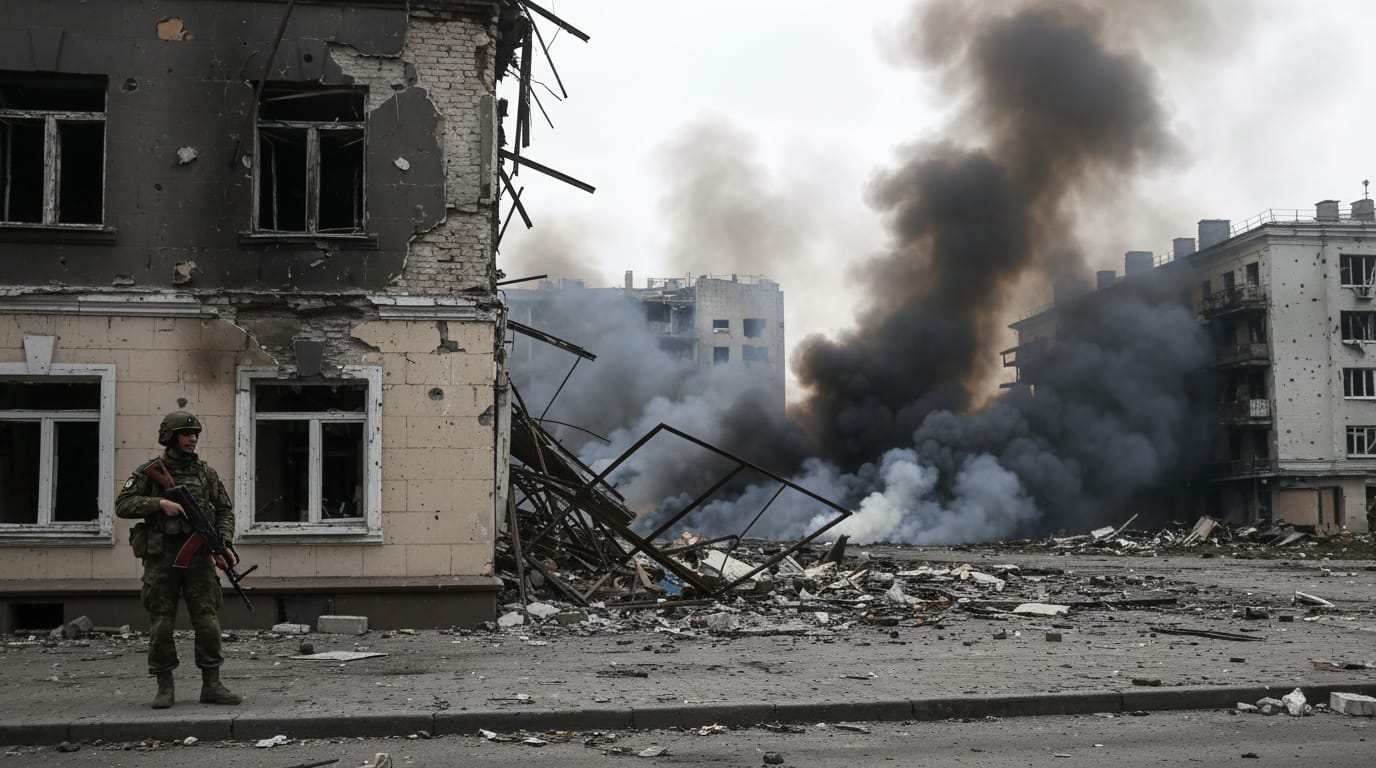
ST. PETERSBURG, RUSSIA – Ukraine launched a major drone assault on St. Petersburg, Russia’s second-largest city, on Saturday, June 6, 2026, marking a significant escalation in its long-range strike campaign. This latest attack, which prompted authorities to urge residents to remain indoors and warned of mobile internet disruptions, unfolded just a day after Russian President Vladimir Putin unequivocally rejected Ukrainian President Volodymyr Zelenskyy’s latest plea for direct peace negotiations, citing "no point" in such a meeting. The twin developments underscore a deepening chasm between the warring nations, suggesting a prolonged conflict characterized by reciprocal long-range engagements and an absence of diplomatic breakthroughs.
The large-scale Ukrainian drone operation targeted critical military and energy infrastructure, including naval arsenals and a base in Kronstadt, near St. Petersburg, according to Ukrainian President Volodymyr Zelenskyy. He stated that the unmanned aerial vehicles traversed approximately 1,000 kilometers to reach the St. Petersburg region. In addition, an oil depot in Russia's southern Krasnodar region was reportedly struck after drones traveled around 500 kilometers. St. Petersburg Governor Alexander Beglov reported three minor injuries from the attack and advised residents to stay inside, while also warning of potential mobile internet service disruptions. Russian authorities offered varying figures on the intercepted drones, with Leningrad regional Governor Alexander Drozdenko claiming 141 drones were shot down over his region, and Russia's Defense Ministry asserting its air defenses intercepted 376 Ukrainian drones across the nation. The strikes, occurring deep within Russian territory, signal Kyiv’s growing capability and willingness to project force far beyond conventional front lines.
A Pattern of Deep Penetration
Saturday's assault on St. Petersburg was not an isolated incident but rather the second major drone strike on the city within a single week. Just three days prior, on Wednesday, June 3, Ukrainian drones ignited an oil terminal and struck a naval base in St. Petersburg, hours before the commencement of the St. Petersburg International Economic Forum. That earlier attack resulted in plumes of black smoke rising over the city's port, temporarily overshadowing the forum, which is typically a showcase event for President Putin. These repeated successful penetrations into Russia's strategically vital and symbolically significant second city, which is also President Putin's hometown, present an ongoing challenge to the Kremlin’s narrative that the conflict remains a distant affair, detached from the daily lives of most Russians. The increasing frequency and depth of these strikes highlight Russia's struggle to maintain effective air defense coverage across its vast territory, particularly against sophisticated long-range drone technology. Following the Wednesday attack, President Putin had publicly vowed to bolster Russia's air defenses, a promise now tested by the latest wave of assaults.
Diplomatic Deadlock: Putin Rejects Zelenskyy's Overtures
The renewed drone attacks on St. Petersburg unfolded almost immediately after President Putin dismissed Ukrainian President Volodymyr Zelenskyy’s latest proposal for direct talks aimed at ending the four-year-old conflict. On Friday, June 5, speaking at the St. Petersburg economic forum, Putin stated he saw “no point” in a face-to-face meeting with Zelenskyy. The Russian leader characterized Zelenskyy's open letter, which requested the meeting, as containing "rude remarks" and suggested that such sensitive negotiations should not be conducted publicly. Putin reiterated his long-standing conditions for peace, which include Ukraine recognizing Russia's annexation of occupied territories and abandoning any aspirations for NATO membership. He emphasized that any meaningful dialogue would require experts to first draft a comprehensive peace agreement, implying that a leadership summit would only be productive after significant preparatory work. This stance contrasts sharply with Ukraine's position, which seeks a full withdrawal of Russian troops, the return of all occupied territories, and accountability for war crimes, alongside security guarantees. The persistent divergence in these fundamental demands has consistently thwarted previous attempts at negotiation, with various international mediation efforts failing to bridge the gap between the two nations.
Kyiv's Strategic Rationale: "No Safe Places"
From Kyiv's perspective, these deep strikes into Russian territory serve multiple strategic objectives. Ukrainian President Zelenskyy described the deep-strike operations as "long-range sanctions," aiming to impose costs on Russia for its aggression. Ukrainian Foreign Minister Andrii Sybiha further underscored this strategy, warning that "no safe places in Russia can be exempt" from Ukrainian long-range attacks and that the intensity of these strikes "will continue to grow." Militarily, such attacks aim to disrupt critical Russian logistics, energy infrastructure, and military command-and-control centers, thereby degrading Moscow's ability to sustain its war effort. Economically, hitting oil terminals and other energy facilities creates repair costs for Russia and forces it to divert resources towards protecting its vast interior, potentially impacting its war funding. Psychologically, these strikes challenge the Kremlin's efforts to isolate the Russian populace from the realities of the war, making the conflict tangible to citizens in major cities like St. Petersburg. The increase in Ukraine's long-range capabilities, evidenced by drones traveling 1,000 kilometers, represents a significant development in the war, expanding the battlefield and putting more of Russia's strategic assets at risk.
The current trajectory of the conflict indicates a cycle of military escalation with diminishing prospects for immediate diplomatic resolution. As Ukraine demonstrates its enhanced deep-strike capabilities and Russia commits to fortifying its defenses while rejecting direct dialogue, the war appears poised to continue its destructive course. The repeated targeting of major Russian cities underscores Kyiv's determination to bring the war's consequences directly to the aggressor, while Moscow's refusal to engage in talks suggests a continued pursuit of its stated war aims through military means. In the absence of a dramatic shift in either side's maximalist positions, the ongoing exchange of long-range attacks is likely to intensify, further entrenching the conflict and widening its scope beyond the immediate front lines.


