Ukraine Forges Resilient, Decentralized Energy Future Under Relentless Attack

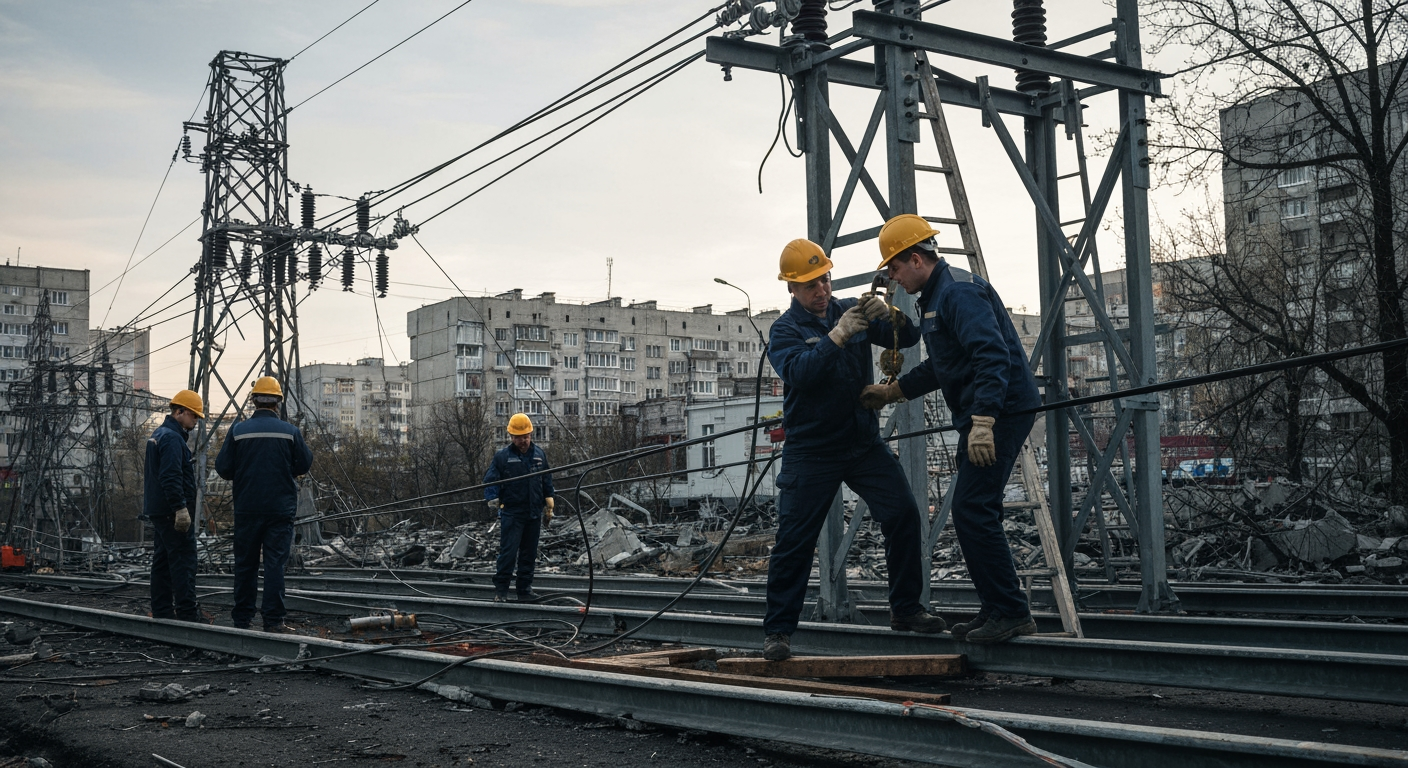
KYIV, Ukraine – Amidst the ongoing and intensifying Russian aggression, Ukraine's energy sector is undertaking a monumental transformation, pivoting from a centralized, Soviet-era grid to a decentralized, resilient, and increasingly green system. This strategic overhaul is not merely about recovery; it is a critical wartime imperative, enabling the nation to withstand persistent bombardment while laying the groundwork for a secure and sustainable post-war energy landscape. Despite suffering over $20 billion in infrastructure damage and losing significant generating capacity, Ukrainian engineers, bolstered by international aid, are demonstrating remarkable ingenuity and determination, keeping the lights on even as the attacks continue.
The Scorched Earth of Ukraine's Energy Infrastructure
Since Russia's full-scale invasion in February 2022, Ukraine's energy infrastructure has been a primary target, enduring a systematic campaign of destruction. Attacks have intensified significantly since the spring of 2024, with 1,225 assaults recorded in 2025 alone, surpassing the combined total of the previous three years. These relentless strikes have inflicted catastrophic damage: by May 2024, approximately 70% of the country's thermal generation capacity was either occupied or damaged, with the Zaporizhzhia Nuclear Power Plant (6 GW) remaining under Russian control. Between March and May 2024, Ukraine lost an additional 9 GW of thermal and hydro generation capacity, leaving it with roughly one-third of its pre-war capacity. By May 2025, a staggering 90% of thermal power generation was destroyed, and 50% of hydropower installations were damaged, with 40% completely destroyed. The electric power industry has borne the brunt of these assaults, suffering an estimated $11.4 billion in damages, three-quarters of which affected generation facilities. This widespread destruction extends to 18 large combined heat and power (CHP) plants and over 800 boiler houses damaged or destroyed since 2022. In addition to physical attacks, cyberattacks against Ukraine's energy infrastructure have surged by 30-40% since the invasion began. The impact on the civilian population has been profound, with power cuts often depriving millions of access to safe water and heating. Prior to these attacks, Ukraine was an energy exporter, highlighting the dramatic shift caused by the ongoing conflict.
A Global Lifeline and Unyielding Ingenuity
In the face of unprecedented destruction, Ukraine's energy sector has demonstrated extraordinary resilience, largely due to the tireless efforts of its engineers and significant international support. Repair crews often work under fire, restoring damaged facilities within hours of attacks. The country's successful disconnection from the Russian and Belarusian energy systems and its expedited integration into the European ENTSO-E grid in 2022 marked a pivotal geopolitical shift, enhancing its energy independence.
International partners have provided a vital lifeline, recognizing the strategic importance of Ukraine's energy resilience. The European Union has committed €1.4 billion in guarantees and grants, part of a broader €50 billion Ukraine Facility. The United States, through USAID, has pledged substantial support, including over $190 million already provided and a larger $244 million project aimed at strengthening the energy sector. Germany has contributed €30 million, while the World Bank allocated $200 million for immediate repairs. The European Bank for Reconstruction and Development (EBRD) signed an agreement for €300 million in emergency support in 2024 and enabled over €300 million in new lending. The multi-donor Ukraine Energy Support Fund has raised over €500 million, with Canada being a key contributor. This aid encompasses financial assistance, humanitarian shipments of specialized energy equipment like transformers, generators, switches, and pipes, as well as crucial technical assistance. In 2025 alone, Ukraine received more than 410 humanitarian shipments totaling over 5,382 tonnes of energy equipment via the Emergency Energy Assistance Hub.
Forging a Distributed and Green Energy Future
The scale of destruction has compelled Ukraine to rethink its entire energy strategy. Rebuilding the grid on the old, centralized model, characterized by large, vulnerable power plants, is no longer considered a viable option. Instead, Ukraine is accelerating a strategic pivot towards a decentralized, diversified, and sustainable energy system, less susceptible to large-scale attacks. The aim is to create smaller, distributed power units, typically ranging from 5 to 100 MW, which are harder targets for Russian missiles and can operate independently, thereby preventing nationwide blackouts.
This transition aligns with Ukraine's long-term commitment to a balanced energy mix, including gas, nuclear, and a significant expansion of renewables. The National Action Plan for Renewable Energy, approved in August 2024, sets an ambitious goal of achieving 24 GW of renewable generation capacity and a 27% share of renewable energy in gross final energy consumption by 2030. Remarkably, Ukraine has already added over 3 GW of new renewable energy capacity since the full-scale invasion. Wind and solar farms, with their geographically dispersed nature, are inherently more resilient than centralized fossil fuel plants, as they require many more missiles to inflict significant damage and can continue to function even if parts are inoperable.
Ukrainian energy companies are at the forefront of this green transition. DTEK Group, the nation's largest energy provider, is constructing the 500-megawatt Tyligulska Wind Power Plant near the Black Sea, making it the first wind park of its size built in a war zone. This plant is expected to supply 900,000 households upon completion. Another project, the 650-megawatt Poltavska array, is also underway with support from Norway. Ukraine possesses immense potential for renewable energy, with estimated capacities of around 180 GW for wind and 39 GW for solar, far exceeding its pre-war generation capacity. Microgrids, designed to operate autonomously, are also being explored and implemented, offering redundancy and enhanced resilience. The "Ray of Hope" project, for instance, has installed solar power plants at 50 healthcare facilities nationwide, ensuring energy independence for critical services. This shift towards renewables also aligns with Ukraine's pre-war pledges to be coal-free by 2035, a commitment reinforced by the destruction of a significant portion of its coal-fired generation capacity.
Persistent Challenges and the Road Ahead
Despite significant progress, Ukraine's energy sector faces ongoing challenges. The continued Russian attacks, particularly in border regions, pose a constant threat to infrastructure and reconstruction efforts. A critical issue remains the procurement of highly specialized equipment, such as large transformers and switches, which are not mass-produced and can have lead times of up to a year. To mitigate this, Ukraine plans to establish a reserve fund for necessary equipment and is actively seeking international assistance to achieve this goal.
Legislative hurdles also exist, particularly concerning the full implementation of decentralized energy solutions. The absence of clear legal definitions for "decentralized electricity generation" and inadequate regulations for grid connection present barriers to wider adoption of microgrids and distributed systems. While amendments to the Law of Ukraine "On the Electricity Market" have introduced the concept of "small distribution systems," further legislative reform is needed. Financial resources remain a significant constraint, as Ukraine lacks the capacity to fully revamp its energy production independently. Furthermore, global energy disruptions and price volatility add another layer of complexity, impacting import costs and potentially straining donor budgets. The long-term vision also includes the need for approximately 2 GW of energy storage capacity, a critical component for grid stability, but implementation has been slow due to high costs. The threat of successful attacks fragmenting Ukraine into "energy islands" remains a pessimistic, though acknowledged, scenario.
A New Era of Energy Independence
Ukraine's ongoing efforts to rebuild its energy system under fire represent a profound transformation born from necessity. The strategic shift towards decentralization and renewable energy not only addresses immediate wartime vulnerabilities but also accelerates the nation's alignment with European energy standards and its long-term goals for sustainability and independence. While significant challenges persist, the unwavering resilience of Ukrainian engineers, coupled with robust international support and a clear vision for a modern energy future, signifies a determined march towards a more secure and robust power grid. This wartime innovation may well serve as a model for energy resilience in an increasingly volatile global landscape.
Related Articles


Record-Shattering Summer of 2023 Signals New Climate Reality, Defying Claims of Normalcy
GENEVA, SWITZERLAND – The summer of 2023 was anything but "normal," marked by an unprecedented cascade of extreme weather events and record-breaking temperatures across the globe, according to leading international...


Global Eco-Innovations Highlight Path to Sustainable Future
Across the globe, innovative approaches to environmental challenges are demonstrating tangible successes, offering a beacon of hope in the ongoing fight against climate change. From high-tech indoor farming in the...


Global Green Shoots: Hungary Embraces Solar, Marmots Stage Comeback, and Rome Reinvents Urban Living
In a world grappling with persistent environmental challenges, recent developments across Europe and North America offer a compelling narrative of progress, innovation, and resilience. From Hungary's unexpected ascent...